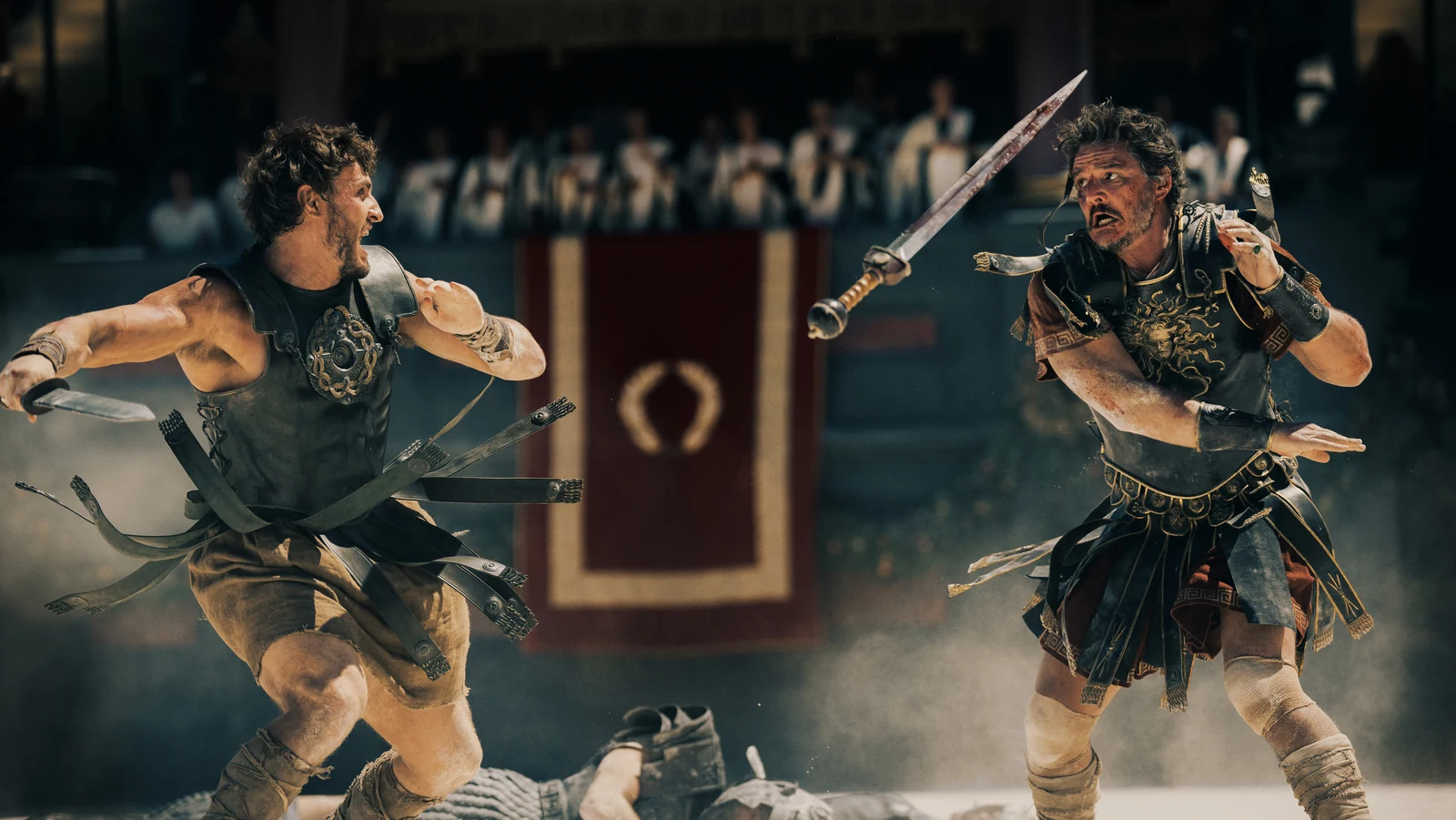
Lucius spares General Acacius in Gladiator II because he comes to recognize that the man he blames for his wife’s death is also trying to protect him and oppose Rome’s emperors. Acacius’s refusal to kill him in the arena makes that contradiction impossible to ignore. For Lucius, played by Paul Mescal, revenge has supplied a reason to keep fighting. Killing Pedro Pascal’s Acacius would finally satisfy the demand he made of his owner, Macrinus. Instead, he refuses to finish the fight on those terms.
There is a difficult qualification here: Acacius really did lead the invasion that destroyed Lucius’s life. The revelation that he loves Lucius’s mother, Lucilla, does not turn the opening battle into a misunderstanding. The choice becomes interesting precisely because Lucius has grounds for his anger. He has to decide what to do with a man whose actions no longer fit the single purpose Lucius has assigned him: someone to kill for Arishat.
Macrinus Offers Lucius a Target
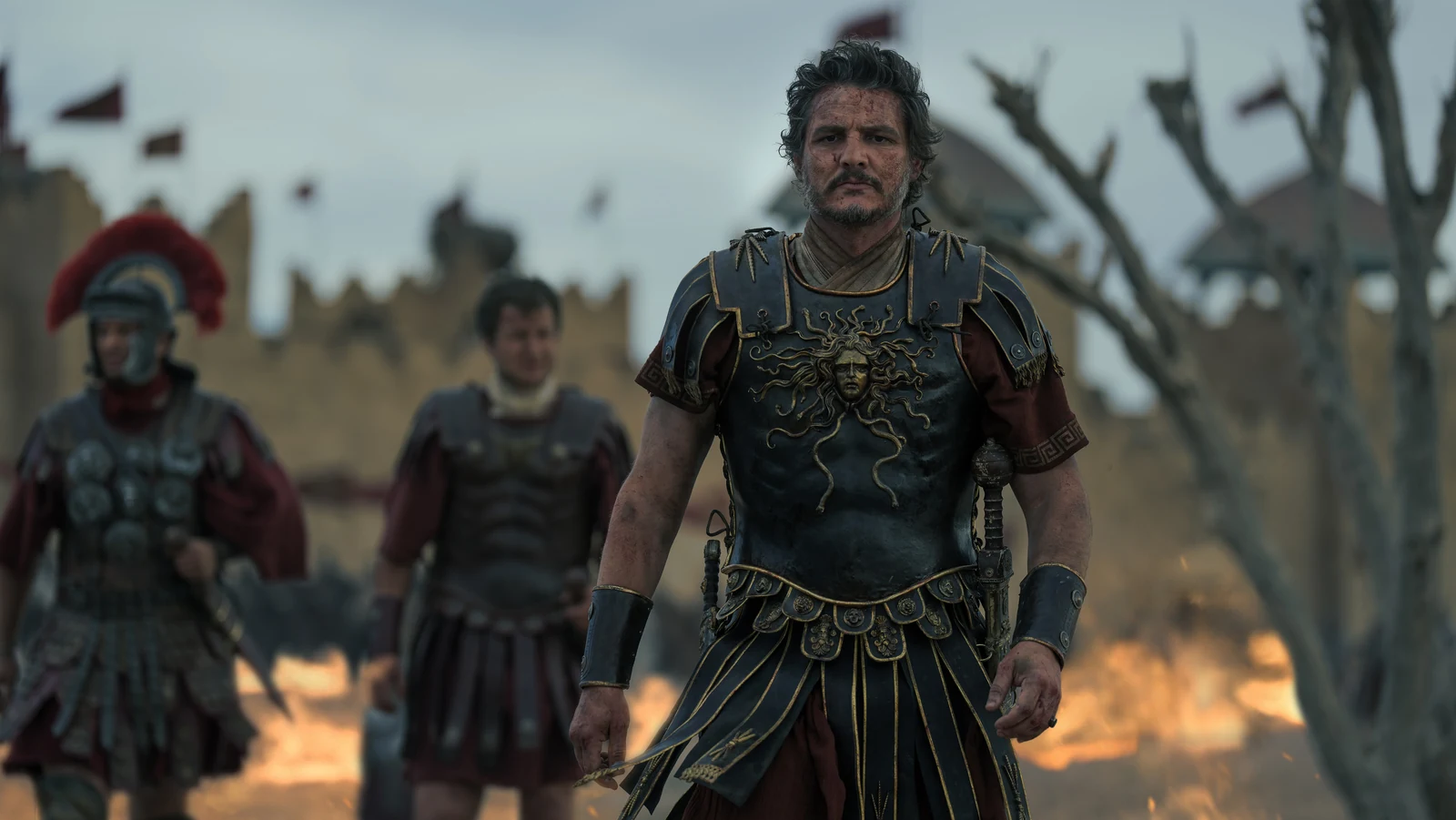
Acacius bears direct responsibility for Arishat’s death as a commander. During the attack on Numidia, she fights as an archer, and he orders his soldiers to target her. He does not need to know who she is for the consequences to be personal to Lucius. The surviving husband is taken into slavery, carrying both the loss of his wife and the destruction of the life they shared. Rome has given him plenty to hate before Macrinus ever speaks to him.
Macrinus, the gladiator owner played by Denzel Washington, sees a use for that anger. He offers Lucius a chance to kill Acacius in exchange for fighting for him. The shooting screenplay makes the bargain especially plain: obedience is what Macrinus wants in return. The promised reward gives Lucius a reason to survive the next fight, while Macrinus gets a fighter determined to win. Whatever Lucius hopes to gain later, his owner benefits now.
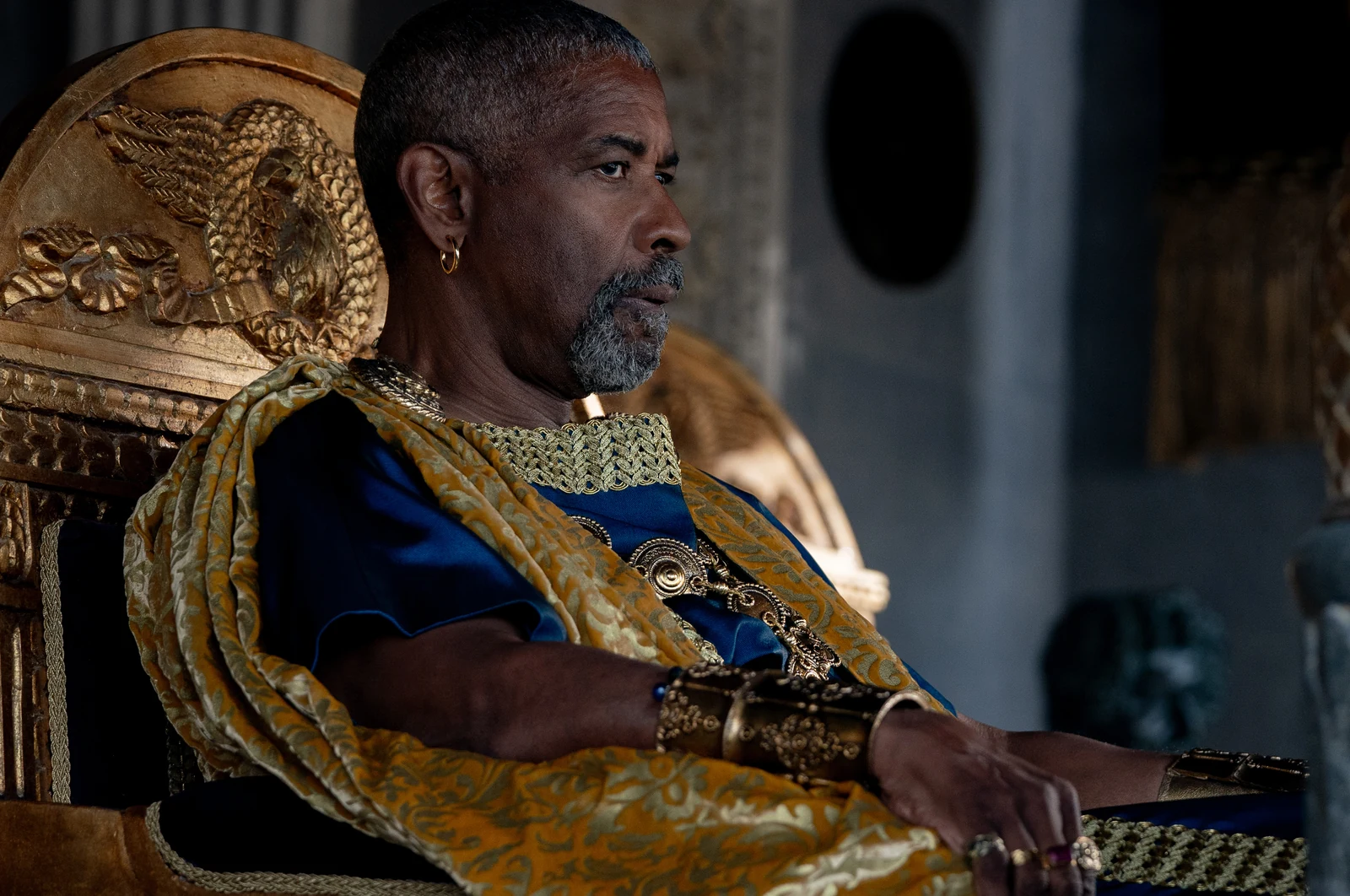
That offer gives Lucius something more specific than hatred of Rome. An empire cannot be dragged into the arena; one general can. Macrinus makes revenge seem attainable, and each fight can now appear to bring Lucius closer to it. But the bargain also gives Macrinus influence over where the anger goes. Lucius is fighting for the person who owns him while waiting for permission to kill the person who captured him. His determination and his captivity have become convenient partners for his owner.
What Acacius Changes in the Arena
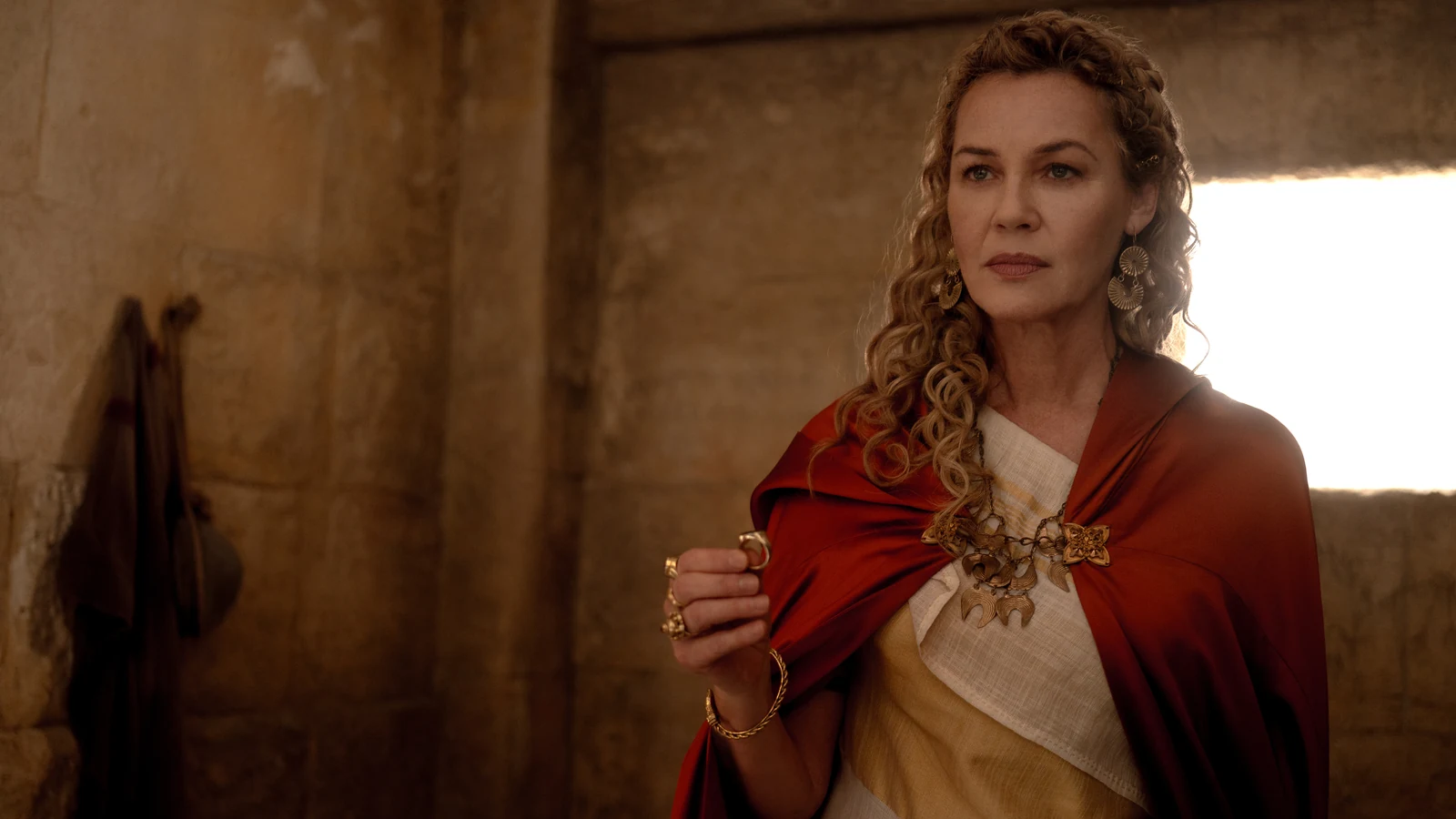
Acacius’s attempt to help Lucius begins before their confrontation. He and Lucilla oppose the emperors, and their plans include freeing her son. The family connection matters: Acacius is Lucilla’s husband, while Maximus is Lucius’s father. But that connection alone cannot explain the change. Lucius already has reasons to resent his mother, and discovering who she married gives him another. What Acacius is prepared to do for him carries more weight than the relationship on its own.
Once the plot is exposed, the arena puts the two men where Macrinus’s bargain said they would eventually meet. Acacius is now a condemned opponent rather than a general protected by his rank. SlashFilm’s account of Acacius follows his attempt to protect Lucius into the fight, where he refuses to kill him. He also invokes his love for Lucilla and his loyalty to Maximus. Lucius has to respond to someone who is risking his own survival, not simply pleading that he followed orders in Numidia.
Executing Acacius would now mean killing Lucilla’s husband and a man who has tried to free her son. His death would remove an opponent of the emperors. Lucius’s grievance remains real, but the execution would serve people with very different reasons for wanting Acacius dead. It would also complete the performance arranged for them. At the moment Lucius is finally allowed his revenge, taking it would mean doing exactly what the people controlling the arena want.
Why His Refusal Cannot Save Acacius
Lucius’s mercy does not secure Acacius’s release. The Praetorian guards shoot the general after Lucius refuses to execute him. That is the immediate limit of his choice: he can withhold his own blade, but he cannot command the other weapons around him. Calling this a rescue would miss the brutality of what follows. The man he has decided to spare is still killed in front of the spectators.
The public consequence is different from the one an ordinary defeat might have produced. Acacius is popular with the crowd, and his killing fuels anger against the rulers. A gladiator has declined to finish him; the authorities insist on his death anyway. Their intervention exposes how little the contest can decide when its organizers require a particular result. Macrinus is quick to exploit the disorder, so Lucius’s refusal should not be mistaken for a plan that immediately outwits him.
Lucius later kills Macrinus. He has not sworn off violence, and the film gives no reason to treat his mercy toward Acacius as a promise to spare everyone. Acacius has tried to free him and refuses to kill him; Macrinus continues to use people to seize power. Lucius can act on that difference, even though his original grievance has not disappeared.
Macrinus delivers the revenge he promised, only to discover that Lucius no longer wants to carry it out. That failure does not end his political scheme; the general’s death still helps him create disorder. But his arrangement with Lucius has changed. The captive he expected to reward with a killing has chosen to stop, in front of everyone who gathered to watch him do it.