Why would a filmmaker make the five-hour version first and the ninety-seven-minute version second?
Brian Knappenberger did. In 2021 he released Turning Point: 9/11 and the War on Terror, five episodes running an hour or more apiece. On September 2 he returned to the same subject with Turning Point: Generation 9/11, one film, ninety-seven minutes. The reviews keep arriving at the same complaint. What’s on Netflix scored it three out of five and could not see why this one was not a miniseries like his others. The RogerEbert review admired it and still said the film covers more ground than the running time can hold. I do not think the film is too short. It is carrying two films, and only one of them is new.
The Witnesses Who Were Not There Yet
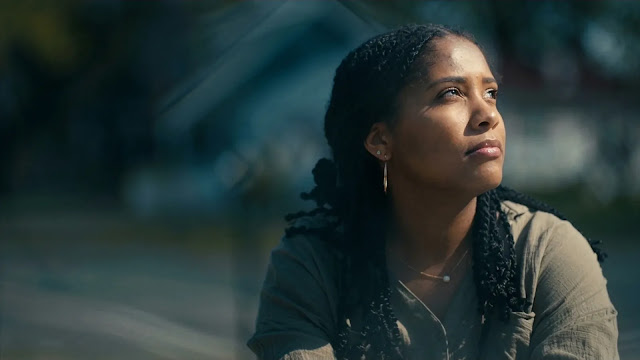
Laurel Homer was ten months old when her father died. LeRoy Homer Jr. was the first officer on United 93. She is twenty-five now, and everything she knows about him came secondhand: photographs, other people’s memories, and a public record that strangers still write to her about to insist the flight was staged. An Nguyen was four. His father, Khang Nguyen, worked as an electrical engineer at the Navy Command Center inside the Pentagon. Michael Smoak was five, home sick from school with his grandmother, and he grew up wanting to serve. At twenty-three he was a Marine at Abbey Gate in Kabul, deciding which people got through and which did not.
None of that could have been filmed in 2021. Smoak was still in uniform. Laurel Homer was twenty. The bombing at Abbey Gate that killed thirteen American service members happened on August 26 of that year, six days before Knappenberger’s series premiered. The five years between the two projects are not a release interval. They are the reason the second one has anything to say.
One of the people this film gives the most time to did the job for a living. Jenny Pachucki spent years as an oral historian at the 9/11 Memorial and Museum, recording survivors, first responders and the families of the dead. Her account of firefighters gathering at the base of the towers, one of them saying out loud that they might not live through the day, is the strongest passage in the film. The museum’s method is also the movie’s best instinct. Find the person, let them talk, do not rush them.
The Idaho Murders: College Nightmare made a version of this trade last year. It handed three hours to four students instead of to the man accused of killing them, and it held together because the film never went hunting for a second subject.
The Film He Already Made
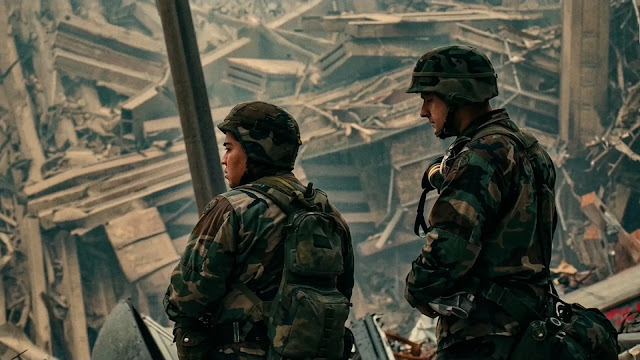
Generation 9/11 does go hunting. The 2021 series was built on an entirely different cast: officials from more than one administration, former CIA officers, Afghan National Army soldiers, Taliban commanders, warlords, civilians. Its first episode opens by traveling backward to 1979 and the Soviet invasion of Afghanistan, twenty-two years before the attack the series is named for. Those are people who own a chronology, and a chronology is what five hours is for.
The new film runs much of that same history again in miniature: the construction of the War on Terror, surveillance at home, the conspiracy theories, the failures of the Afghan war, and the uses American politics has made of all of it since. Reviewers describe this stretch as rushed, and I think they are right about the sensation and wrong about the cause. Ninety-seven minutes is not the problem. The stretch feels hurried because it is a summary of five hours the same director already shot, and nothing is harder to make urgent than a summary of your own work.
The scores are spread wide: two and a half out of four at the San Francisco Chronicle, three out of five at What’s on Netflix, three and a half out of four at RogerEbert, four out of five at the Guardian. Critics who admired it and critics who did not are describing one object, and the distance between them is mostly a question of how much of the briefing each of them still needed.
Mohammad Razvi is the one subject who belongs to both halves at once. He grew up in the part of Brooklyn people call Little Pakistan, and he describes Italian-American coworkers asking him how his people could have done this, and answering that they were not his people. That exchange holds a policy story and a private one at the same time. The film has him for a few minutes and then moves on to the next chapter of the briefing. I would have given him twenty.
Freefall: A Reckoning for Boeing faced both jobs as well, a decade of corporate decisions on one side and a single man’s testimony on the other, and it survived by refusing to leave the man. A documentary can hold an institution and a person at once, but only if it decides which one it will not walk away from.
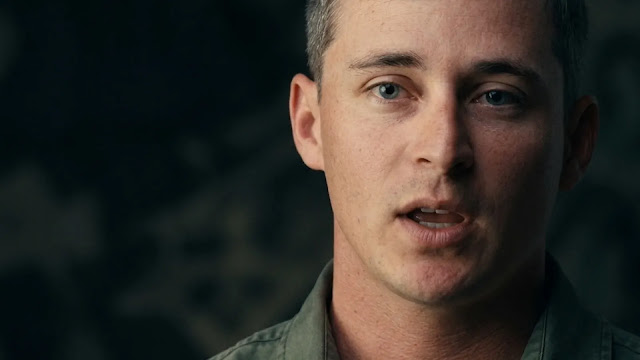
Roughly a third of Americans alive today were born after 2001 or were too small to hold on to any of it, which means the country is now mostly made of people who received September 11 rather than watched it. Laurel Homer is one of them. So is An Nguyen, and so was Michael Smoak on the morning he stayed home from school. That is the film worth ninety-seven minutes, and for long stretches this is that film. The rest is a briefing, and the briefing already exists in five parts with his name on it. What I want from the next one is the nerve to choose the twenty-five-year-olds and never cut away from them.