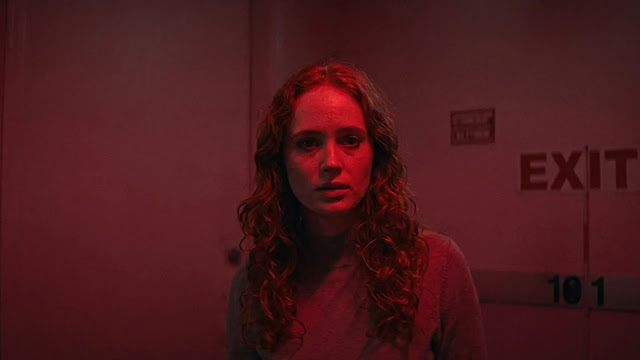
Somewhere in the last stretch of The Strangers: Chapter 2, you start to notice the movie is not going to end. Not really. It just stops, mid-chase, with the door left open for another film. If that feels like a pause instead of an ending, there is a concrete reason, and it has nothing to do with laziness. The entire story was locked in before a single ticket was sold. Now streaming on HBO Max after its September 2025 theatrical run, this Lionsgate slasher is the middle third of a trilogy that director Renny Harlin filmed all at once, and almost everything that frustrates people about it flows straight from that one decision.
One Script, Three Movies, Fifty-Two Days
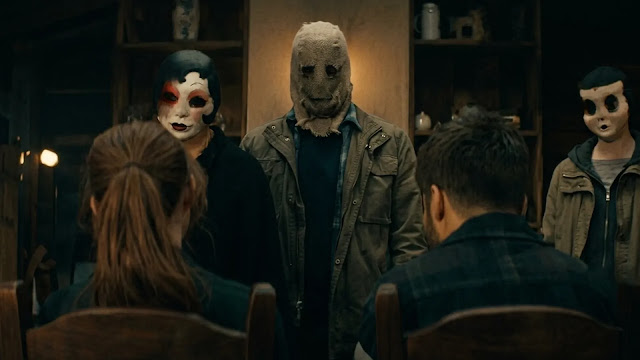
Harlin did something almost no horror franchise attempts. He shot all three chapters back to back, from a single 260-page script, across 52 days in Slovakia back in 2022. The plan was to take the original’s tight, one-house premise and widen it into a sprawling story that crosses America and finally explains who the killers are and why they do this. It is an enormous up-front bet. Most sequels wait to see if the first film works, then adjust. Harlin committed the entire arc before anyone had reacted to a frame of it, which means Chapter 2 could never course-correct. Whatever Chapter 1 got wrong, the follow-up was already in the can, unable to learn from it. The film you are watching was finished long before the audience got a vote.
That ambition also cuts against the very thing that made the 2008 original land. Those killers were frightening because they had no reason. Asked why they were doing this, one of them only answered, because you were home. This trilogy sets out to undo that mystery, to hand the strangers a backstory, a hometown, even a network that protects them. It is a bold swing and a risky one, since explaining a monster can quietly drain it of menace. Harlin clearly thinks the trade is worth it. He even went back for 28 extra days of reshoots to tighten Chapters 2 and 3.
The Sequel Is Really Act Two
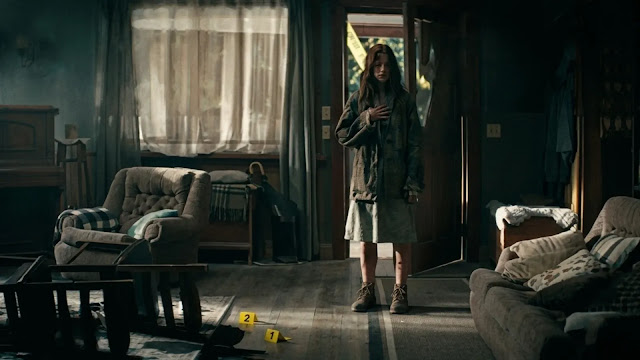
Watch it with that in mind and the shape makes sense, even when the plot does not. If you skipped Chapter 1, the shorthand is simple. Maya and her partner Ryan, a young couple on a road trip, broke down near a small town and were terrorized overnight by three masked figures. She walked out the only one breathing. Chapter 2 picks up a heartbeat later, with Maya, played by Madelaine Petsch of Riverdale, barely able to tend her wounds before the killers resume the hunt in rural Oregon. There is no arc that closes here, because closing was never this film’s job. It is Act Two, tasked with keeping one woman alive and seeding the questions that Chapter 3 will answer. That structure is also why critics were rough on it. Empire said it makes hardly a lick of sense on its own, and a 15 percent critics’ score reflects a movie judged as a standalone it was never meant to be. Audiences were gentler, landing it near 54 percent, roughly the gap you would expect for a chapter aimed at people already inside the story. The film runs into the same trap as Undertone, another recent horror that closes on a deliberate non-ending, except here the blank space is not a mood. It is a sales receipt for a ticket you have not bought yet.
The Bet Now Rides on Chapter 3
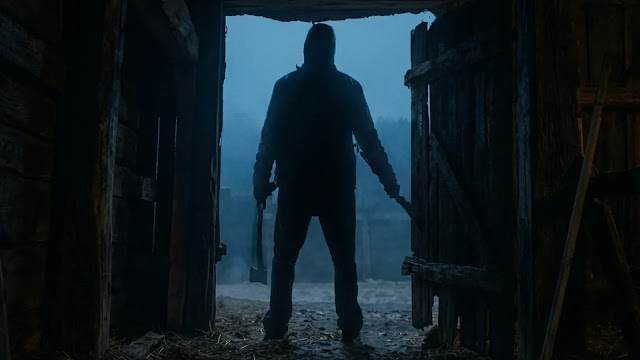
Here is the twist the filmmakers did not plan for. Chapter 2 opened to less than half of what Chapter 1 made, and the first film had already been a modest earner, roughly 48 million dollars on an 8.5 million budget. For a low-budget slasher those were healthy returns, which is why the sequel’s steep drop-off has spooked the people holding the purse strings. So the back half of the trilogy sits finished on a shelf while its theatrical future looks shaky, a strange limbo for a story that was supposed to arrive as one confident sweep. Trade outlets have openly wondered whether the finale will reach theaters at all. The end-credits tease for Chapter 3 promises the payoff, the killers’ origins, a basement archive, hints that the quiet town of Venus and its sheriff have been shielding the murderers all along. Petsch, who anchors nearly every scene as the trilogy’s designated survivor, has clearly held up her end of the deal. Fans who stuck around clearly want that answer, which is the same critic-audience gap that drove Five Nights at Freddy’s 2. It is the payoff the entire design was building toward, and it lands only if viewers are still there to receive it. Whether they get it on a big screen or straight to streaming is the real cliffhanger now, and it is one Harlin cannot reshoot his way out of. He already bet all three films at once. The rest of us are just waiting to see if the wager pays.