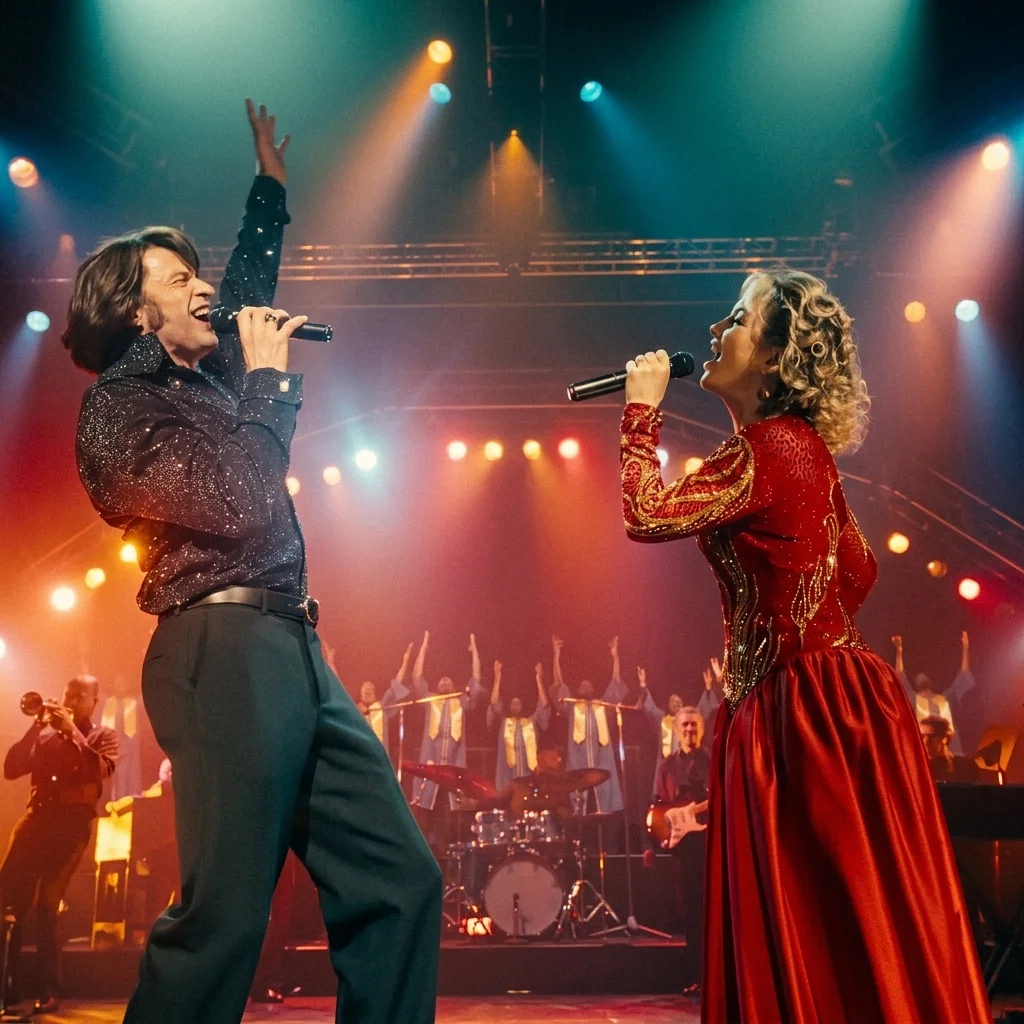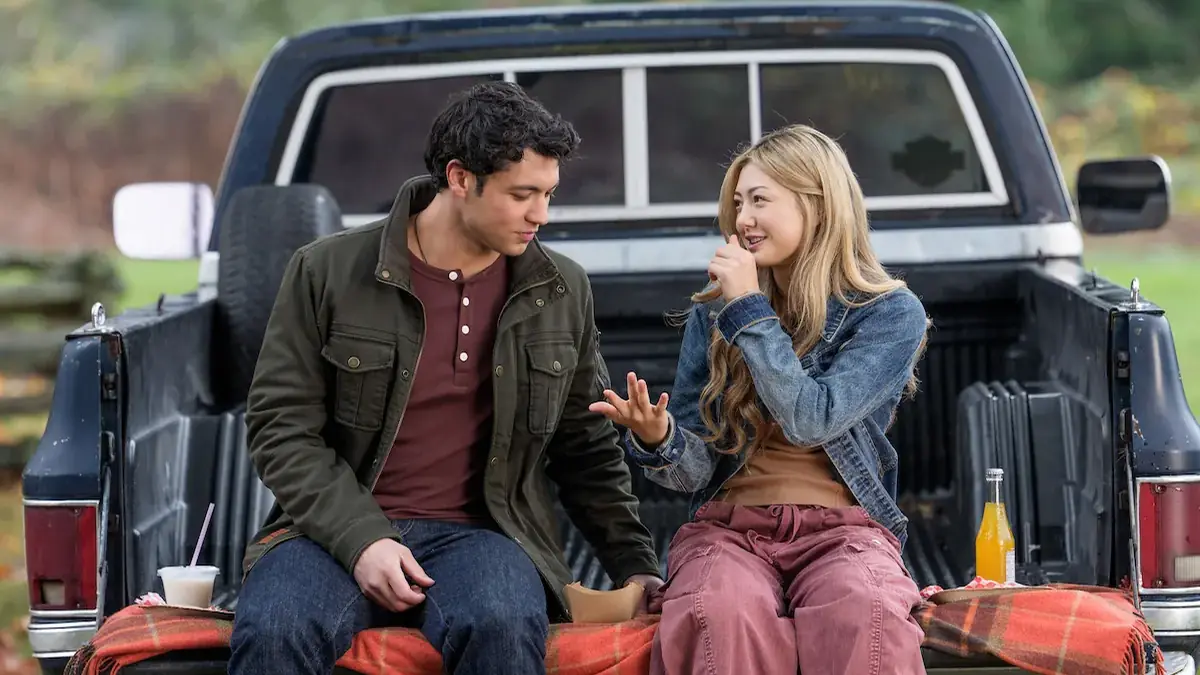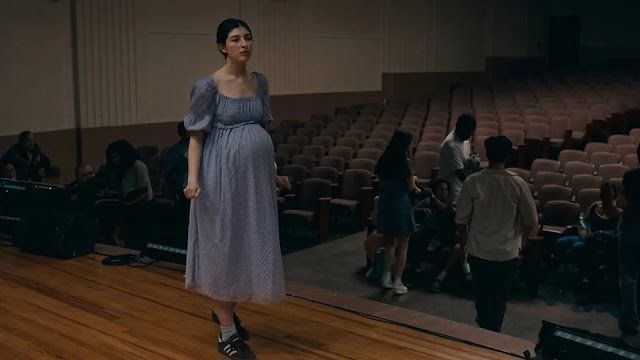
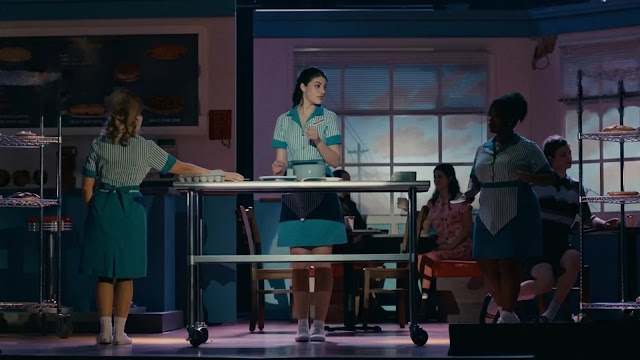
Near the end of Don’t Say Good Luck, Sophie Birenbaum walks to the front of her school stage and sings “She Used to Be Mine.” She is sixteen, cast almost by accident in the lead of a student production of Waitress. In the musical, that song belongs to a grown woman looking back at the person she was before her life closed in on her. Sophie is not a grown woman. Her mother is out there in the dark, dying of a cancer that came back and moved fast. The distance between the song and the girl singing it is where this whole film lives.
Julia Hart’s film landed on Netflix on August 14, and it is quietly one of the better things the platform has put out this month, sitting at 96 percent with critics. The lead performance comes from Sunny Sandler, and it will surprise anyone who knows the last name only from her father’s comedies. Three years ago she was the loud younger sister in You Are So Not Invited to My Bat Mitzvah. Here she carries a whole film, and mostly with her face. It is a weeper, and it knows it. What keeps it off the assembly line of dying-parent dramas is how carefully it chooses its moments, and how much of the emotional weight it hands to one borrowed song instead of to a speech.
The Song Does the Argument
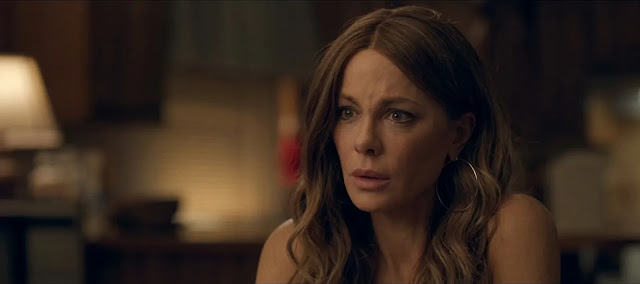
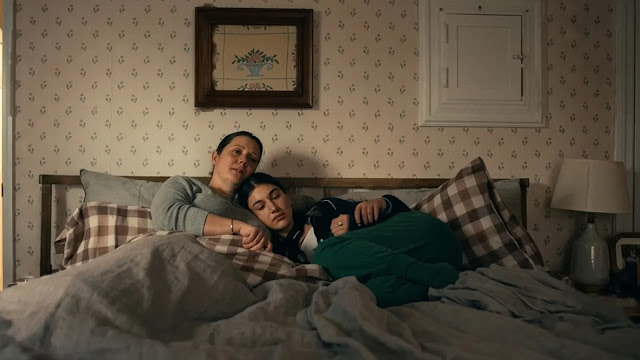
Waitress is about Jenna, a pregnant waitress stuck in a bad marriage who bakes her way toward a life that might be hers. “She Used to Be Mine” is her second-act reckoning, a woman grieving the self she lost somewhere along the way. Sara Bareilles wrote it for the stage show, and it has spent a decade as the song singers reach for when they want to prove they can break a room open. Handing that to a sixteen-year-old could have been a stunt. Instead the song does two jobs at once. The “she” is Sophie’s mother, Elizabeth, played with real restraint by Melanie Lynskey, the woman the illness is taking apart piece by piece. The “she” is also Sophie, turning into someone her mother will not get to meet. A teenager singing a grown woman’s elegy shouldn’t land, and the movie feels the risk in every frame of that scene. It lands because both people the lyric describes are sitting in the same room.
That doubling is the film’s smartest instinct, and it shows up everywhere once you notice it. Sophie is learning to be a performer at the exact moment her mother is teaching her, without ever saying so, how to be left behind. Hart trusts the audience to feel the overlap without underlining it. It belongs to the same tender corner of Netflix that gave us the gentlest coming-of-age stories about kids working out who they are, and it earns its place there.
What You Don’t Say Out Loud
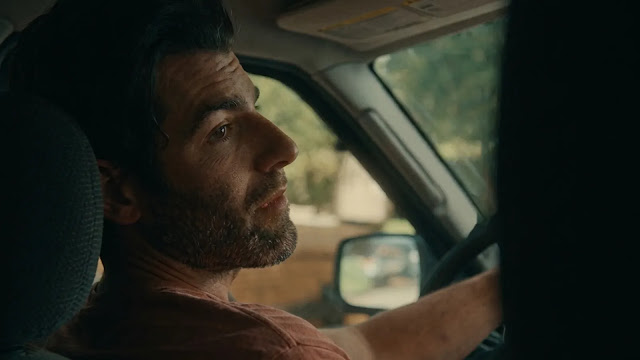
In a theater, you never wish anyone good luck before a show. You say “break a leg,” because the plain wish is supposed to jinx it. The title takes that old rule and turns it on a family that cannot say the plain things either. You can’t wish someone luck against cancer. Luck is the wrong currency for it. So the Birenbaums say what they mean sideways, through a role, a rehearsal schedule, a father, Max Greenfield, keeping the house running on fumes, a mother walking her daughter through a future she won’t be in.
The credits carry their own quiet surprise. The producer is Adam Sandler, working under his Happy Madison banner, casting his own daughter and stocking the edges with old friends like Steve Buscemi and Jon Lovitz and Bebe Neuwirth. The comedy machine behind decades of broad studio hits making a hushed drama about a dying mother sounds like a mismatch on paper. On screen it plays like a family showing up in force for one of their own. Hart is the right hand for the job. Her earlier films, Fast Color and I’m Your Woman, kept their genres at a low simmer, and she brings the same refusal to oversell here. She shoots the illness without spectacle, Lynskey underplays the scenes that a lesser film would milk, and the movie lets a song carry what the dialogue keeps declining to state, the same move a recent Hugh Jackman music drama built its best scenes around.
None of this is reinventing the family drama. The beats are ones you have met before, the diagnosis, the last good day, the performance the parent might not see. What Don’t Say Good Luck understands is that the form works when you resist it, and it resists at exactly the moments other movies press. By the time Sophie reaches the last line of that song, the film has paid for it the slow way, one withheld scene at a time. The movie doesn’t leave you wrung out. You walk away steadier than a story about a dying mother has any right to make you.