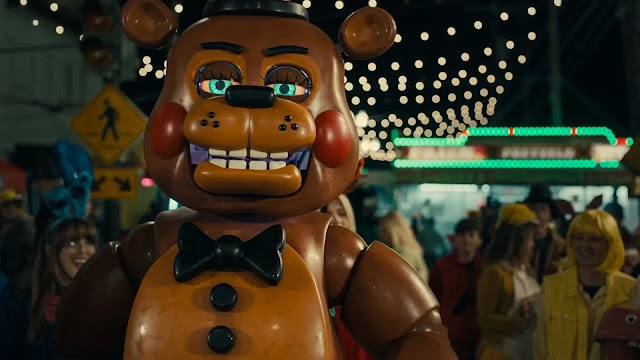
Five Nights at Freddy’s 2 arrived on Netflix this month carrying two numbers that do not belong together: 17 percent from critics on Rotten Tomatoes, and 82 percent from audiences. That gap is not a rounding error. It tells you how this franchise works.
The basics first, since people come looking for them. It is streaming on Netflix in the US now, four months after it left theaters, where it opened to more than 100 million dollars worldwide. Whether you should watch it depends almost entirely on which of those two numbers is yours. The critics and the fans sat through the same movie and came out having seen two different films.
Two Audiences, Two Movies
Judged as a horror movie, Five Nights at Freddy’s 2 is a mess. The scares are thin, the story moves in lurches, and if you wander in cold, most of it reads as noise. A fired security guard, his young sister, a rival with a grudge, and a warehouse of animatronic mascots that want people dead. Critics reviewed that movie, and 17 percent is a fair grade for it.
The fans came for something else. Five Nights at Freddy’s began as a run of indie horror games in 2014, and for more than a decade its players have traded theories about a buried story: who the killer is, which murdered child is trapped inside which machine, how the timeline fits together. For them the films are not thrill rides. They are canon, the official next chapter of a mystery they have been piecing together for years. Graded as that, the sequel delivers, and 82 percent of them walked out satisfied. This is a fan base that has filled the internet with theory videos and wikis, and it arrives already fluent in a story the movie barely has to explain. It is the same split that turned Kevin Hart’s 72 Hours into a number one hit while critics shrugged.
The Puppets Are the Point
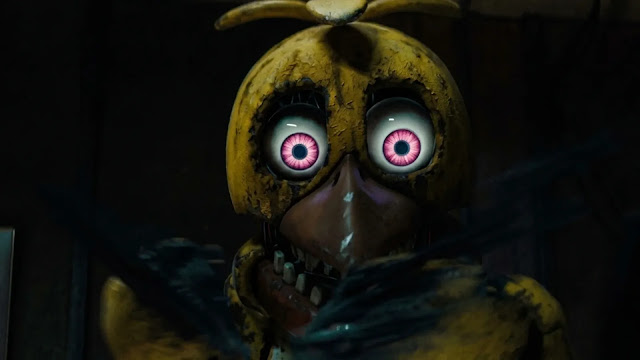
The clearest proof the movies know their crowd is right there on screen, and none of it is computer-generated. The animatronics are real, physical machines. Blumhouse builds them as practical puppets through Jim Henson’s Creature Shop, the studio behind the Muppets and decades of creature work, and the sequel puts more than three times as many of them on set as the first film did. Director Emma Tammi has said she wanted the characters to move and feel as practically as possible instead of taking the CG route. Jim Henson’s Creature Shop teased fan-favorite designs like the Mangle while it built out the roster, the sort of detail that means nothing to a critic and everything to people who named these characters a decade ago. Creature work on this scale has grown rare in modern horror, where digital effects run cheaper and faster, so the choice reads as a promise kept.
That is the movie’s real special effect. A digital monster is weightless, but a seven-foot bear that a team of puppeteers is actually working on set has weight, and it unsettles you the way a costumed mascot at a theme park can. Producer Jason Blum has put it plainly: he wanted to scare the generation raised on the Muppets and Sesame Street, using the same Creature Shop that built them. Even reviewers who disliked the film tended to single out the puppetry as its best feature. Practical effects also hold up on rewatch in a way a computer render often does not, which matters for a fandom that replays scenes and freezes frames hunting for clues. For fans who grew up staring at these designs in a game, watching them exist as real objects is the entire payoff, and no review score touches that.
What the Sequel Adds
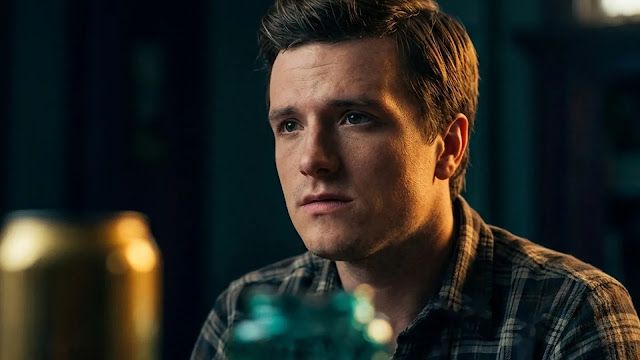
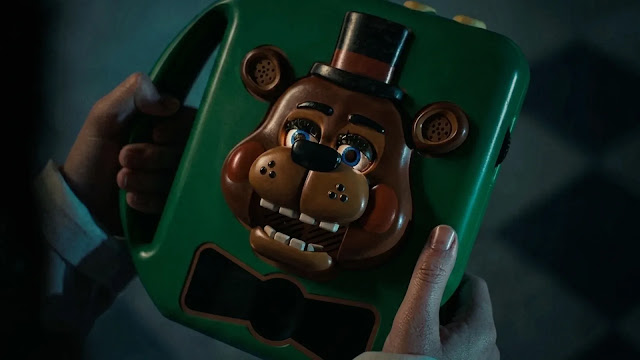
The story digs further into the games this time. Josh Hutcherson returns as Mike, Mckenna Grace as his sister Abby, and Matthew Lillard as William Afton, the man at the center of the mystery. The sequel brings in the Toy animatronics from the second game and pushes deeper into who Afton is and what he did, which is what the fandom shows up to find out. Scott Cawthon, who created the games, co-writes the films, so they answer to the lore first and to horror conventions second. The first movie turned a decade of fan theorizing into one of the biggest horror openings of its year, so the sequel had no reason to start courting critics now. Video-game movies increasingly work this way, made for the people who already know the source, as Mortal Kombat II was.
My take is simple. Five Nights at Freddy’s 2 is not a good horror movie, and it is a good Five Nights at Freddy’s movie, and those are two different tests. If you have never touched the games, the 17 percent is your number, and you can skip this one without missing much. If you have spent years theorizing in the comments, the animatronics alone are worth the price, and the reviews were never going to change your mind.