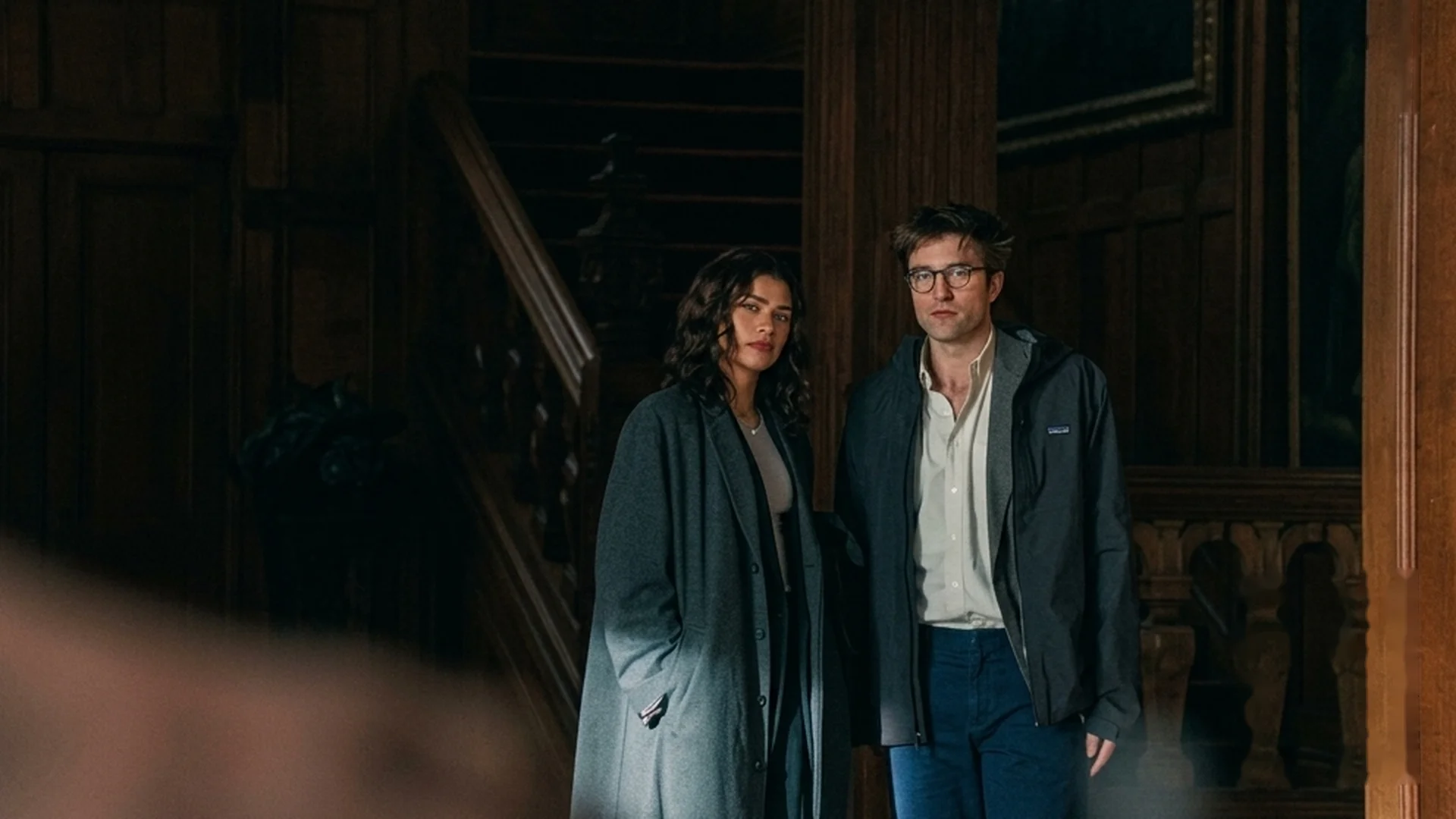
For most of its first hour, The Drama behaves. Zendaya and Robert Pattinson play Emma Harwood and Charlie Thompson, a couple a week away from their wedding, and the film hands you the movie the trailer sold: two of the most photographed actors alive, a gorgeous engagement, the low comic hum of a big day closing in. Then Emma tells Charlie the one thing she has never told anyone, and the floor tilts under both of them. The Drama arrives on HBO Max on July 31, and anyone hitting play for a glossy movie-star romance is in for a stranger evening than that.
That is because the credits carry a name that should have been the warning. The film is written and directed by Kristoffer Borgli, the Norwegian filmmaker behind Sick of Myself and Dream Scenario, and yet it is the most Borgli premise he has ever filmed. He keeps making a single movie, over and over, about the distance between the self a person performs and the self they keep out of sight. No premise has ever handed him a better stage than a wedding.
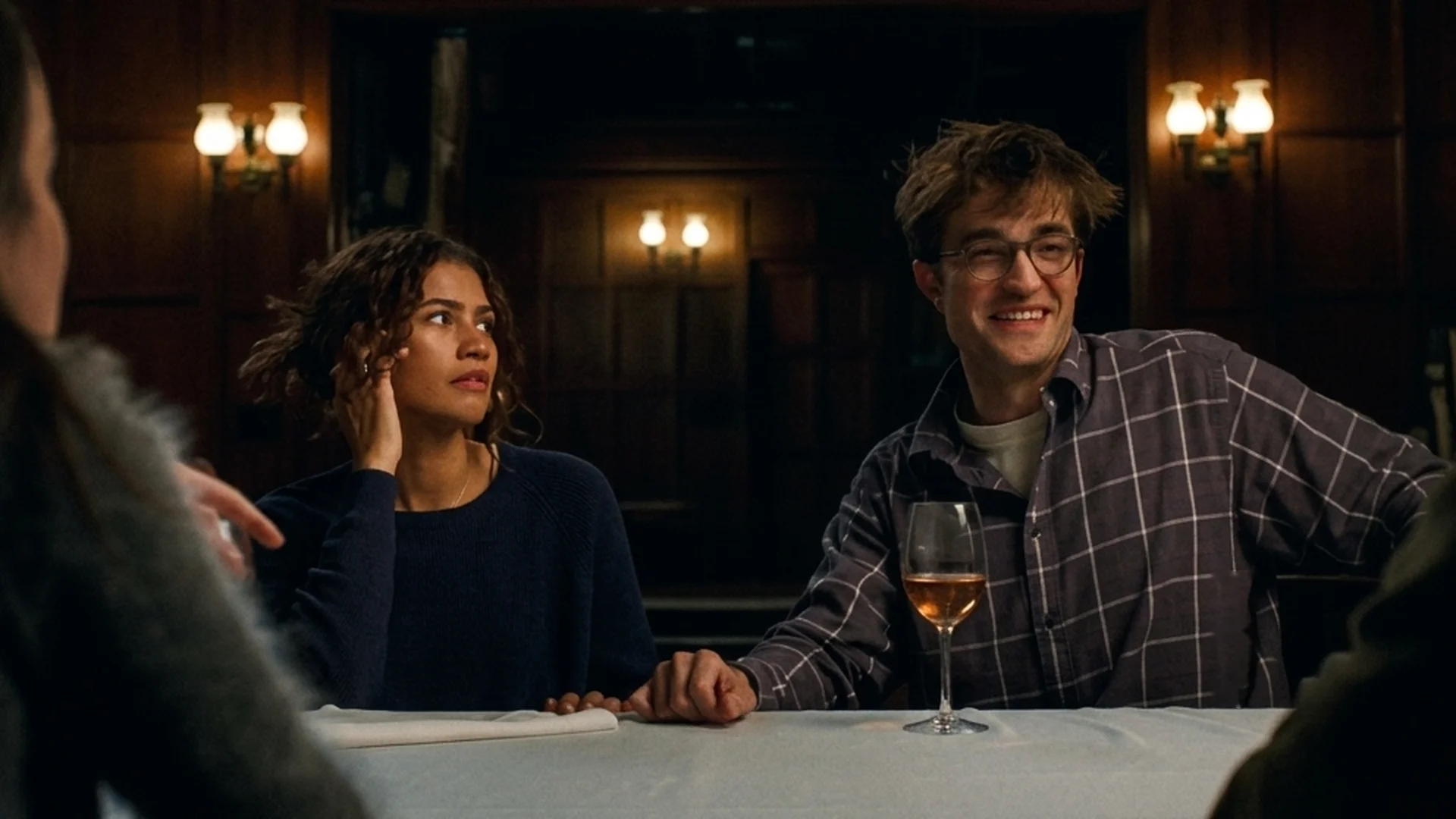
The Director Nobody Books for a Wedding
Borgli’s earlier films are studies in social self-image pushed until they turn into horror comedy. Sick of Myself follows a woman who gives herself a disfiguring illness because the attention it buys her is worth more than her own skin. Dream Scenario, his first American feature, drops Nicolas Cage into a nightmare of accidental fame, a mild professor who becomes a celebrity by turning up in strangers’ dreams and then loses all say over the version of himself they see. Both movies are about performance, and both end with the performer trapped inside the audience’s idea of who they are.
The Drama takes that obsession and aims it at love. A relationship, in Borgli’s hands, is the longest performance of all: two people showing each other curated selves, day after day, hoping the edit holds. Emma and Charlie are good at it. The wedding is the performance’s grand finale. So when Emma finally says the unsayable thing, the crack runs deeper than broken trust. It reaches the whole project of staying the person your partner signed up to marry.
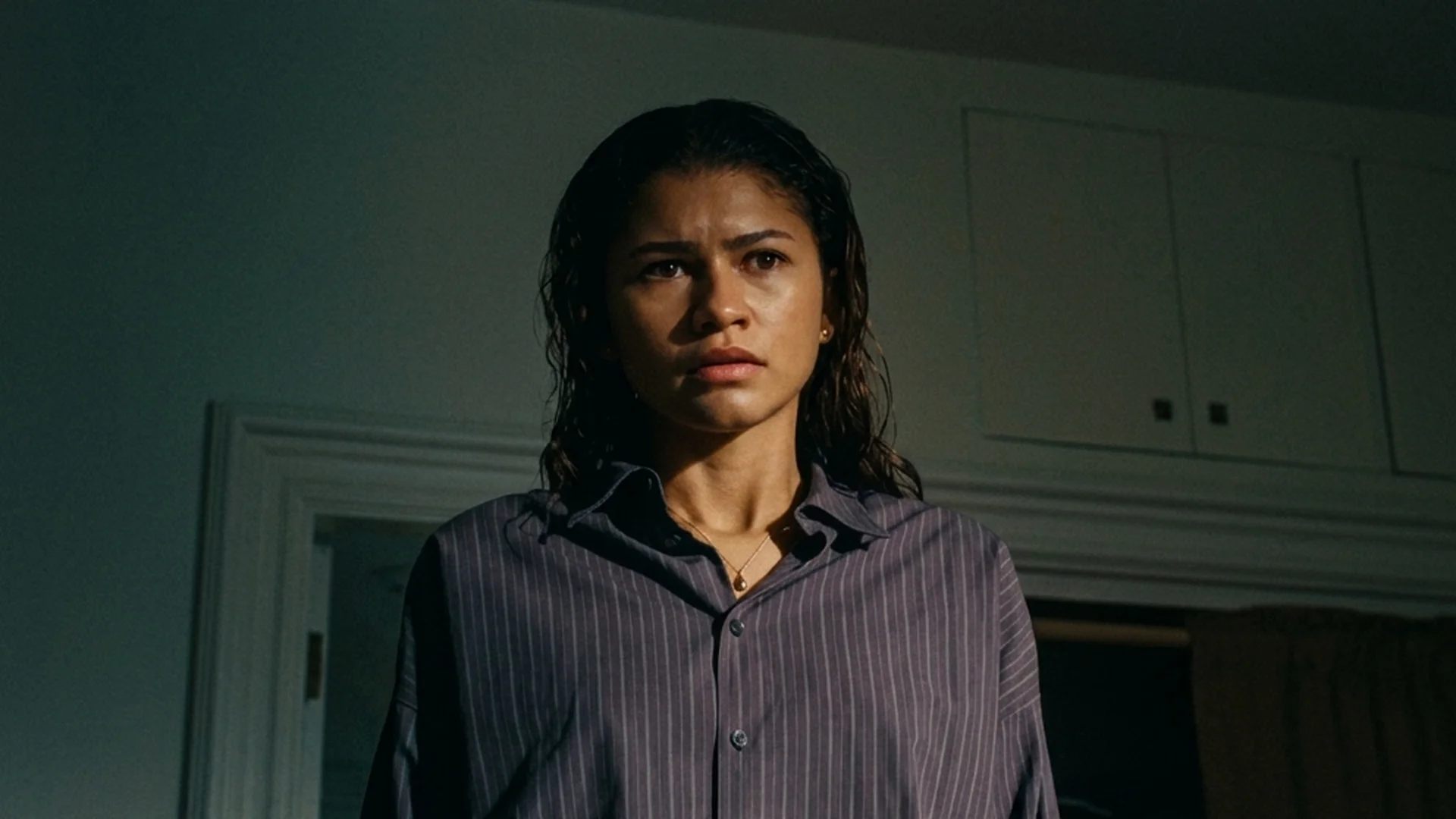
The Secret That Breaks the Spell
The secret is a gut-punch, and it is worth being careful about how much to spell out. Years earlier, as a teenager, Emma came within a moment of committing an act of violence at her school, stopped herself at the last second, and spent the rest of her youth as a devoted activist against the very thing she nearly did. She has carried it in silence ever since. Now, on the eve of the wedding, she tells Charlie, because she cannot marry him from inside a lie.
What makes the reveal land is what it does to the film’s logic. Everything else about Emma has been, in a sense, curated: the poise, the cause, the life arranged as a kind of visible penance. This is the one part she never performed, the piece of herself she walled off, and Borgli understands that a confession like this does not bring two people closer together. It detonates. Charlie spends the back half of the film unable to decide whether he is looking at the woman he loves or a stranger wearing her face, and the movie declines to make that call easy, for him or for us.
A Hit It Had No Right to Be
None of this sounds like a crowd-pleaser, which is what makes the box office the film’s own best twist. Made for a reported 28 million dollars, The Drama crossed 100 million worldwide in nineteen days and muscled onto A24’s list of biggest domestic releases ever, in company with Hereditary, Uncut Gems, and Everything Everywhere All at Once. Critics settled at a warm 77 percent on the major aggregators, with audiences just behind at 80.
The engine, plainly, is the two faces on the poster. Zendaya plays Emma’s composure as a held breath, a woman managing a secret so large it has organized her entire adult life. Pattinson gives Charlie a rattled decency that keeps the second half from curdling into cruelty. The Rotten Tomatoes consensus singled out both as career-highlight work, and the sheer reach of their fame did the rest. Audiences bought a ticket to watch Zendaya and Robert Pattinson get married. Borgli handed them something with teeth, and the disguise is exactly why it worked. I came out unsure whether I even liked it, which is a stranger and more interesting outcome than the poster leads you to expect.
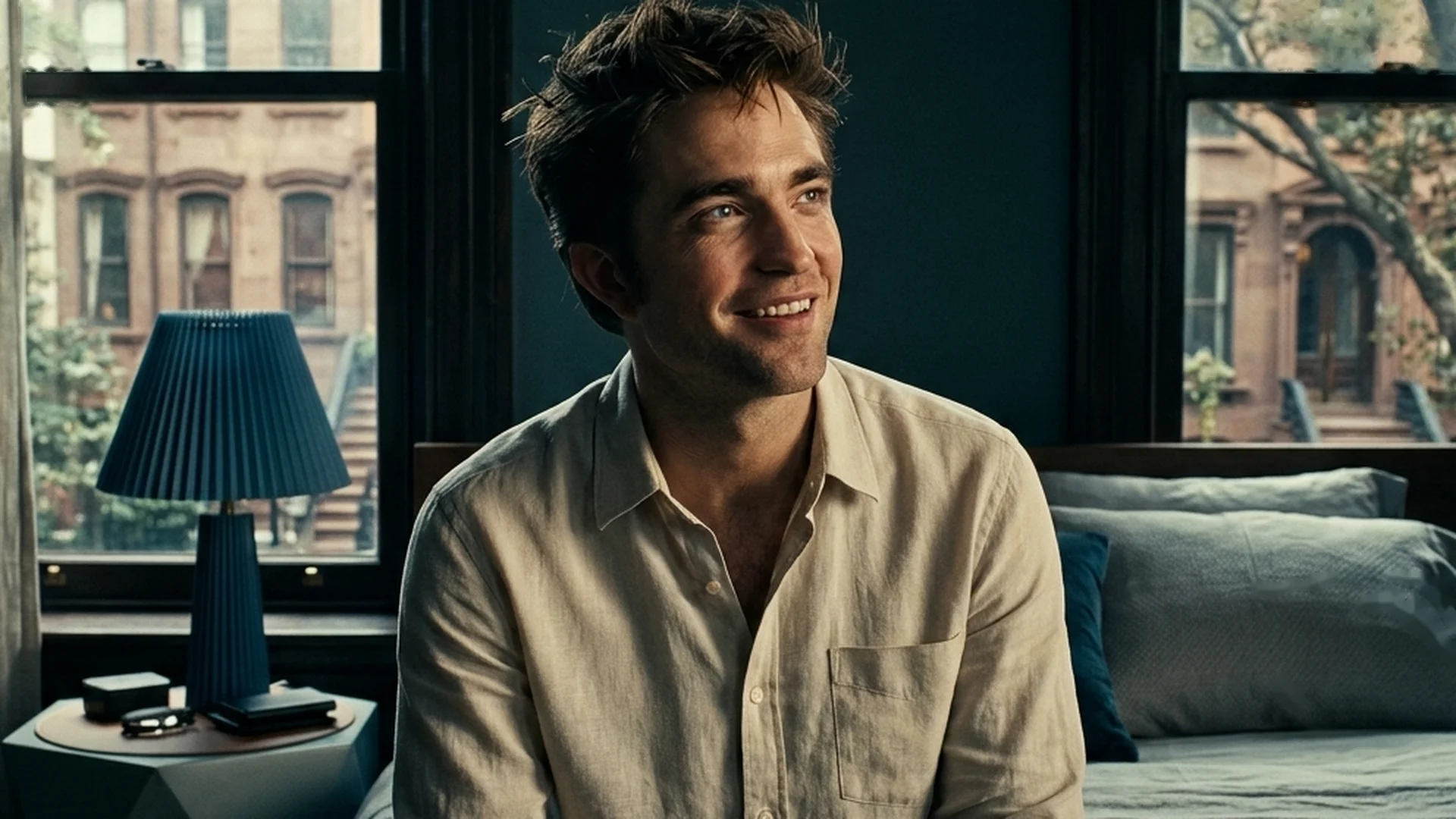
How It Leaves Them
Is it worth the evening? Yes, with a caveat: come for the wedding and you will get Borgli’s version of one, which sits closer to an autopsy. The film ends where it has to, not on a clean resolution but on Emma and Charlie back at the diner they love, bruised from a reception that fell apart, reaching for an old inside joke and agreeing, tentatively, to begin again. It plays like a happy ending and refuses to fully become one. Borgli will not tell you whether they make it. He only shows you two people choosing to keep performing for each other, now that each has seen what the other keeps offstage.
That is the unnerving little trick of The Drama. It uses the two most bankable stars of the moment and the most reassuring genre on the shelf to ask whether anyone ever fully knows the person across the table, then sends you home without the comfort the poster promised.
If it is two stars visibly enjoying each other that pulls you in, another recent title leans almost its whole weight on the pair at its center.
The Drama is also not the only recent hit where the movie and its reputation seemed to be describing two different films.