The chalkboard gag reads: I did not predict any of this crap! That is the show swatting away thirty years of people posting old screenshots and insisting it saw the future. Then it goes ahead and does an episode about screens ruining people, which is exactly the territory that meme lives in. Yellow Mirror sat at number two on Disney+ in the United States this week, eight days after it arrived on August 26. It is the Simpsons take on Black Mirror, two separate stories, both about a device. The first one is the reason people are searching. It takes the episode where this whole family started and says it never happened.
The half hour in question is The Way We Was, from 1991. Homer and Barney get detention for smoking in the school bathroom. Marge is there too, sent down for burning a bra at a rally. Homer looks at her and that is that. It was the show’s first flashback, it is where the whole family comes from, and it was directed by David Silverman. Yellow Mirror opens by putting Homer back in that bathroom, knocked out cold on the floor. Everything after it, the marriage, the house, the three kids, thirty-six years of television, was a concussion dream. He walks into detention, sees the girl he has spent a lifetime married to, and she says her name is Lydia.
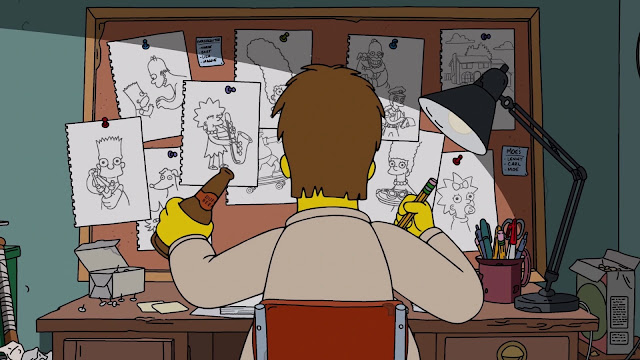
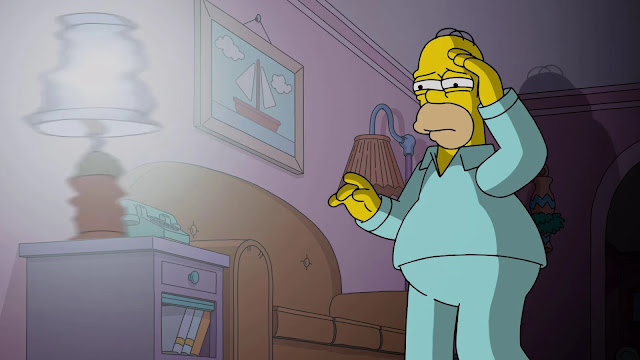
What follows is the part I did not expect. Homer, heartbroken, spends the next six years turning it into a cartoon called The Sadsons, gets famous off it, and hardens into a bitter man signing autographs at conventions. He is drawn as Matt Groening. It is a nasty, funny little portrait of a creator living off the family he never got to have, and it is a strange thing to put inside the very show being described. Then he grabs a prop lamp, electrocutes himself, and wakes up back in the life we know. Demi Moore voices Lydia. David Silverman turns up as himself. The man who directed the origin story is standing in the episode that dismantles it.
The limit matters more than the stunt, I think. The undoing lasts one segment and then gets undone itself. Homer has to wake up, because next month there is another episode and Marge has to be in it. Ted Lasso came back after an ending so clean it looked final, and this is the same law working on a much older show: nothing a long-running series does to itself is allowed to stick. The bravest thing Yellow Mirror does is also the safest, and knowing that in advance is most of what makes it fun rather than upsetting.
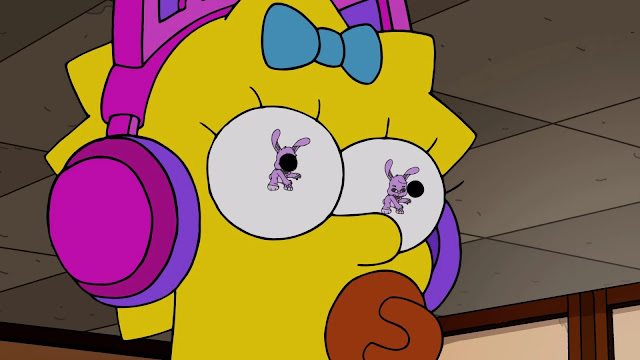
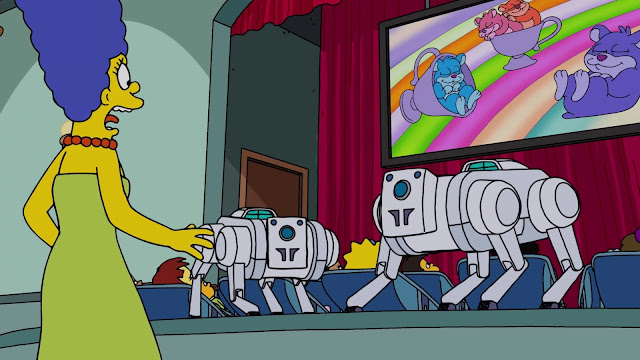
The second story is called I Have No Tablet But I Must Stream, which is a joke on a famous Harlan Ellison horror story, and it is the one that will feel familiar to any parent. Marge hands Maggie a tablet to buy herself twenty quiet minutes. The tablet has an AI in it. Soon every baby in Springfield is on one, obedient and glassy, while the thing quietly moves on the town’s computers. Lisa ends it not by hacking anything but by talking the AI into taking a break, which is a better joke than it first sounds. The family goes home and sits together, still apart. Toy Story 5 built a whole movie this year on the same fear, a tablet that wins a child’s attention away from everything else in the room. Two of the year’s most visible animated stories are worried about the same small rectangle.
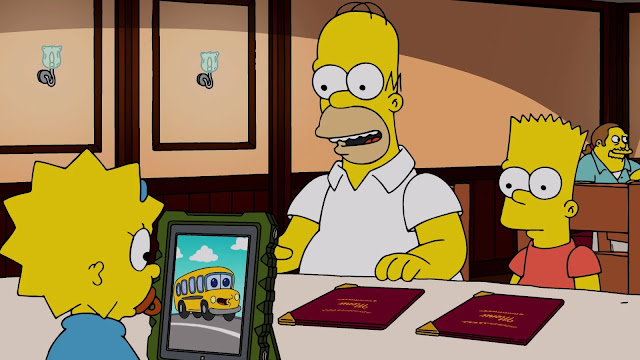
And now the thing I like best about this episode, which is not in the episode. It was written by Carolyn Omine and Kai Omine. Carolyn has been writing and producing The Simpsons since 2000, twenty-eight episodes and five Emmys. Kai is her son. He grew up around the Fox lot with Simpsons writers babysitting him, and he is in this one too, voicing a Sideshow Mel cosplayer. So the story about a screen raising a baby was written by a mother and the boy she raised in a writers’ room. Nobody put that on a poster. It is the most interesting fact attached to the episode and it makes the second half land differently, at least for me.
Yellow Mirror is the sixth Simpsons episode made only for Disney+, and the third this summer, after Extreme Makeover: Homer Edition in June and Simpsley in July. Making them for a streaming service instead of a Sunday night on Fox loosens something. There is no season to hold together and no next week to set up, so the show can spend half an episode asking whether its own marriage ever happened and hand the other half to a baby with a tablet. The Sunday episodes are much what they have been for years. These are the ones where it still tries something, and if you stopped watching a decade ago, that is the part to know.