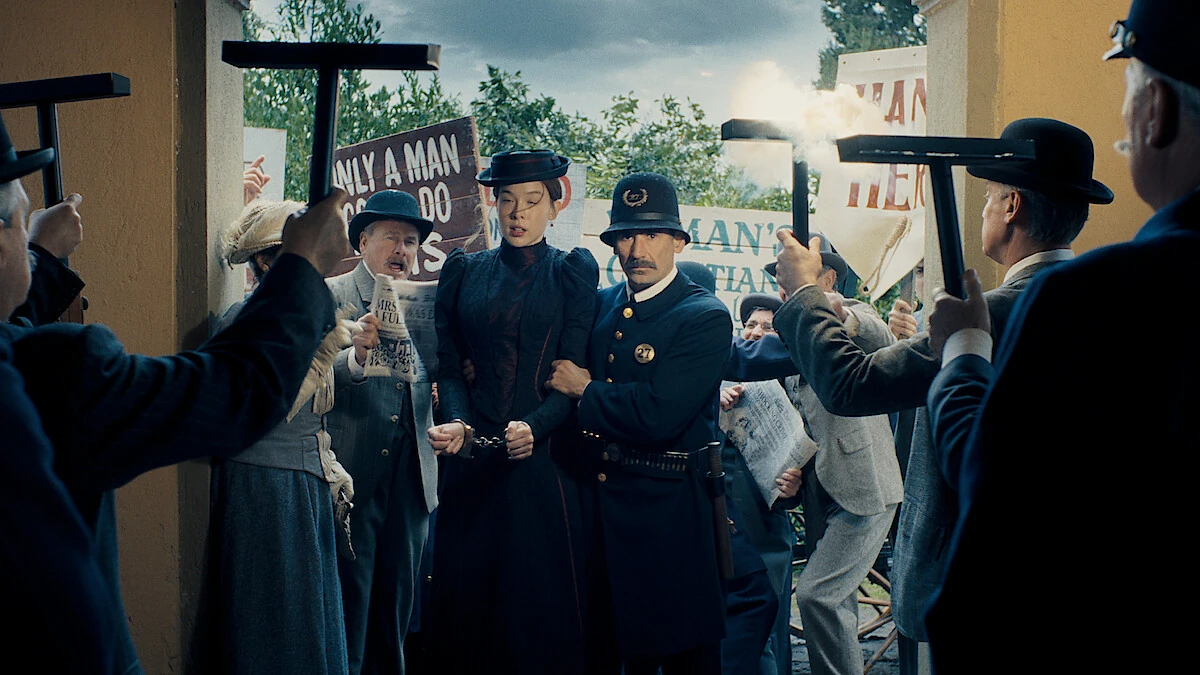
Lizzie Borden was acquitted because the prosecution did not persuade a jury that she had murdered her father and stepmother beyond a reasonable doubt. The case had gaps in its physical evidence, important testimony was excluded, and her defense benefited from ideas about what a respectable woman could do. On June 20, 1893, the jury found her not guilty. That verdict did not identify the killer. It explains why Netflix’s Monster: The Lizzie Borden Story and the historical trial can leave you with very different levels of certainty.
Netflix’s own account describes Ella Beatty’s Lizzie as a fictionalized character and presents the murders as acts she commits. A dramatization can put the audience inside a room no witness could describe. The real jurors had no such view. To understand their decision, it helps to follow the evidence they could consider, including the details that resist a neat explanation.
The Evidence Left Unanswered Questions
The physical evidence did not securely connect Lizzie to the killings of Andrew and Abby Borden, who were found dead at their Fall River, Massachusetts, home on August 4, 1892. Andrew was her father; Abby was her stepmother. Investigators recovered a hatchet head with a broken handle, but recovering a possible weapon was not the same as establishing who had used it, or whether it had inflicted these wounds.
The familiar shorthand that there was “no blood evidence” needs care. In Dr. Edward S. Wood’s trial testimony, he describes stains on a blue dress that tested negative for blood, and a tiny blood spot on a white skirt. Under cross-examination, he acknowledged that the latter could have been menstrual blood. He also found no blood in the suspicious marks on the broken hatchet head. Those findings gave the prosecution no conclusive blood link between Lizzie and the attacks. They did not amount to a laboratory certificate of innocence, either.
Then there was the dress she disposed of. Family friend Alice Russell testified that, days after the murders, Lizzie said she was going to burn a garment because it was covered in paint. Her sister Emma separately testified that the dress had been paint-stained. The timing was suspicious, and Russell herself objected to what Lizzie was doing. But the claim that Lizzie destroyed a bloodstained murder dress required a further inference. The surviving testimony gives us a troubling action and competing explanations, not a recovered garment proving which explanation was right.
Even a prosecution witness could help the defense. The Bordens’ maid, Bridget Sullivan, testified under cross-examination that she had not witnessed family quarrels and had heard Lizzie speak civilly to Abby. Her answers did not prove the household was harmonious; a servant could not know every private exchange. They did, however, complicate a simple account of openly murderous resentment. Reading Sullivan’s testimony means keeping her limits in view, rather than treating her presence in the house as complete knowledge of what happened there.
Why the Jury Did Not Hear Her Inquest Testimony
Lizzie’s contradictory answers at the inquest were excluded from her murder trial. An inquest is an inquiry into a death; it was not the later trial where a jury would decide her guilt. That distinction matters because a reader can encounter both sets of records and assume the jurors heard everything we can read.
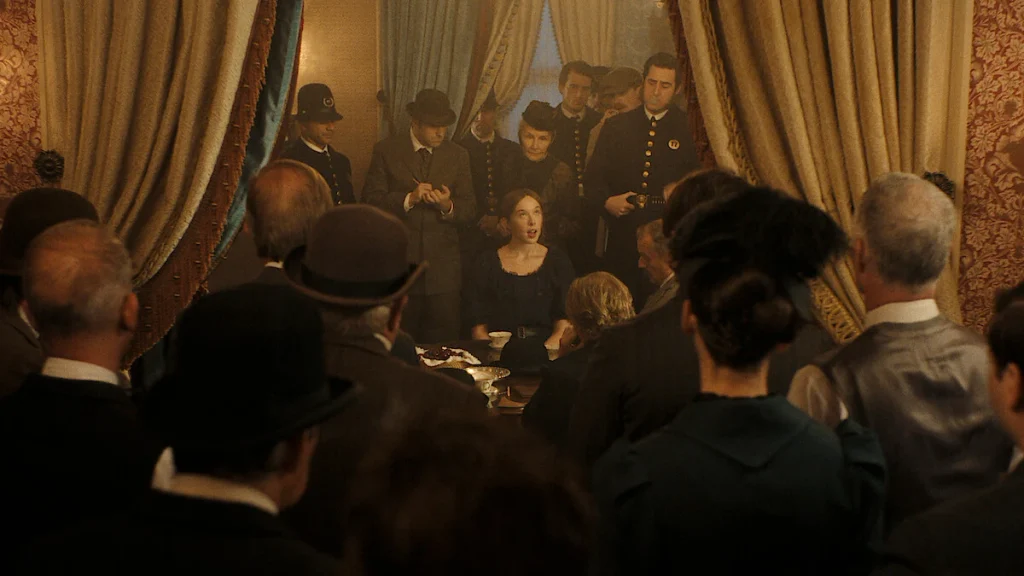
Douglas O. Linder’s trial account explains that the judges treated her as effectively in custody when questioned without her attorney and considered the testimony involuntary. The prosecution also lost its attempt to introduce a drugstore clerk’s account of her seeking prussic acid, a poison. These were consequential rulings: material that made Lizzie look suspicious outside court could not simply be placed before the jury as proof.
That does not make every suspicion unreasonable. Nor does calling a case circumstantial automatically defeat it. The prosecution needed to establish its account through admissible evidence. Remove the excluded statements, leave the weapon uncertain, and the accusation becomes harder to prove even if you still believe Lizzie was the most likely suspect.
Being a Respectable Woman Helped Her Defense
Lizzie’s social position helped her defense in ways that an account focused only on forensic gaps would miss. Historian Joseph Conforti’s Smithsonian essay describes a wealthy Protestant defendant whose public identity made the accusation difficult for many contemporaries to accept. Her family resources bought formidable legal representation. Her appearance in court, including flowers and a fan, could reinforce an image of feminine delicacy that seemed incompatible with the violence alleged.
Conforti also describes a judicial charge favorable to the defense and a jury drawn largely from communities outside Fall River. So “the evidence was weak” is incomplete if it implies an entirely neutral room. Yet “they acquitted her because she was a woman” is too easy in the other direction. Social assumptions could influence how jurors understood the case while the missing evidentiary links remained real. We cannot isolate a single cause from the verdict and call the rest irrelevant.
Monster Gives the Trial a Coach History Does Not
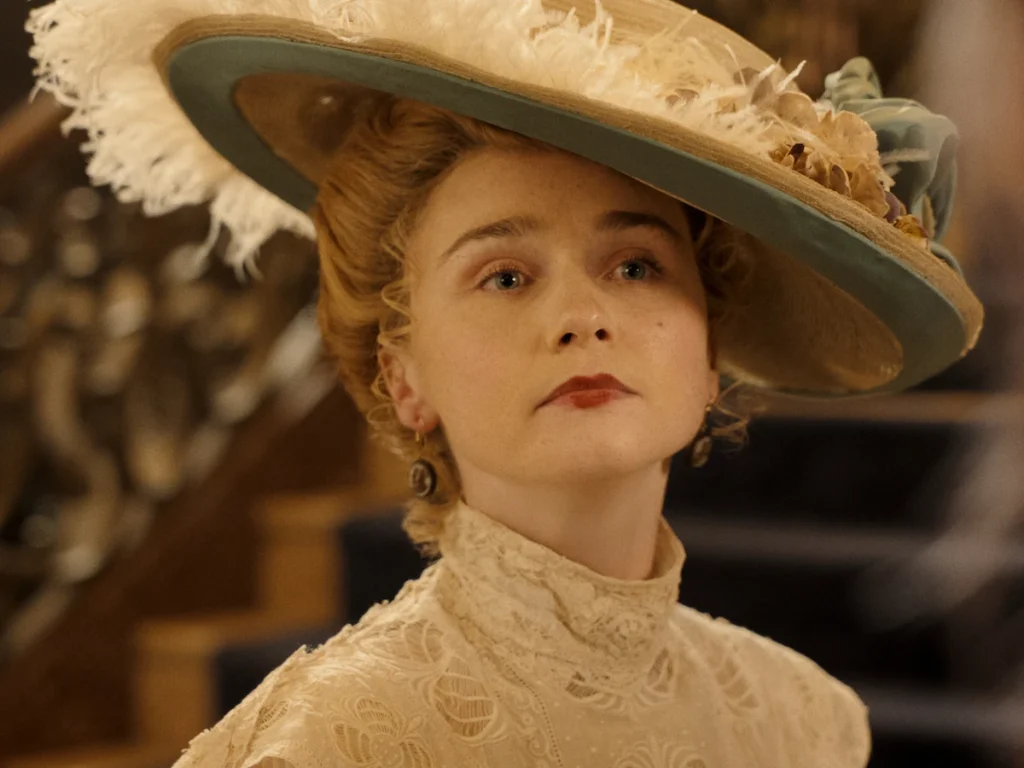
Monster changes the trial’s explanation by giving Lizzie an actress to help her through it. Netflix’s historical explainer says Nance O’Neil, played by Jessica Barden, coaches her in the series, although their real friendship began in 1904, long after the 1893 acquittal. Moving that relationship backward supplies a character who can turn courtroom behavior into a deliberate performance. It is a useful dramatic device, but it cannot explain the historical verdict.
This is a different problem from an unnamed true-story inspiration, where even the supposed source case is uncertain. Here the people, deaths, and verdict are documented. What changes is the explanation connecting them. A viewer shown a rehearsal may read the acquittal as the payoff to that rehearsal. A historical account has to work through testimony, rulings, and social pressures without that convenient scene.
After the verdict, Lizzie and Emma moved to Maplecroft, a larger house in Fall River. Acquittal did not restore an ordinary social life: neighbors continued to treat Lizzie as a suspect. That aftermath helps explain the story’s endurance, but public suspicion cannot settle the murders retrospectively. The most revealing question to carry into Monster is which parts of its explanation came from testimony and which required a writer. Nance’s misplaced coaching is one clear place to start.