The Runner cheats, and I think the cheat is the best argument the movie has. Here is the short answer. Maia Marten never kills the witness she is sent to kill. The gun she fires on the 53rd floor of the Excelsus Hotel holds blanks, the blood is a rig the police set up in advance, and Radian Tafa walks out of the building on his own feet a few minutes later. Maia arranged all of it herself, earlier, with a borrowed phone and a lipstick on the Underground. The man holding her son is arrested in the lobby, and Tommy Boyd, the crime boss who paid to stop the testimony, is convicted on it instead. That is a decent twist. It is also the moment the movie stops being the thing it advertised.
The Hour, and the Insulin Pump
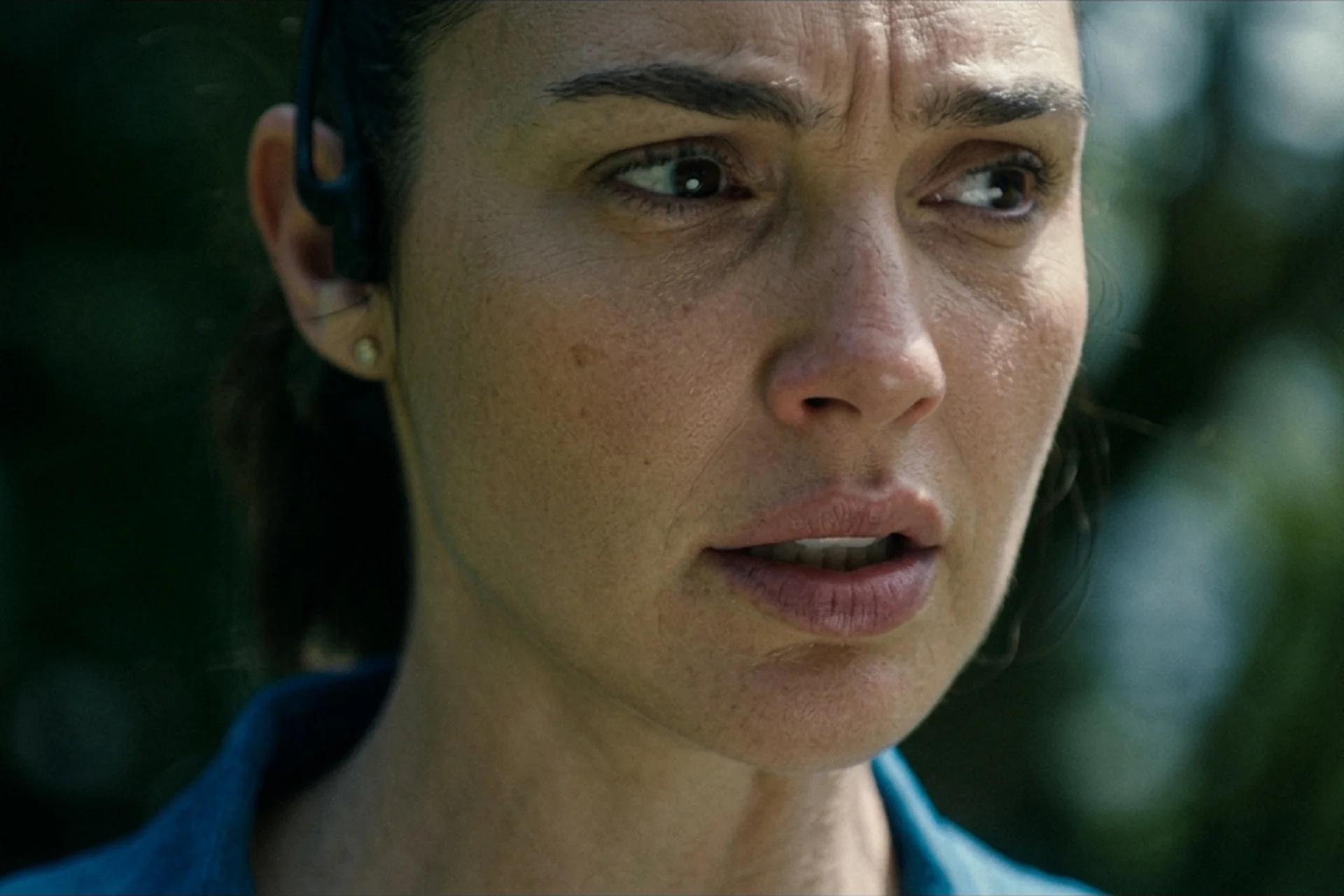
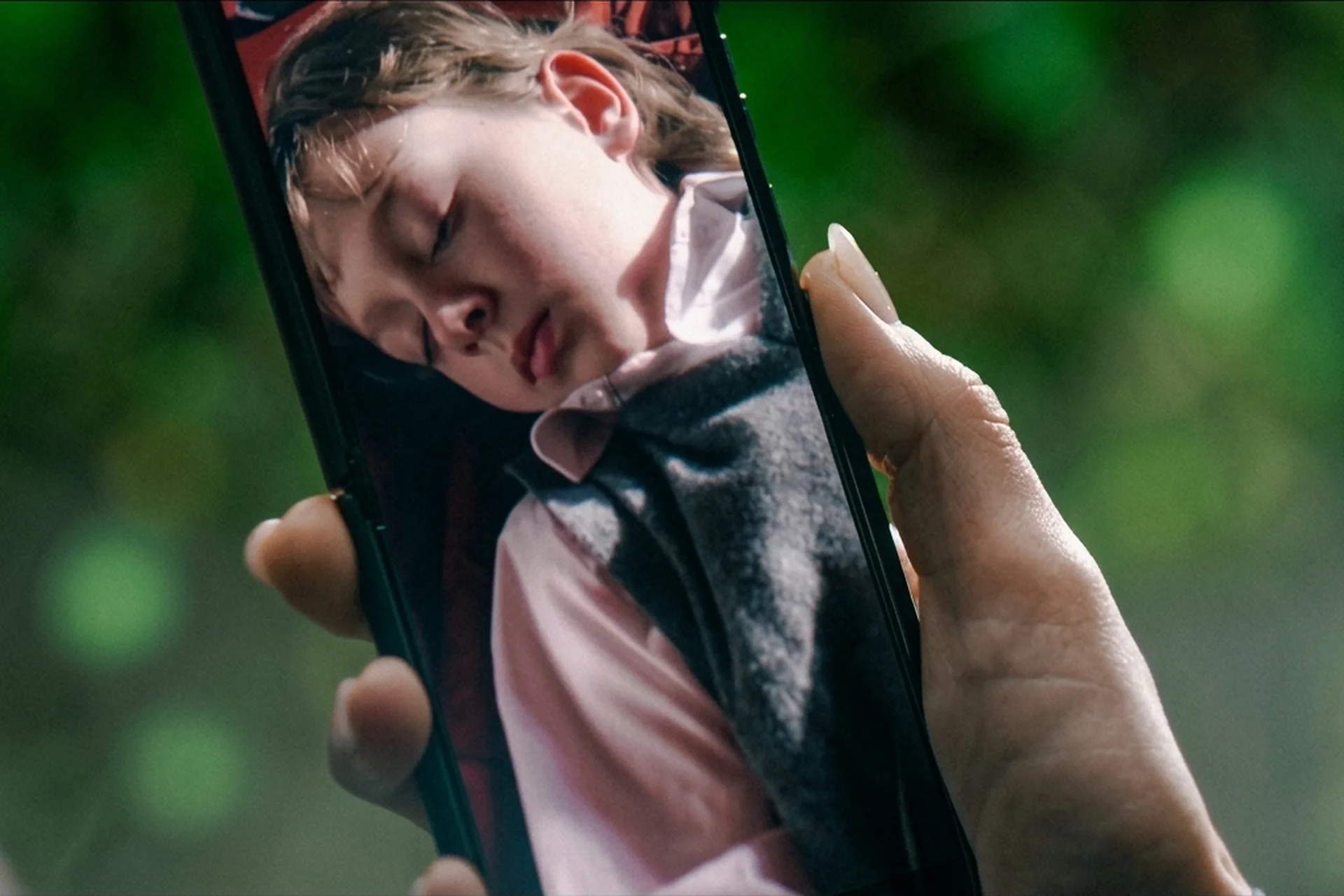
Maia Marten (Gal Gadot) is a London prosecutor with a diabetic son, Noah. She drops him at school, goes out for a morning run, and her phone rings from Noah’s number. The man on the line, credited only as the Caller (Damian Lewis), works for Boyd, whose trial is on her calendar that morning. He has the boy. Her phone is his too, hacked before she left the house, so he can hear her, follow her on a map, and read anything she tries to send. His first instruction sends her to a dumpster, where Noah’s backpack is waiting with one of Boyd’s guns inside. Then comes the part he has already taken care of. He has reached the insulin pump as well, and Noah is in a diabetic coma. She has one hour to reach the Excelsus Hotel and shoot Radian Tafa, the witness sitting up there under police guard, or the coma finishes the job for him.
The pump is the best idea in this script and it is not a close contest. A ticking clock in this kind of thriller is usually just a number somebody says out loud, and you go along with it, since the genre expects that. This time the hour sits inside a child’s body, so it keeps running whether or not anyone is watching. That one choice is why the setup works at all, and I suspect it is why the film is performing the way it is. Prime Video has it at number one in the United States this week, the same slot Icefall took in August, and both are built on a premise you can hand to somebody in one sentence.

What Actually Happened at the Excelsus
The hour itself is a chase, and the chase is the part you have seen before. A car hits her and she wakes in an ambulance and climbs straight back out. A pickpocket takes her phone on the Underground and she gets it back at gunpoint. She goes off Waterloo Bridge onto a passing barge. None of that is where the ending is. It sits in a gap the film keeps from you until the last five minutes, and the gap opens on the Underground, in the stretch where the Caller loses her signal. During those minutes Maia borrows a stranger’s phone and writes to Ted (Alfred Enoch), her colleague, in lipstick. By the time she reaches the 53rd floor, the police have already swapped her rounds for blanks and rigged Tafa with blood packs. She fires. He drops. The Caller, watching from a few floors above, pulls the fire alarm and walks out.
Downstairs a detective meets her and does not arrest her, which should be the first thing that gives it away. Noah spots the Caller through a window, dressed as a paramedic. The man comes over to enjoy his win and sees Tafa being escorted out upright. Maia fires the blank at him so the officers can place him, he is arrested, and the bomb he had held in reserve is defused. Boyd is convicted on Tafa’s evidence. The final shot is a call from an unknown number that Maia throws out of a moving car without answering it. As plotting, that holds. Every piece is planted and every piece pays. What I keep catching on is not whether it works but where she did it.
The Contract a Real-Time Movie Signs
The craft is not lazy, which is what makes the result sting. Kevin Macdonald has an Academy Award for a documentary and made Touching the Void, so he knows how to shoot a body under strain and keep it readable. The film runs 84 minutes, close to the hour it covers. Anthony Dod Mantle shot it, and Dod Mantle won an Oscar for Slumdog Millionaire and came up through Dogme 95, so the boxy, almost square frame is a decision rather than a shortcut. Gal Gadot trained for nine months with an Olympic coach, broke both feet late in the shoot, and finished it on crutches. Seven percent of the 46 critics counted on Rotten Tomatoes gave it a positive review.
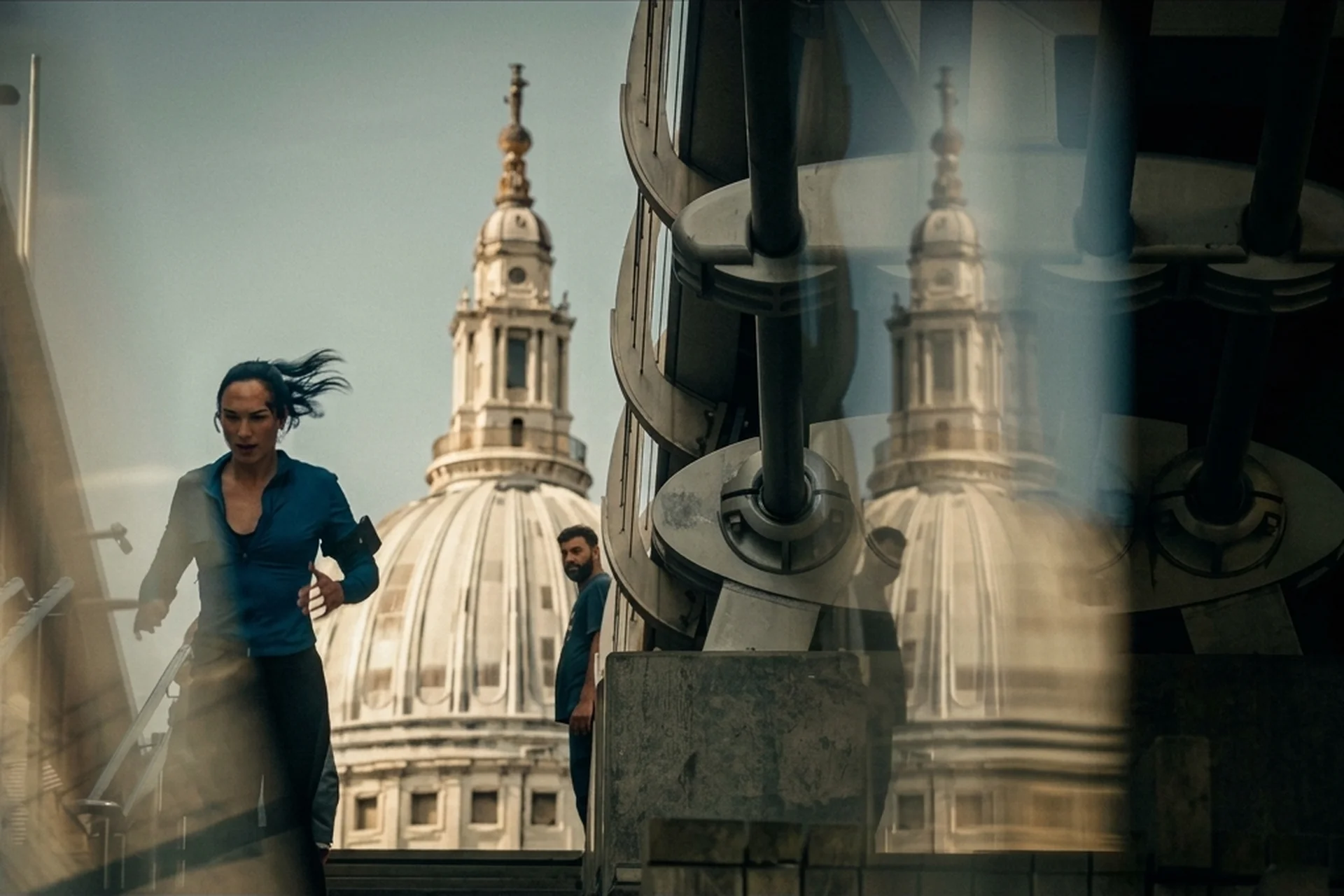
The distance between that effort and that verdict bothers me more than a plain bad movie would, because the skill is real and it is pointed at nothing. Real time is not a stopwatch. It is a promise that nothing important is happening where you cannot see it, and the reason to lock yourself into one unbroken hour with somebody is that you find things out when she does. Dod Mantle’s narrow frame keeps that promise beautifully. You cannot see what is coming from the sides because the movie has cut the sides off, which leaves you as blind as she is. Even the trailer keeps this up, shooting her through glass, past pillars, behind reflections, so that half of London is always in the way. Then the script turns that blindness on her instead of on the threat. The one thing the camera never shows is the only thing that changes the ending.

Reacher Season 4 gets away with a much rougher shape because it asks nothing of you and therefore owes you nothing. The Runner asks for its 84 unbroken minutes and then spends the ending on a scene it kept out of the frame. Nine months of training, two broken feet, an Oscar winner squeezing the image down to the width of a hallway, and every bit of it ends up serving a trick that needed none of it. I would rather watch a film aim at something this specific and miss than watch one aim at nothing. That does not make the miss less annoying.