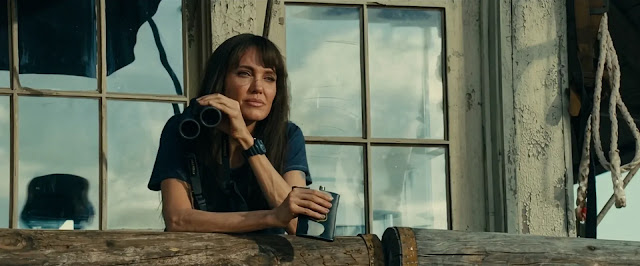
By its last stretch, The Whisper Man has two questions left to answer, and it closes them almost back to back. The person taking children this time is not Frank Carter, the original Whisper Man, who is still behind bars. It is Frank’s grown son, Francis Jr., who has spent the whole film in plain sight as a soft-spoken teaching assistant at Jake’s school. And the little girl in the blue sweater that Jake keeps talking to, the friend nobody else can see who somehow knows too much, is his own dead mother as a child. Those are the answers people come looking for. What sticks afterward is the shape the two of them make together.
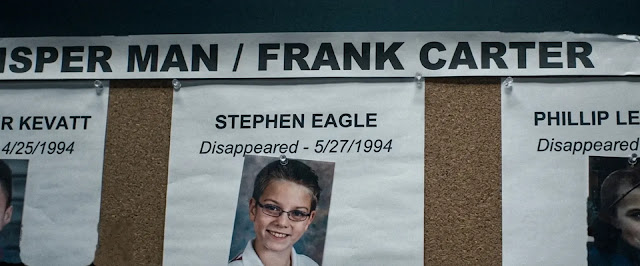
The Son Who Picked Up the Whispering
Frank Carter (Michael Keaton) has been in prison for two decades, and the movie never lets him out. His only real function is to sit across a table and enjoy the visits. What connects him to the fresh murders is Norman Collins, a collector of serial-killer memorabilia who idolized Frank, smuggled messages between the two, and carried out some of the early killings himself before turning up dead in Tom’s basement. Collins is the middleman. The actual hand belongs to Francis Jr., raised on stories about his father and determined to keep the legend running. The detail that curdles the whole thing is how close he got: this is a man who spent months being gentle with Jake at school, trusted by the parents, before he ever made a move. The cruelest beat comes from Frank himself, who tells the retired detective hunting him that the Whisper Man never grabs a child off the street. He only takes the ones who want to go. It is a taunt with a barb in it, because Jake did walk toward the danger, on a night he was furious at his father and desperate to be anywhere else.
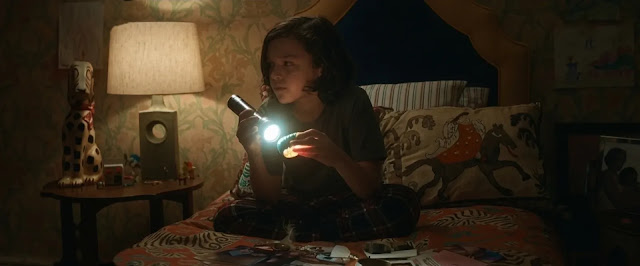
The Girl in the Blue Sweater
For most of the film, Jake’s invisible friend looks like a warning sign about a grieving boy, or maybe a horror-movie ghost. The truth is gentler and stranger than either. Tom finds an old photograph of his late wife as a child, wearing the exact blue sweater Jake has been describing all along. The friend is her. Whether Jake is seeing an actual presence or has simply built himself a mother he never got to keep, the movie refuses to decide, and it is right not to. This is the thread that separates The Whisper Man from a standard manhunt. Underneath the copycat plot, it is a story about a house full of missing parents, and a boy who conjures one back because the living adults around him keep failing to show up.
How the Case Actually Ends
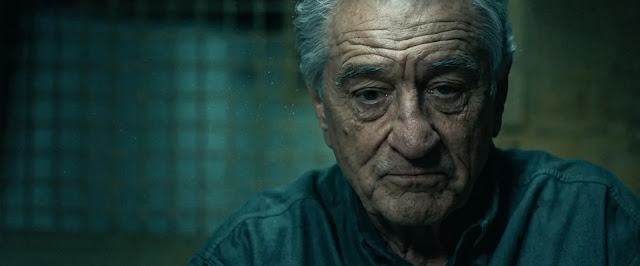
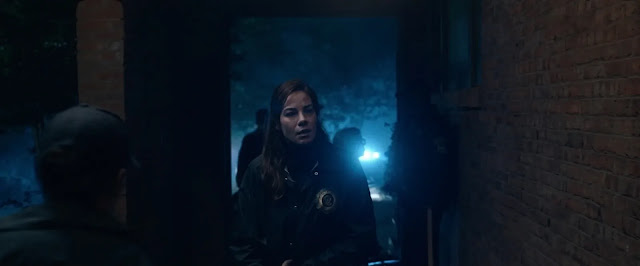
The film saves its biggest emotion for the rescue. Francis Jr. takes Jake to the house at the center of the case, and Peter Willis (Robert De Niro), the retired detective who caught Frank the first time, gets there with Detective Amanda Beck. In the struggle, Francis Jr. stabs them both. Amanda pulls through; Peter does not, and he spends the last of himself telling Jake to run. It matters that Peter is also Tom’s father, worn down and long out of the picture, because his death is the moment father and son finally close the distance between them. Francis Jr. is arrested rather than killed, which sets up the film’s last, coldest turn. In prison, Frank Carter strips down and strangles his own son, making Francis Jr. the final victim of the Whisper Man. The movie ends with Tom and Jake living in Peter’s house, sorting through photographs of the woman all three of them lost.
The Fathers and Their Sons
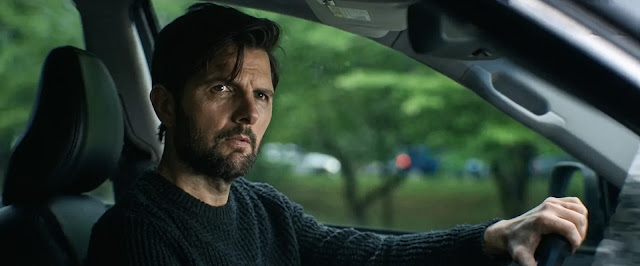
Line the reveals up and the movie’s real design shows through. Almost every pairing here is a father and a son. Frank and Francis Jr. are one version, a father who fed his boy a legacy of horror and then killed him to keep it his. Peter and Tom are the mirror, an absent father and a resentful son who reach each other only at the very end, one dying to pull the other’s child out of the dark. Even Jake sits inside the pattern, a son who lost his mother and keeps reaching for her in the dark. The critics who found the film muddled are not wrong about the middle, where the scares get diluted and the plot mechanics creak. I think the sag is real enough that plenty of viewers will drift off before the design pays off. When we previewed it, the cast and that buried father-son core were the reasons to give it a chance, and the finale is where that core finally surfaces. Two fathers, one prison visit apart, make opposite choices about their sons, and that rhyme does more work than the whodunit ever does. Strip away the copycat machinery and what remains is the oldest fear the story has: what a father can pass down to a son, and what he can take back.