
Courtesy of Samuel Goldwyn Films.In Joe R. Lansdale’s novel The Thicket, Cut Throat Bill is a man. In the film, the outlaw is played by Juliette Lewis, who built the character around a badly damaged voice. That change has consequences beyond casting: it raises the question of what people expect a woman to do with a young captive, and how dangerously wrong that expectation might be.
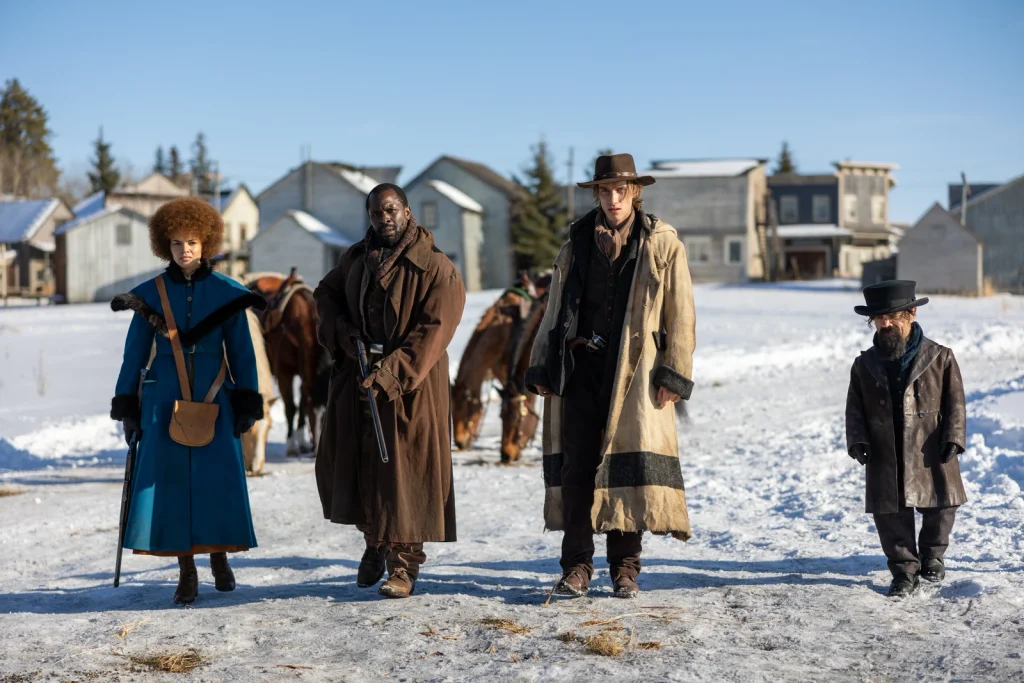
The rescue story is straightforward. Bill’s gang kidnaps Lula, played by Esmé Creed-Miles. Her brother Jack, played by Levon Hawke, recruits Peter Dinklage’s bounty hunter Reginald Jones to help bring her back. Bill is the person they have to reach. Lewis’s account of preparing the role explains why understanding her should offer very little comfort to anyone waiting for Lula to come home.
Courtesy of Samuel Goldwyn Films.Bill Was a Man in the Novel
Director Elliott Lester made the decision to turn the book’s male antagonist into a woman. In his ScreenRant interview, he described sending the script to Lewis through her manager, talking with her over Zoom, and then receiving a video in which she tried out Bill’s voice. The casting decision gave Lewis the role; the voice was something she brought to the director.
It helps to keep those two decisions separate. A casting announcement can tell us that Bill has changed. It cannot tell us how she talks, how much effort speech takes, or how she makes someone listen. Those are acting problems, and Lewis found a particularly restrictive way into them. Bill’s injury would have to remain present even in an ordinary exchange.
How Lewis Made Bill’s Damaged Voice
Lewis told Moviefone that the written description connected Bill’s mangled voice with people mistaking her for a man. She experimented with a lower register, found that she could sustain it, and showed Lester. Her aim was to make the fearsome reputation described on the page believable in a person who could actually speak.
There was a catch. In a later interview with The Contending, Lewis said she discovered that she could not yell in that voice. She was working from the idea of a throat injury severe enough to have nearly killed Bill. The useful detail is the limitation: lowering her voice also took an easy way of expressing anger away from her.
That gives me a more specific reason to pay attention than the usual promise of an actor disappearing into a part. Listen for what happens when Bill wants control of a conversation. Does a pause do the work a shout normally would? How close does she need to get? Lewis’s preparation makes those useful questions to bring to the performance, without assuming that a rasp alone can supply a whole character.
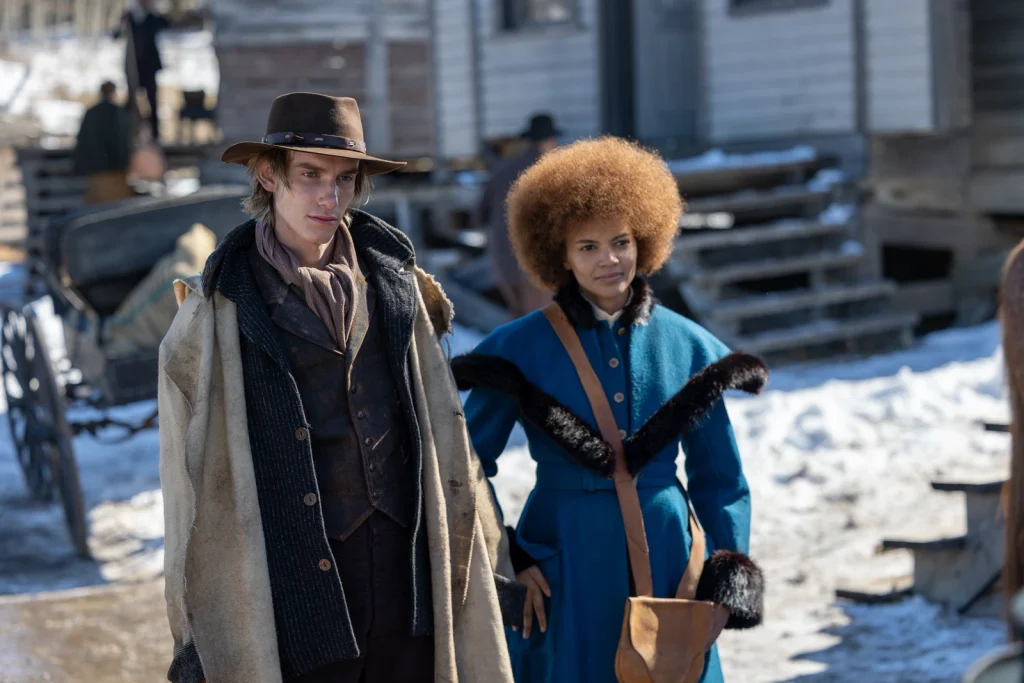
Members of the rescue party in The Thicket. Courtesy of Samuel Goldwyn Films.Why Lula Is Still in Danger
Lewis resisted the idea that being a woman would keep Bill from killing Lula. In that same Contending interview, she described a captor whose feelings could include care and cruelty together. She treated Lula’s resemblance to something vulnerable in Bill as a source of danger, rather than a dependable reason for mercy.
That is where the casting change becomes worth discussing. Recognizing yourself in another person can encourage tenderness, but it can also make that person unbearable to you. Lula has no control over which response she gets. Reading Bill’s wounds as a promise that she will protect her captive would put more trust in the outlaw than the actress playing her does.
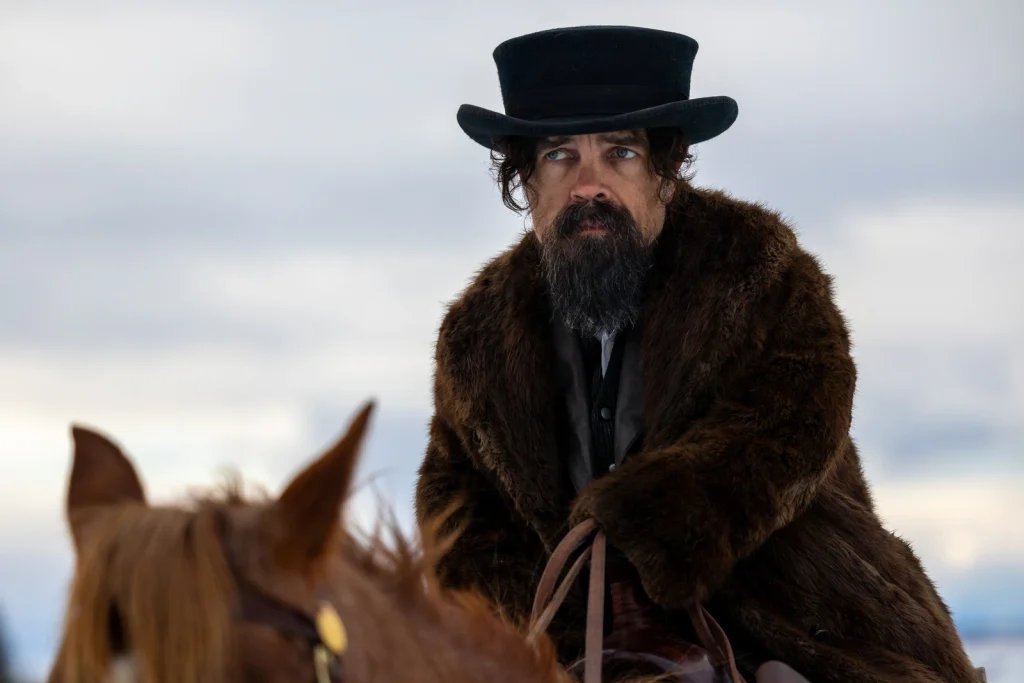
Courtesy of Samuel Goldwyn Films.How the Novelist Responded to Lewis’s Casting
Lansdale initially disliked the news that Lewis would play Bill, then changed his mind. His Texas Monthly interview needs a small but important qualification: he had seen clips and trailers, not the complete film. His favorable comments concerned what he had seen of the casting, so they should not be stretched into an endorsement of every adaptation choice.
He also connected Bill and Reginald through the ways their appearances set them apart from other people. His comparison gives us a second character to consider when reading Bill’s suffering as an explanation of her violence. Reginald has also been treated as an outsider, and he is the one Jack turns to for help. There is room to understand what has hurt Bill while still judging what she does to Lula.
Lewis’s damaged voice gives Bill a history we can hear. What interests me about her account of the role is that she also leaves Lula in danger. A sympathetic explanation for the voice does not settle what its owner will do next.