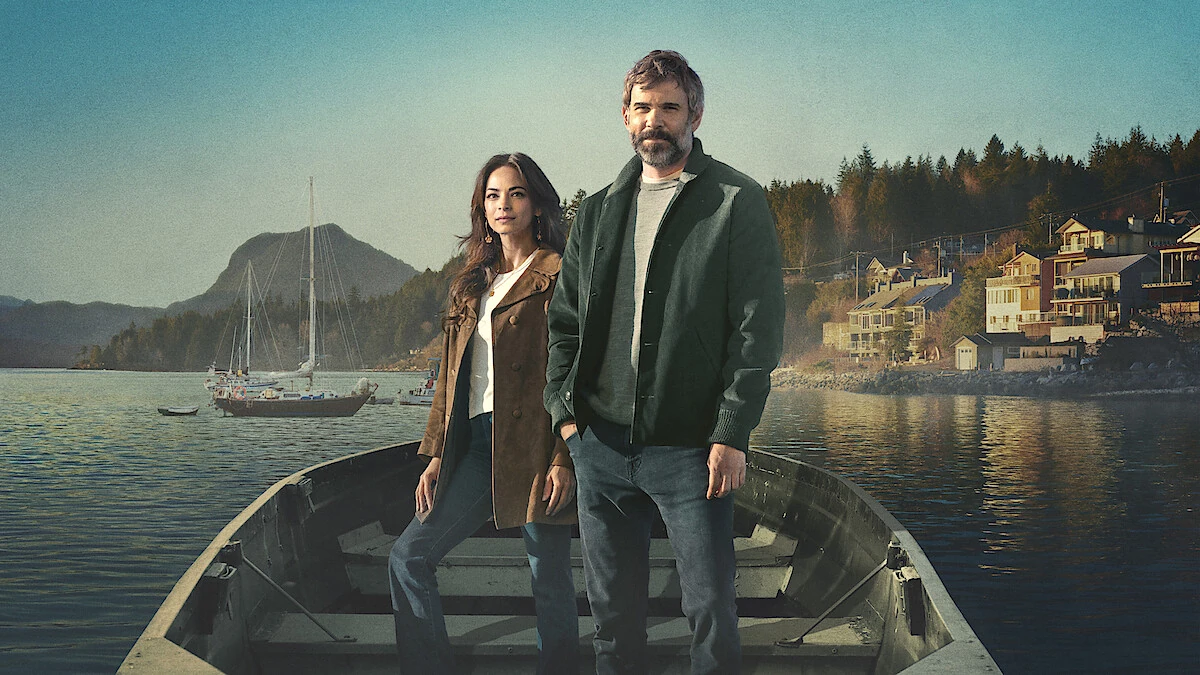
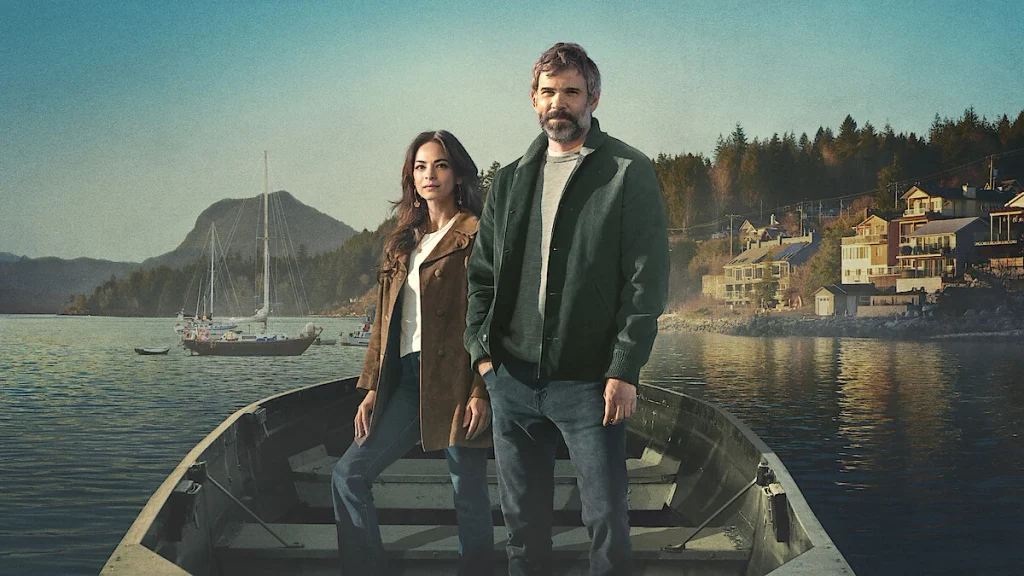
Murder in a Small Town is filmed mainly in Gibsons and nearby communities on British Columbia’s Sunshine Coast, in Canada. Its fictional world places Gibsons in Washington state. There is another location to keep straight: L.R. Wright’s original Karl Alberg novels were set in Sechelt, a different town on the same Canadian coast. The series borrows a real place, changes the books’ central town, and gives its screen version an American address.
That helps explain why a location search can produce answers that seem to disagree. A Canadian filming address and a Washington setting can both be correct. Police chief Karl Alberg, played by Rossif Sutherland, arrives seeking a quieter life and begins a relationship with librarian Cassandra Lee, played by Kristin Kreuk. Understanding where their town comes from is useful; treating every detail of that town as a documentary record would be a mistake.
Filmed in Canada, Set in Washington
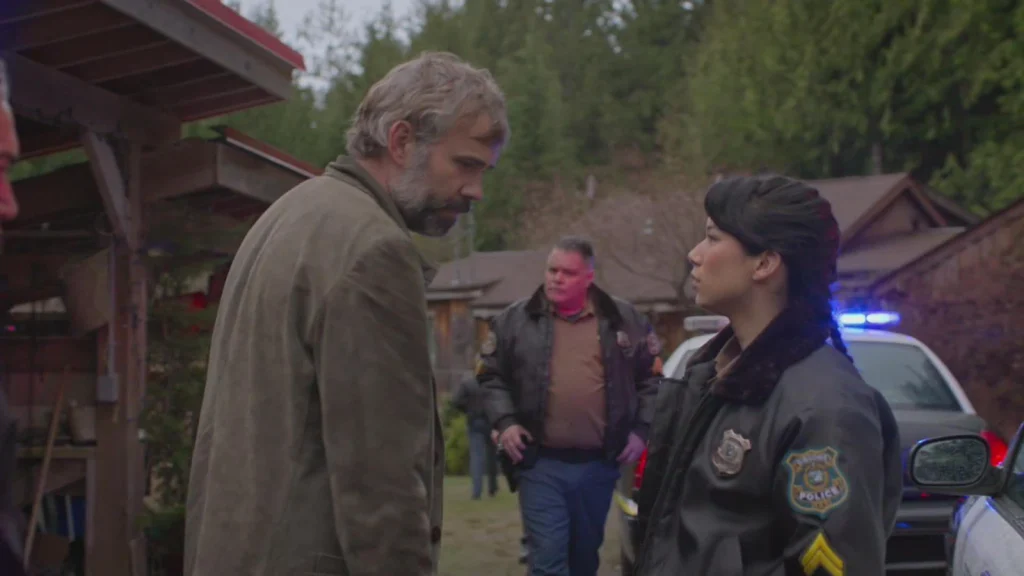
Showrunner Ian Weir explicitly separates the two locations in his Time Out México interview: the production films on Canada’s west coast, while the fictional story takes place on Washington’s west coast. Sunshine Coast Tourism’s filming guide makes the same distinction. For finding the real buildings and waterfront, British Columbia is the place to look.
The series keeps the name Gibsons while changing its country. That lets a recognizable Canadian harbor become part of an invented American community. The real buildings help locate the production, but they cannot tell us how its fictional police department operates or how closely its civic life follows the real town.
Why the Series Moved from Sechelt to Gibsons
Producer Nick Orchard gives a concrete reason for choosing Gibsons: he preferred its hills and slopes to Sechelt’s flatter layout. In his Hollywood North Magazine interview, he describes Gibsons as the more cinematic location. He also knew the area from working on The Beachcombers, the earlier Canadian series associated with the town.
Orchard is describing the shape of a place: changes in height, sloping streets, and the possibilities they offer a camera. That gives his account a specificity that “beautiful coastline” would miss. A location has to support repeated filming, and his explanation identifies a physical feature he wanted to keep working with.
Sechelt has not vanished from the production. The tourism guide identifies locations there as well, including Cowrie Street and Twenty Two Taphouse. So “the books used Sechelt, the show uses Gibsons” is a useful starting distinction, but an incomplete account of the filming. The production draws on the surrounding coast rather than staying inside one town’s boundary.
The Real Places Behind Karl and Cassandra’s Town
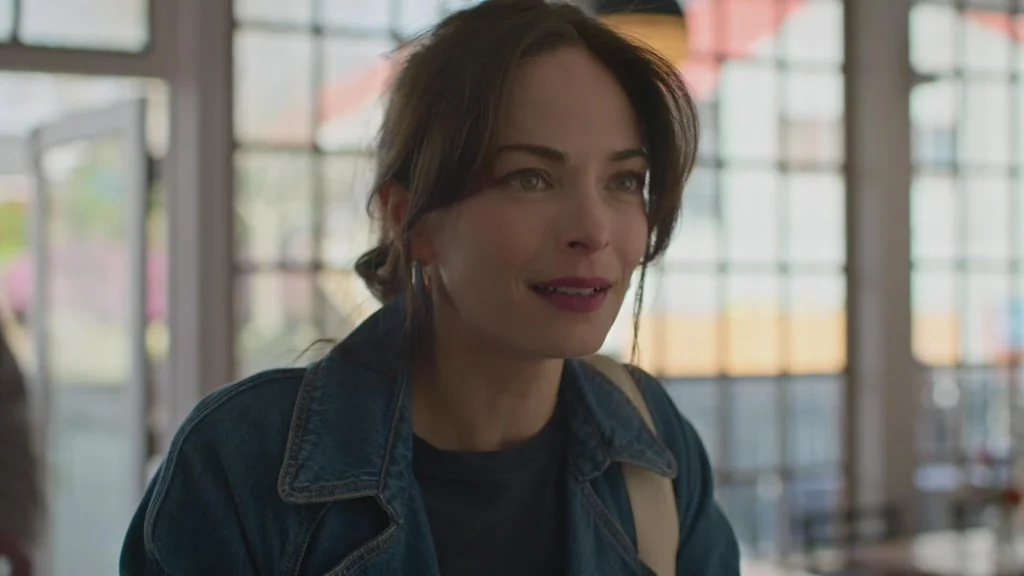
Molly’s Reach is one of the clearest connections between the real Gibsons and Karl and Cassandra’s relationship. Sunshine Coast Tourism identifies it as their first-date location, a connection also noted in Us Weekly’s location reporting. Their meeting place is a real local establishment, even as Karl’s work complicates their relationship.
The tourism guide also identifies Gibsons Public Market in scenes involving a painting and, in the second season, council meetings. Those uses interest me because they give the town activities beyond the next police investigation. People meet, browse, and make public decisions in spaces that can also carry the drama. A market can help establish what the characters have to return to after a case.
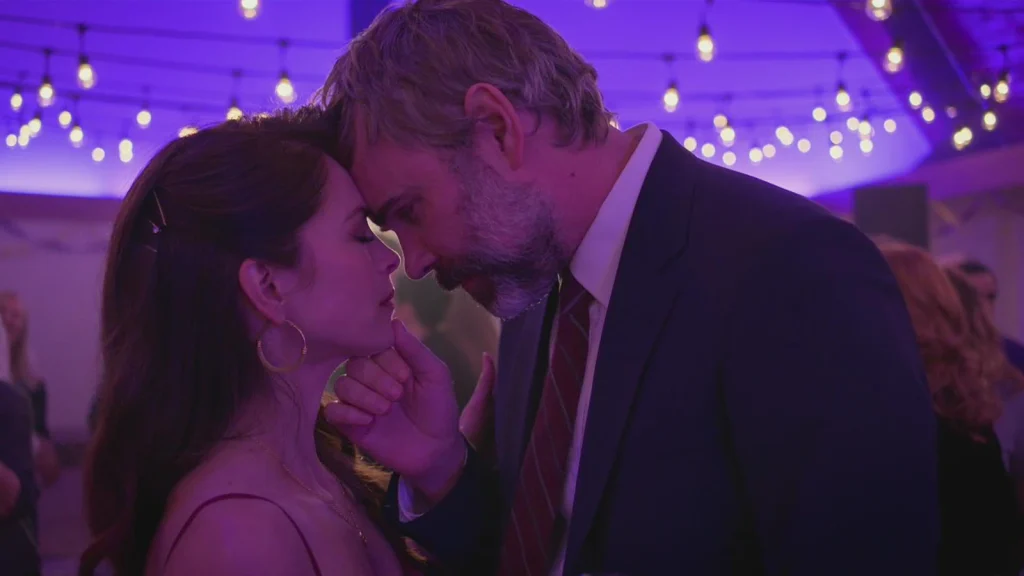
Weir has described Karl and Cassandra’s relationship in terms of loneliness and finding connection. That intention gives the location details a purpose beyond spotting a familiar sign. I would pay attention to the places where Karl is allowed to stop being the police chief for a while, and whether Cassandra has room for a life that is not organized around his cases. Their town needs somewhere to have a conversation as well as somewhere to discover a body.
For the practical answer, look to Gibsons and the wider Sunshine Coast in British Columbia. For the story, keep Washington and the novels’ Sechelt separate. Orchard’s account of choosing the hills makes the move feel like a specific visual decision. The more useful question, once those locations are clear, is what the series lets its people do in that landscape when they are not solving a murder.