
John Castle has a reason to knock on Mrs. Caldwell’s door that goes beyond telling her how he survived. In Lucky Strike, she helped build the radio that kept him connected to his unit behind enemy lines. He comes to thank her and help resolve the pension dispute her former employer has left her fighting. It is an unusually practical destination for a war story. After everything the soldier has endured, his gratitude has to make room for a problem that belongs to someone else.
That makes the visit worth thinking about beyond its obvious warmth. A grateful man bringing good news could easily become another occasion to admire him. But Caldwell’s situation complicates that pleasure. She should not need to have saved this particular soldier’s life to receive what she is owed. Castle’s intervention can be generous and necessary while also exposing how unfair it is that she needs him. The ending becomes more interesting when we allow those feelings to sit together, rather than asking the check to settle everything.
The Person Behind the Radio
The radio gives Castle a connection he cannot create through courage or resourcefulness alone. Scott Eastwood’s soldier is wounded and separated from his men during the Battle of the Bulge; equipment made far from the fighting helps him reach people he cannot see. The film’s survival premise makes that dependence concrete. Being capable does not stop him from needing someone else’s work to hold up under conditions that worker will never witness. His determination matters, but it operates alongside a trust he has little choice about placing in the radio.
Director Rod Lurie told Nell Minow at RogerEbert.com that the story behind the film included a soldier seeking out the woman who made the radio that saved him. That account gives the visit a place in the film’s origins, rather than leaving it as an explanation added after the action. It also offers a useful way to read Castle’s attention. He wants his gratitude to reach an actual person. A manufacturer’s name would tell him where the equipment came from without telling him whose working day had become so consequential to his own life.

There is something vulnerable in making that connection after the danger has passed. Castle could carry the radio’s usefulness into a story about his own endurance and leave its maker anonymous. Seeking Caldwell out allows another person into that account. She did not know him while doing the work, and the work did not have to be an act of personal affection to matter to him. Their meeting gives him a chance to acknowledge a kind of care that existed before either of them knew the other’s name.
The Pension Is Already Hers
Caldwell’s pension changes the meaning of what Castle brings her. Money withheld by an employer is different from a reward a visitor decides to bestow. Thinking of the payment as a lovely surprise risks overlooking the years in which she had reason to expect it. The question is not simply whether Castle is kind enough to help. It is why an employee’s claim can remain unresolved until someone with more influence takes an interest. Her frustration belongs in the scene as much as his gratitude does.
In his Behind the Lens interview, co-writer and producer Marc Frydman connects the visit to the veteran’s later influence over Army purchases. That influence gives him a way to press the company into a settlement. Frydman is recounting the story behind the screenplay, not supplying independent documentation of every event in the film. Still, his account clarifies the choice being dramatized: the man who once depended on the equipment can now make himself useful to the person who helped produce it.
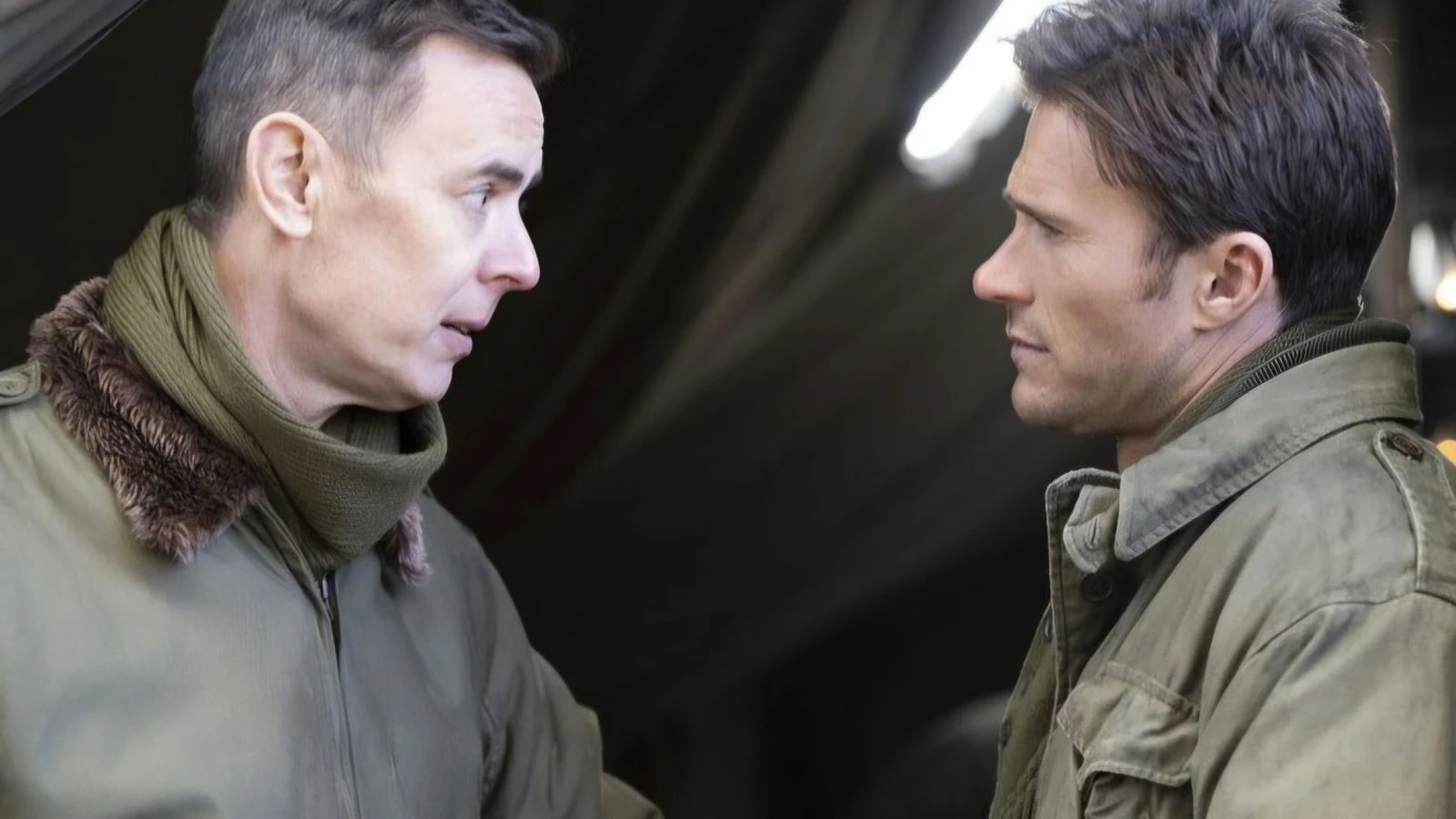
I find that use of influence more convincing than gratitude expressed only as praise. Admiration asks little of the person offering it when nothing else has to change. Castle takes an interest in an obstacle Caldwell has been unable to remove, and his connection to the company becomes useful on her terms. It is a limited intervention, but its limits give it some weight. He cannot repay a life with a check. He can help stop an existing injustice from continuing, which is a more modest and more specific thing to attempt.
Caldwell Deserves More Than a Place in His Story
Caldwell’s importance also raises a question about how much of her life the film allows us to see. In his review, Robert Daniels objects to the way the film introduces her circumstances and then spends most of its time elsewhere. That criticism is worth keeping beside the sympathetic reading of Castle. A story can recognize a woman’s contribution while still giving us far more access to the man who benefits from it. The visit does not automatically correct that imbalance simply because his intentions are good.
Nor should Caldwell have to become an explanation for whatever peace Castle may find afterward. Her claim matters before he arrives. She has a history with the company that cannot be reduced to its eventual connection with a soldier, and receiving payment need not mean that her feelings about those years become simple. Leaving room for that possibility makes her more than the grateful recipient of his generosity. It lets the encounter belong to two people whose needs overlap without becoming the same.
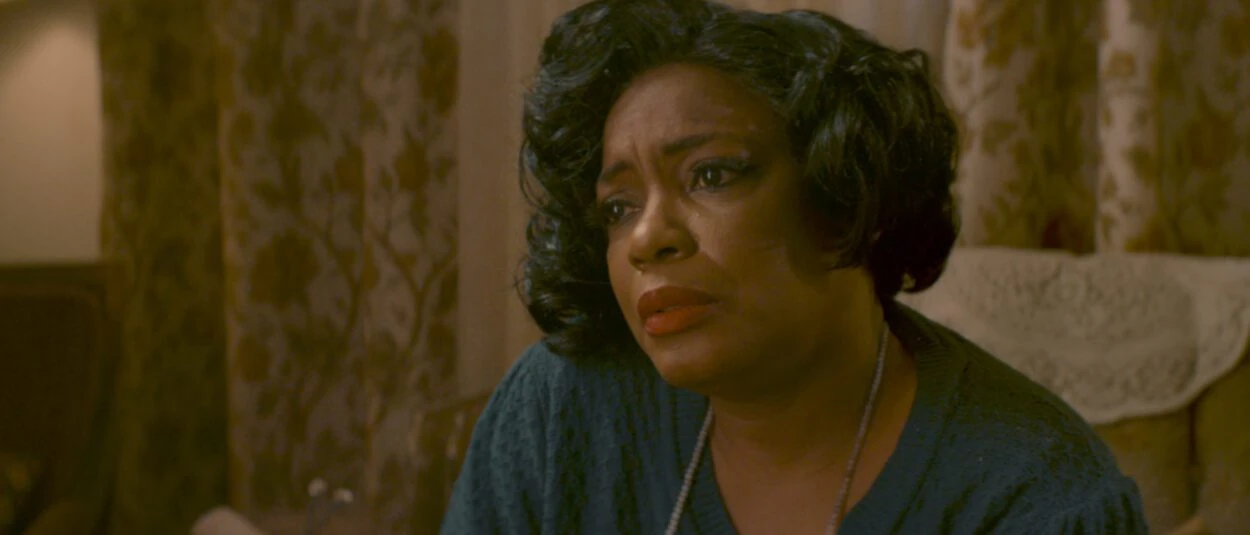
Castle does not have to stop being the soldier who made it home for Caldwell’s work to receive its due. By seeking her out, he carries his gratitude into a part of her life that has nothing to do with getting him home. He reaches her door with a story she could not have known and assistance she should not have needed to wait for. There is warmth in that meeting, certainly. There is also the overdue relief of somebody finally taking her problem seriously enough to do something about it.