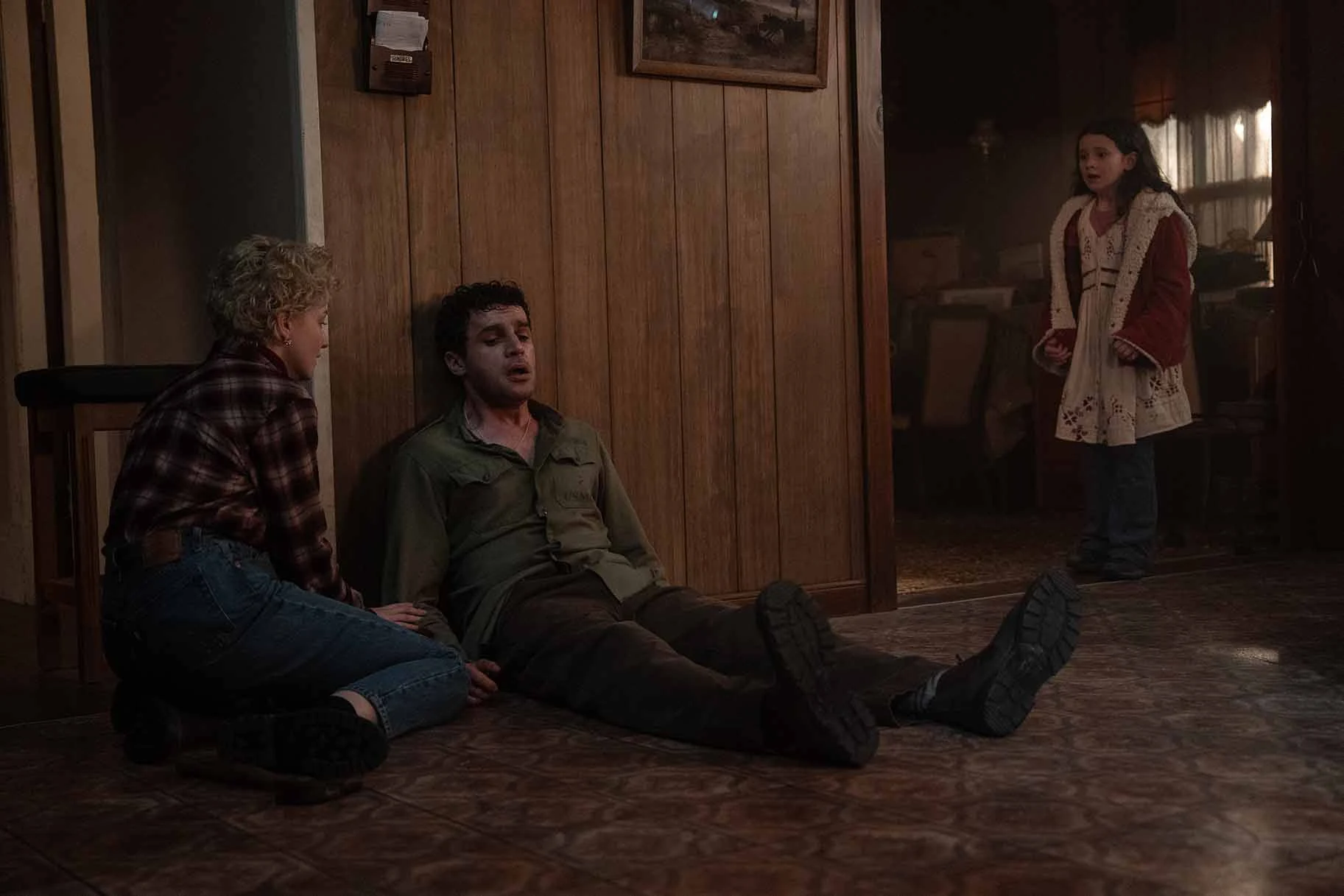
Blake loses the ability to understand his family in Wolf Man because the infection changes how he perceives human speech. His wife and daughter can still speak to him, but their words become unintelligible as his transformation progresses. That distinction gives Leigh Whannell’s 2025 film a particular kind of horror: someone can be close enough to talk to, and still be unable to receive what you are saying.
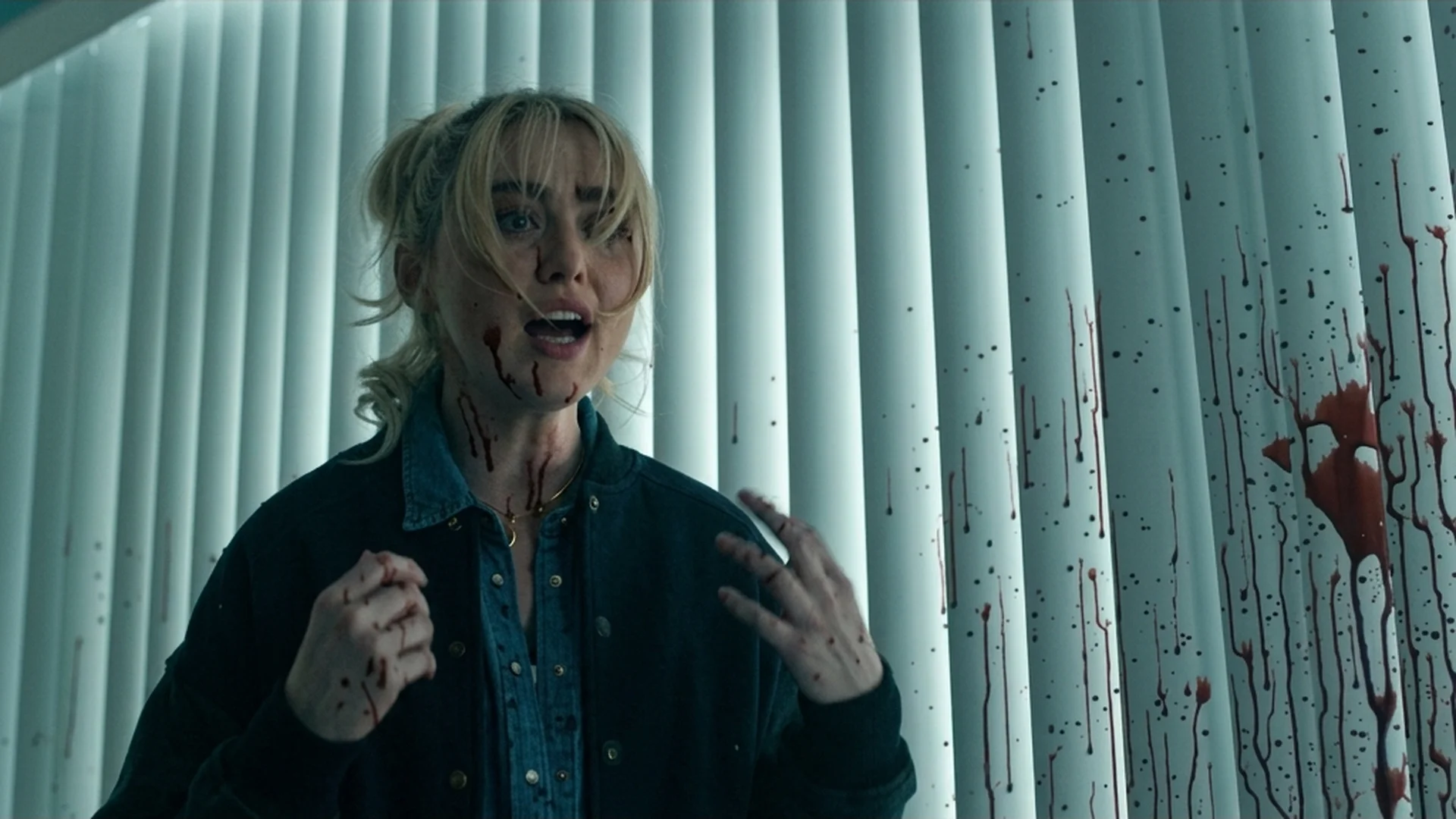
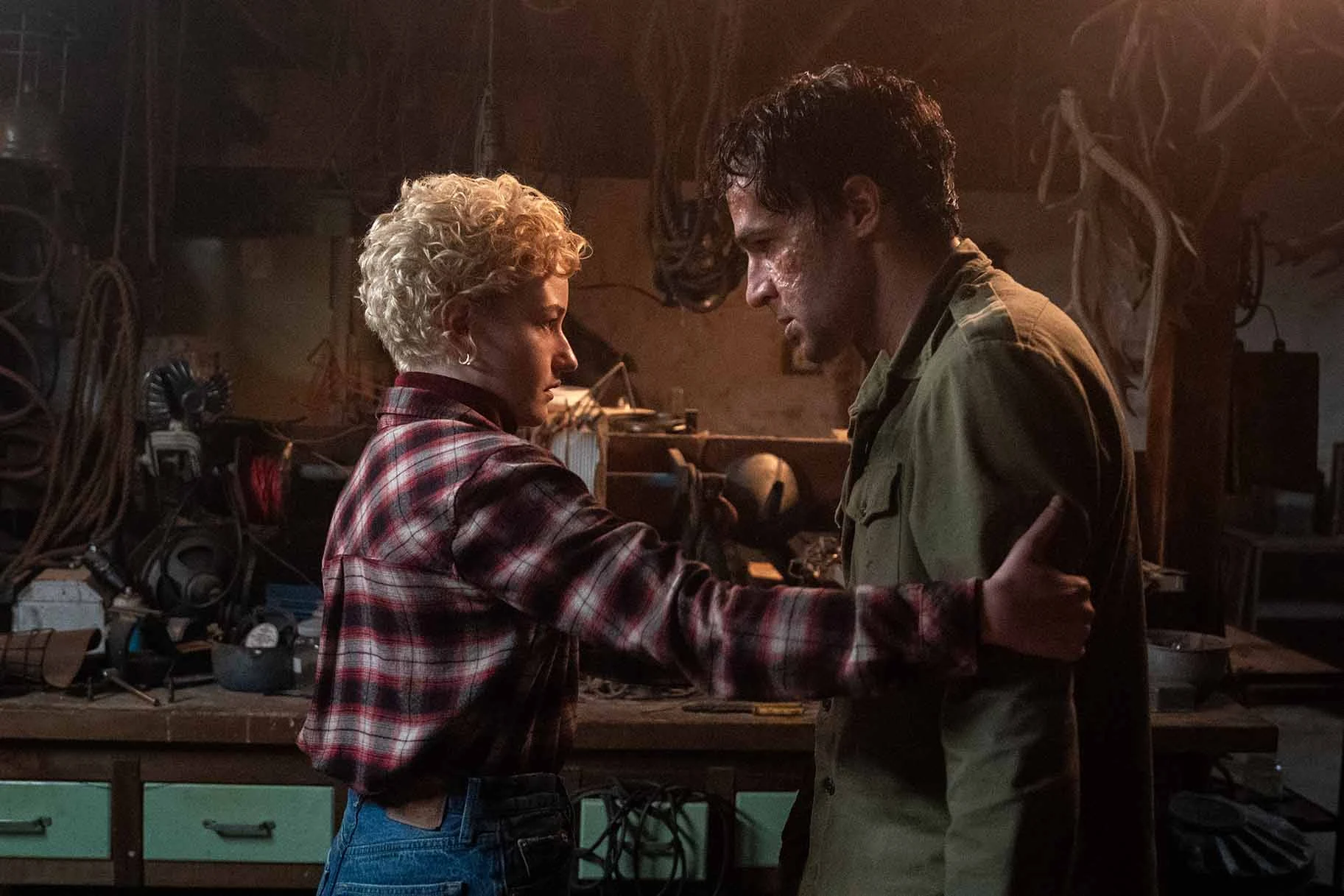
Christopher Abbott plays Blake, who takes his wife Charlotte, played by Julia Garner, and their daughter Ginger, played by Matilda Firth, to his childhood home in rural Oregon. After an attack, the family takes shelter as Blake begins to change. The filmmakers’ accounts of the sound and visual design offer a useful way to read that change. The family’s difficulty communicating becomes something the soundtrack and image can express directly, without another argument explaining what has gone wrong between them.
Why Blake Can Hear Voices but Cannot Understand Them
Blake’s loss of language is deliberate sound design. In his interview with The AU Review, Whannell explains that the team recorded dialogue with the actors and layered it to create the distorted speech. He wanted the voices to feel close. Making them sound distant would suggest that Blake simply needed to move nearer or hear more clearly; the intended problem was that human language itself was becoming inaccessible to him.
That choice changes what an ordinary line of dialogue can do. A voice normally tells us both that someone is there and what they want. Separating those functions leaves the presence intact while removing the explanation. Charlotte can be addressing her husband, yet the familiar act of talking offers no reliable way to reach him. Raising her voice would not necessarily solve the problem. The relationship has lost a tool it normally depends on.
At a screening Q&A reported by SYFY WIRE, Whannell said that an image of someone speaking incomprehensibly helped him find his approach to the film. The difficulty understanding another person was already central to his conception of the monster.
How the Changing Sight and Sound Put Us in Blake’s Position
The altered voices belong to a broader shift in perception. In a separate interview with Zavvi, Whannell describes researching the senses of dogs and wolves while developing the film’s sound and color palette. His interest was in how a familiar environment might register differently to another creature. He also acknowledged the limits of knowing what an animal’s experience is actually like. The result is a cinematic interpretation of altered senses, rather than a literal demonstration of wolf biology.
This matters because heightened senses can sound like an upgrade when listed on their own. More sensitive hearing or an altered view of darkness might seem useful for surviving a threat. Put those changes beside the loss of understandable speech, however, and the advantage becomes less straightforward. Blake can gain access to aspects of his surroundings while losing access to the people trying to help him. More sensory information does not guarantee a more usable picture of his situation.
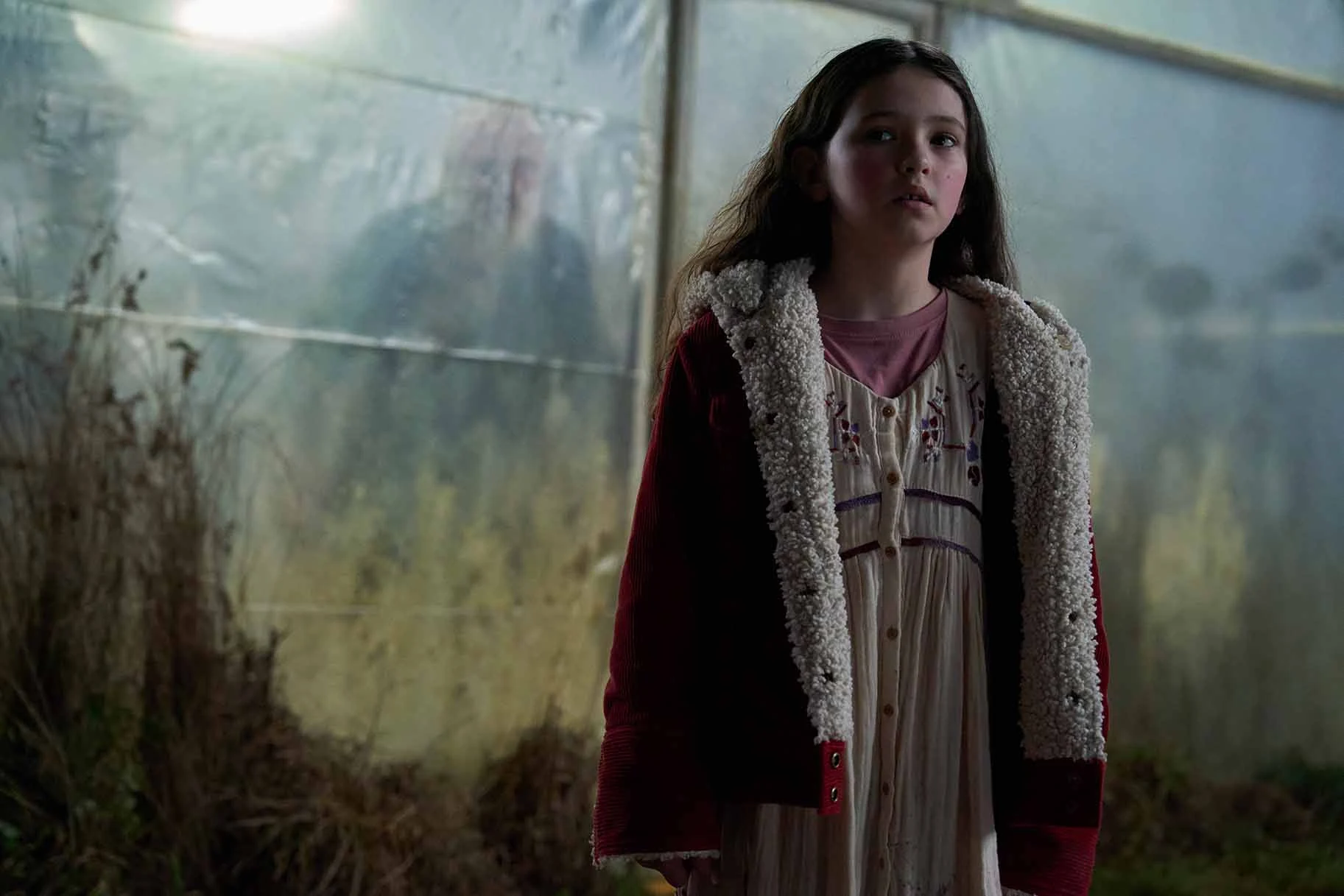
The shift between perspectives also lets the same encounter carry different dangers. From Blake’s side, the problem includes confusion: the world he uses to orient himself is changing. From Charlotte’s side, she must respond to the changing man in front of her. Neither position provides the whole encounter on its own. Moving between them gives the transformation two distinct human costs, without requiring either character to explain the other’s experience.
The Marriage Problem Becomes a Physical Barrier
Co-writer Corbett Tuck gives the communication theme a clear origin in The AU Review interview. She describes a marriage coming apart and the idea of partners no longer hearing or seeing one another in the same way. The changing perspectives were part of that early conception. This is useful context for the distorted voices, but it should not turn the infection into a punishment for a bad marriage. The literal danger and the relationship metaphor operate together.
Whannell’s BFI interview adds his anxiety about parenting during lockdown to that context. He describes struggling with the demands of looking after his children and feeling that he was failing them. Those concerns help explain why this monster story stays so close to a family. A parent’s intention to protect does not settle what the child is experiencing. Blake’s predicament makes that gap especially severe because even the ordinary work of explaining himself becomes harder.
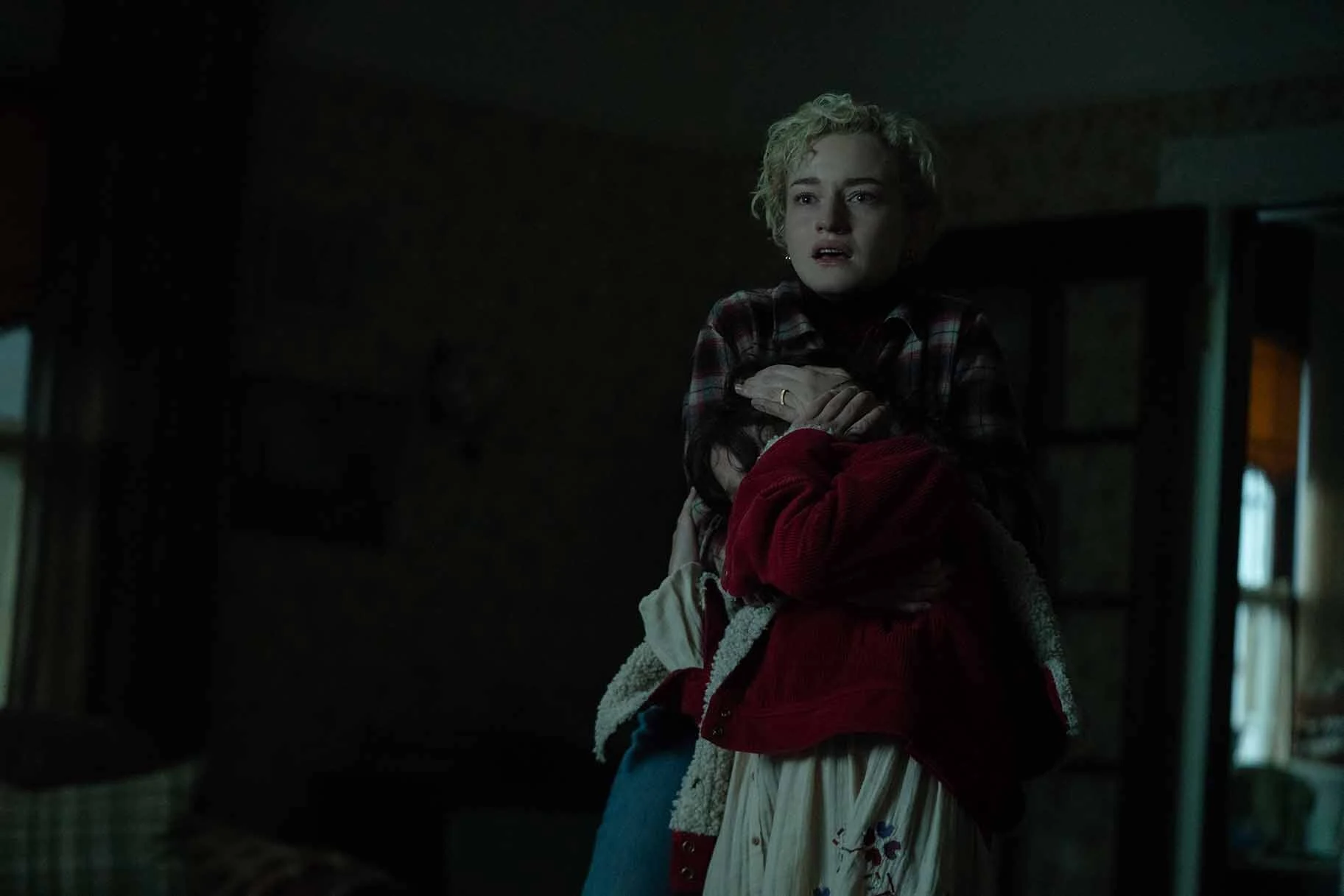
The useful distinction is between refusing to listen and losing the capacity to understand. A relationship can contain the first problem before the attack; the transformation introduces the second. Treating both as the same failure would make the film’s central device much less troubling. An argument leaves room for another explanation, a correction, or an apology. Once speech stops conveying meaning, those familiar options become uncertain.
That is the detail worth following in Wolf Man: whose hearing and vision organize a given moment, and what becomes unavailable when the perspective changes. The makeup makes Blake look unfamiliar to his family. The sound lets us approach the same change from his side: the people he knows are still speaking, but he can no longer make sense of what they say.