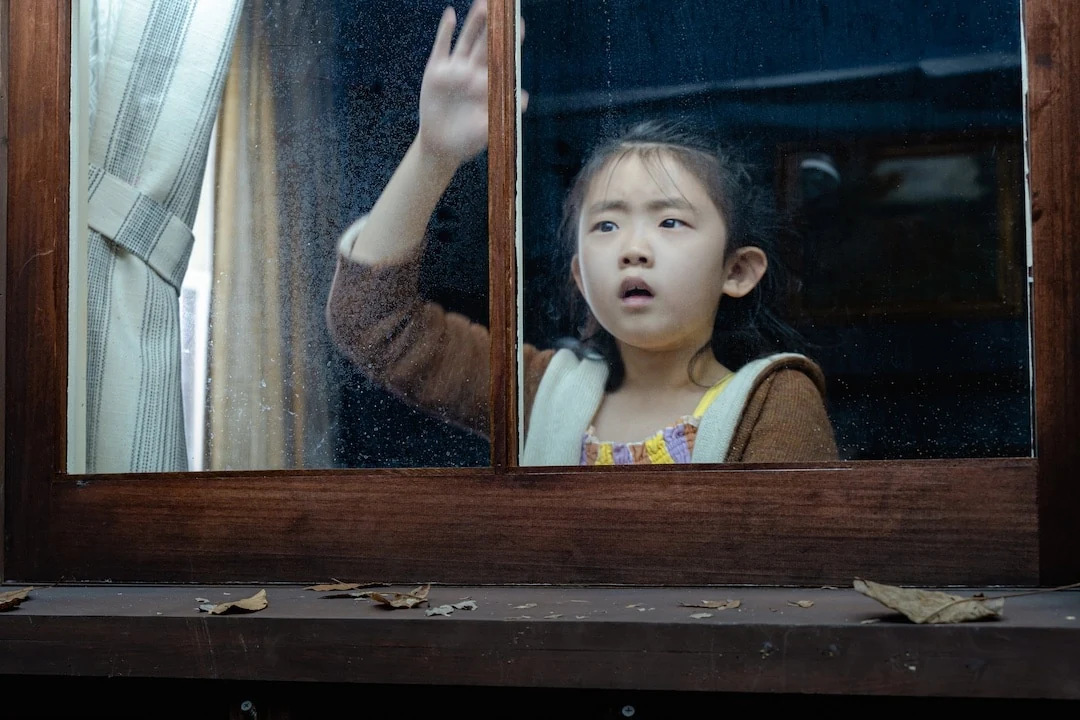
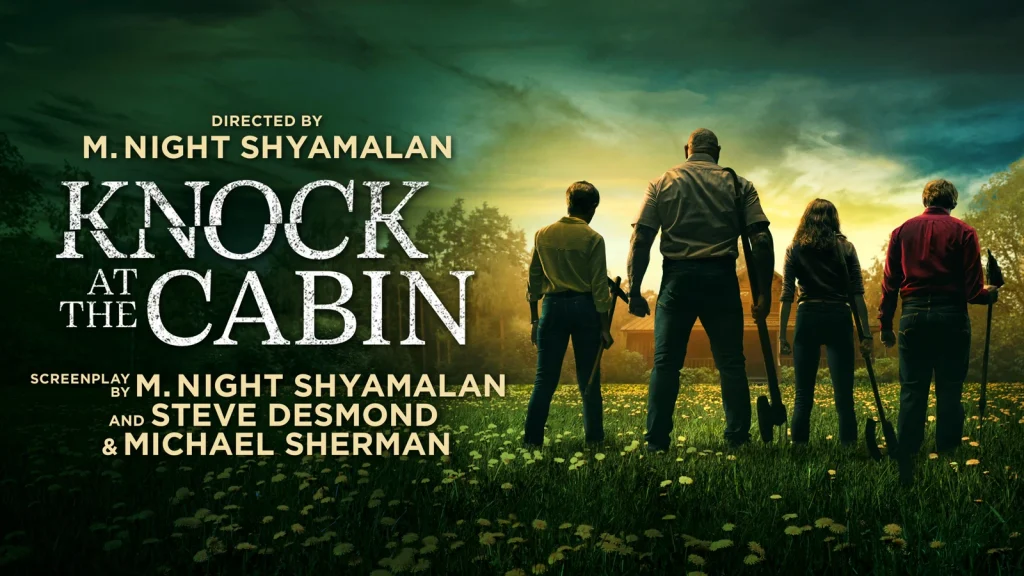
Wen survives Knock at the Cabin. Her two fathers, Eric and Andrew, are married. Four strangers hold the family hostage and claim the world will end unless they sacrifice one of their own. At the film’s end, Eric offers his life and asks Andrew to shoot him. Andrew does, then leaves with Wen as the disasters subside. Paul Tremblay’s novel, The Cabin at the End of the World, makes a different family member die: Wen is accidentally shot, and her fathers refuse to sacrifice anyone else. That change does more than spare a child. It gives the movie’s parents something their counterparts in the book have lost: a daughter whose future still depends on them.
Both versions put Eric and Andrew in the same bind: they are trapped with Wen and told to weigh one family member’s life against everyone else’s. But once the endings diverge, asking which parents make the better choice becomes a misleading comparison. They no longer have the same choices available.
In the Book, Wen’s Death Does Not Count
Wen dies in the novel during a struggle between Andrew and Leonard, one of the intruders, over a gun. Her death is an accident, so it does not meet the strangers’ demand for a willing sacrifice. TIME’s comparison of the two endings and SYFY’s account agree on that crucial distinction: losing their daughter does not release Eric and Andrew from the demand to kill again.
The fathers ultimately leave together without making that additional sacrifice. The book does not settle the world’s fate. Their refusal, however, has a specific reason beyond uncertainty about the invaders. A demand that dismisses Wen’s death as insufficient has given them reason to reject whoever might be making it.
This is where the practical rules become intolerable. The family has suffered the loss the strangers threatened, yet the rules treat that loss as a failed procedure. Eric and Andrew are still expected to participate. Their remaining relationship becomes something they can protect by refusing, even though they cannot undo what happened to Wen.
Eric’s Sacrifice Leaves Wen a Future
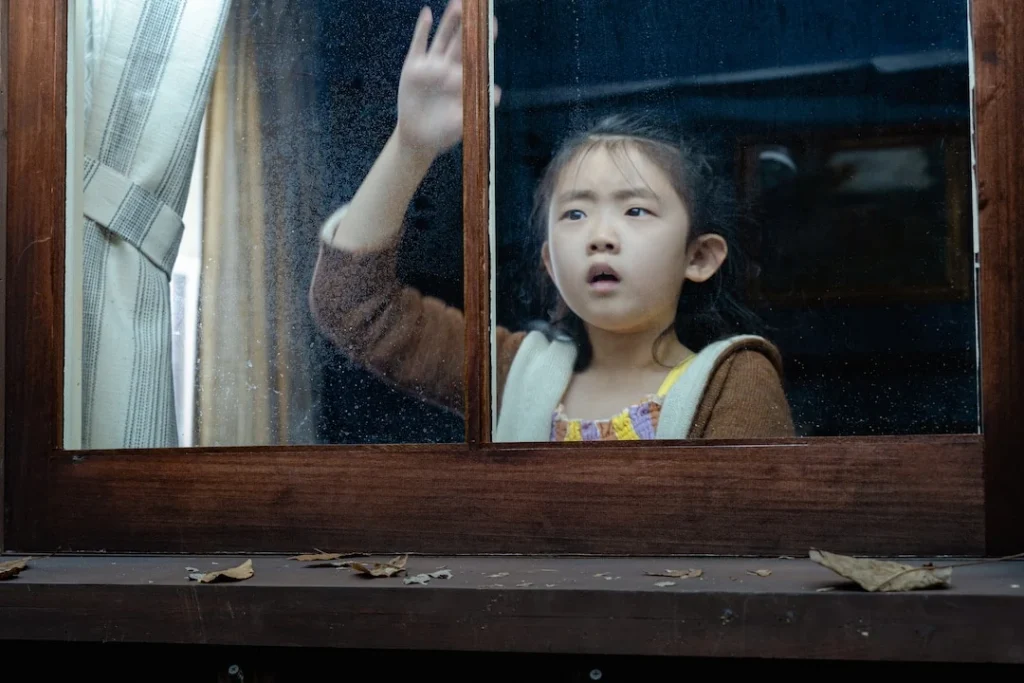
In the movie, Eric accepts death because he wants Andrew and Wen to have a life after the cabin. SYFY’s ending account describes his appeal to Andrew and the news reports the survivors later encounter in a diner. Those reports show the catastrophes easing. The film supplies strong support for the conclusion that the sacrifice worked, while leaving the power behind the ordeal unexplained.
For Eric, saving humanity includes saving the ordinary world his daughter might grow into. That makes his decision easier to understand without making the situation fair. A parent can act lovingly inside a cruel arrangement. Accepting the sincerity of that love does not require accepting that the arrangement should ever have existed.
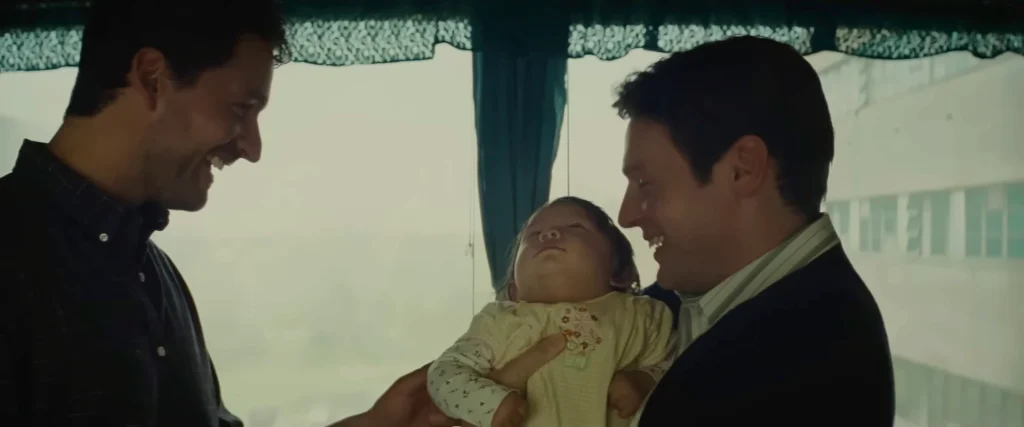
Andrew also has to carry out the act and then continue raising Wen. Describing the ending only as Eric’s sacrifice leaves his husband’s burden underexamined. One father dies for the future he imagines; the other must live through the work and grief that future contains.
Why Keeping Wen Alive Changes the Argument
Keeping Wen alive gives the film a concrete reason for Eric to agree to the sacrifice. Den of Geek’s Rosie Fletcher reported that Shyamalan discussed the dilemma with his own family. Thinking about the youngest daughter’s chance to grow up and experience life changed their response. That account helps explain the adaptation’s concern with the child’s future.
Fletcher reads both versions as stories about love, and that continuity is convincing. The harder question is what love asks the parents to do. In the novel, another death would take away the surviving partner after their child is already gone. In the film, Eric believes his death can preserve their child’s life. The adaptation has changed the family’s circumstances before it changes their answer.
Calling the movie simply happier therefore misses the cost. Wen is spared, but she survives in a story where her father’s death appears to have been necessary. The book’s fathers endure an appalling loss and still refuse the next demand. There is comfort and horror in each outcome, attached to different things. Counting who survives cannot settle which ending offers more hope.
What Remains for Andrew and Wen
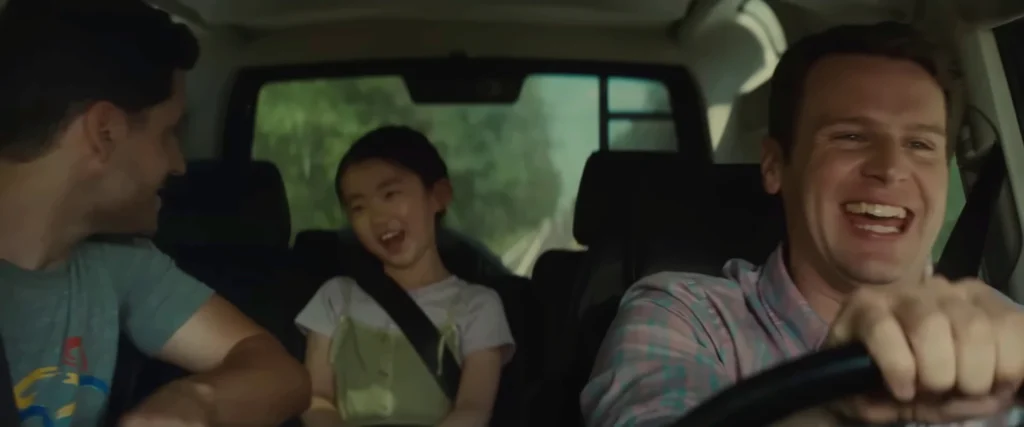
The movie returns to “Boogie Shoes,” the song associated with the family’s earlier happiness, as Andrew and Wen drive away. It gives them something familiar that can survive Eric’s absence. A shared song is a modest thing to carry out of a story about the end of humanity, which is why it makes a useful final detail: this family still has a history together.
Saving Wen allows the film to end with parenting still to be done. Andrew has a child to take home, memories to preserve, and a loss they will have to understand together. That is the consequence of the rewritten ending I find most persuasive. Eric can imagine a future for Wen. Andrew now has to help her live it.