
Katie Wilcox’s Shark Tank deal in the 2026 family comedy The Breadwinner is fictional. So is the Star Minder, the household organizer she pitches. The Sharks and their set are real, but the investment exists to send Katie (Mandy Moore) on a business trip and leave her husband Nate (Nate Bargatze) in charge of their three daughters. The important turn is not where the cameras stood. It is what happens to a family once Katie’s work takes her away from home.
The movie borrows the recognizable pressure of a televised pitch, then turns to the less public work of keeping a household running. It is easy to confuse the scene’s real participants with a real business success. Separating them lets us see what the invented product is doing for the story—and why the family’s role reversal starts with Katie’s idea rather than Nate’s mistakes.
Real Sharks, Fictional Business
In an interview with SlashFilm, director Eric Appel said the film crew shot on the actual Shark Tank set after the show’s team had finished its work for the day. Mark Cuban, Kevin O’Leary and Lori Greiner were among the Sharks involved, according to interviews with Moore and Bargatze. Those details establish which part of Katie’s pitch belongs to the real show: its setting and some of its familiar faces.
The Star Minder and Katie’s investment deal are different. The product is an invention for the screenplay, even though the actors faced real investors. Moore and Bargatze told People that they had scripted lines; Appel said the Sharks were also encouraged to ask the questions they would put to an actual entrepreneur. The participants could react naturally without turning Katie’s fictional business into a real one.

Sony’s synopsis gives that imaginary deal a specific job. Katie’s business trip leaves Nate Wilcox (Bargatze) to care for their three daughters. The movie is not asking us to track a start-up’s sales; it is asking what changes when the person who organized the household is suddenly the one with a career opportunity outside it. That question carries the story well beyond the television studio.
The Opportunity Changes Two Jobs
The invention does more than remove Katie from the house. It establishes that her way of managing the family’s schedule has value outside it, too. The public pitch turns that skill into a business opportunity. The private consequence is that Nate must discover how many small decisions had been keeping their home on track. The same organizational work appears in two forms, and the movie’s premise asks us to notice both.
The title makes the swap sound simple, but the starting arrangement is already more complicated. Sony describes Nate as a salesman and Katie as the person holding together a home with three children. His paycheck may identify him as the breadwinner; her planning gives the family its daily structure. Star Minder turns that planning into a saleable idea. Once she leaves, Nate is not learning a job she never had. He is taking responsibility for work that had been going on alongside his paid job all along.
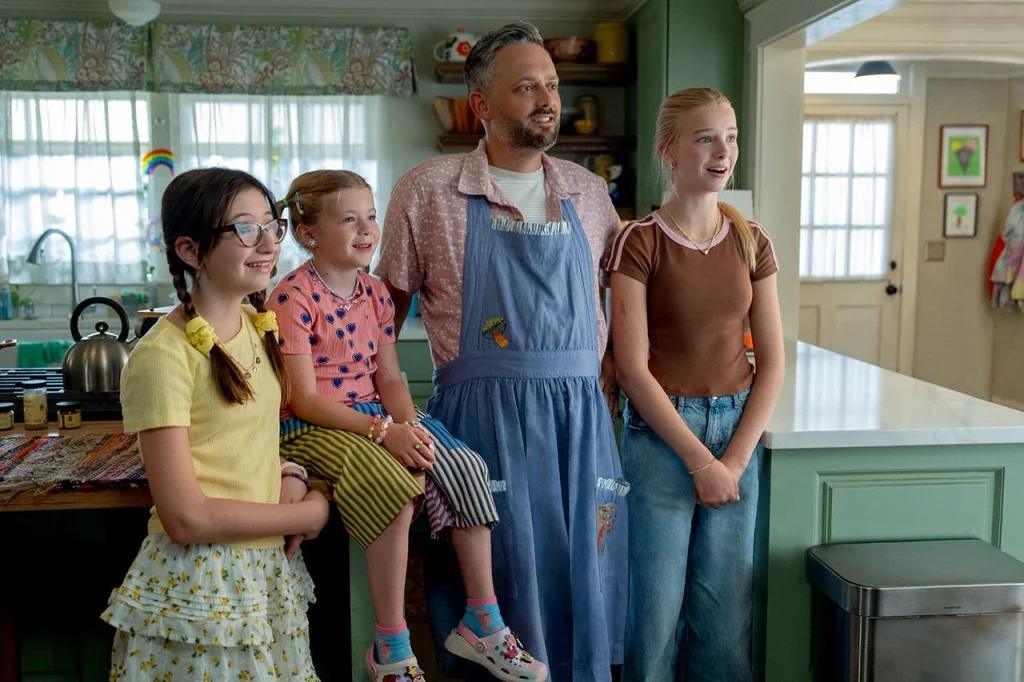
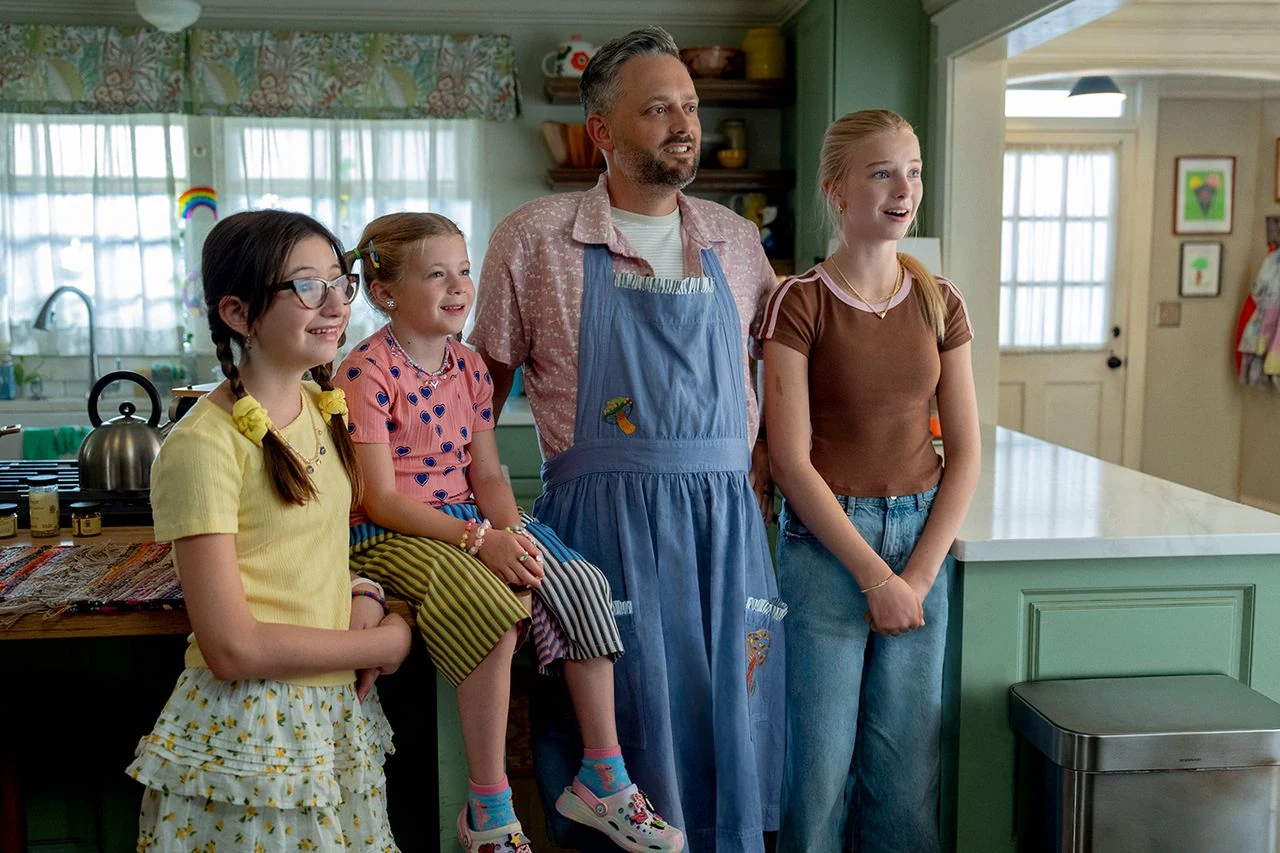
Two published stills make that change visible. At Katie’s pitch, Nate holds a snack beside her; in the kitchen, he wears a blue apron with their three daughters around him. He can stand next to Katie while her idea is judged, yet the family’s everyday decisions will soon be his to make. The apron makes the new job visible. Nate still has to understand the planning behind it.
Moore told People that she liked the story’s recognition of what mothers contribute at home, while noting that her own husband could take care of their children without the same confusion. That distinction keeps the comedy’s premise in proportion. Nate’s difficulties describe this character, not fathers as a group. The worthwhile question is whether his mistakes expose the planning behind an ordinary day or simply make Katie’s work the setup for another easy joke. Publicity can establish the intended role reversal; it cannot settle how well the finished film handles it.
Did Nate Bargatze Live This Story?
Some of Bargatze’s own parenting experience did make it into the movie. In an interview with People, he recalled a real call concerning his daughter’s school bus that became part of his stand-up; not knowing her school routine is one of the comic ideas he drew on. That does not turn the film’s Shark Tank deal into a piece of family history. His character is Nate Wilcox, while the investment and prolonged business trip belong to a fictional plot.
The Sharks may lend Katie’s pitch its familiar television pressure, but they are not the point of The Breadwinner’s story. Katie’s fictional opportunity changes who earns outside the home and who keeps life moving inside it. Nate’s harder assignment begins when the cameras are no longer on the pitch.