
If you are here for the short answer, the biological father is Emilio Martinez, played by Erik Hayser, a man from a relationship Maca kept buried for twenty years. My Daughter’s Father, the Mexican drama that arrived on Netflix on July 22 under its original title El otro padre, does not hide this for long. The premise practically demands the reveal early: a teenage girl needs a kidney, her parents line up to be tested, and the man who has raised her his whole life turns out to share none of her blood. The heart of the show is not the secret itself but the machine that drags it into the light, one that no amount of love or good intention can switch off.
The Setup Nobody Can Refuse
The engine of the story is medical, and that is what makes it merciless. Julieta, played by Azul Guaita, collapses and needs a transplant, and the fastest path to a living donor runs through her own family. Her mother, Maca, is a physician, which means she of all people can read what the compatibility panel will show before it shows it. Her husband Ricardo, played by Manolo Cardona, steps forward to be tested the way any father would, and the results quietly inform him that he cannot be the donor because he was never the biological parent. There is no villain pulling a lever here. A sick child simply needs an organ, and the only honest way to find one forces a private history onto a clipboard where two families can read it. That is the trap the show springs again and again: every choice that would protect the secret also puts Julieta’s life at longer odds, so the truth is not confessed but extracted, drop by clinical drop.

The Question It Keeps Circling
Here is the sharper thing under the telenovela surface. The affair is old news within the first episodes; what the story keeps pressing on is what a lab result is allowed to undo. Ricardo has been Julieta’s father for her entire life, at every school pickup and every fever, and a single line on a compatibility report reclassifies him as an outsider to his own daughter. The show keeps asking, without ever putting it this bluntly, whether fatherhood is a fact you can revoke. Emilio contributed the biology and none of the years. Ricardo has the years and none of the biology. The transplant needs one of those men; the family needs the other; and the cruelty is that the medical answer and the emotional answer point in opposite directions.
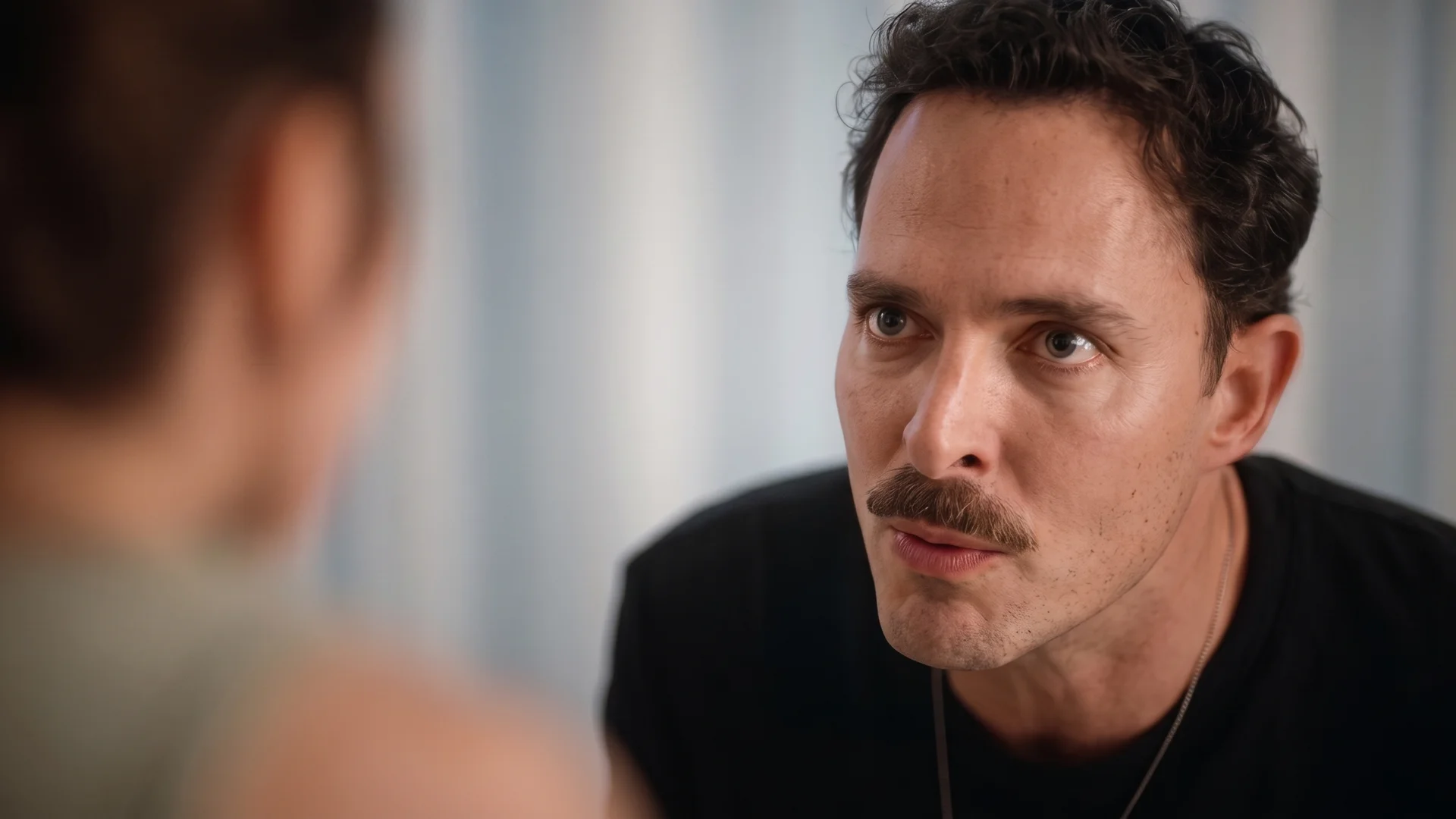
Is It Based on a True Story
For the question that always trails a premise this dramatic: no, it is not based on a true story. My Daughter’s Father is a scripted drama created by Roberto Stopello, built across ten episodes for maximum emotional pressure rather than adapted from a real case. That does not make the dilemma invented, though. Transplant medicine really does run on family compatibility, and paternity really does surface through it, sometimes to people who never wanted to know. The show simply takes a thing that quietly happens in real hospitals and turns the volume all the way up, which is exactly the telenovela tradition it belongs to.

Whether It Is Worth Your Ten Episodes
Honest verdict: this one lives or dies on its faces, and the faces mostly carry it. Silvia Navarro plays Maca as a woman being punished by her own competence, forced to run the tests that will expose her, and she is the reason the early episodes hold. The problem is length. Ten hours is a lot of runway for one revelation, and the middle stretch circles the same arguments more than once, with characters relitigating the betrayal until the emotional beats start to dull from repetition. The finale, titled The Limits of Forgiveness, is where the show finally decides what it believes fatherhood is worth against blood, and I would not spoil which way it leans. If you came for a taut thriller, temper that; this is a slow, teary family drama that trusts its cast to keep you seated. On the strength of Navarro alone, it mostly earns the chair. It is comfort food with a knife hidden in it, familiar in shape but sharper than it looks whenever it remembers the question at its center. That question, in the end, is the most modern thing about a very old-fashioned show: in an age when a saliva sample can rewrite a family tree, we have handed the definition of a parent to a laboratory, and the laboratory does not care who showed up for twenty years of birthdays.
If a family bending around a sick child’s medical need pulls at you, another recent drama put a boy’s illness and a second family’s refusal at its center and asked an equally uneasy question about consent.
And if it is the affair and its long aftermath that hooks you, another story this month set a wife’s old betrayal against the pull to forgive it.