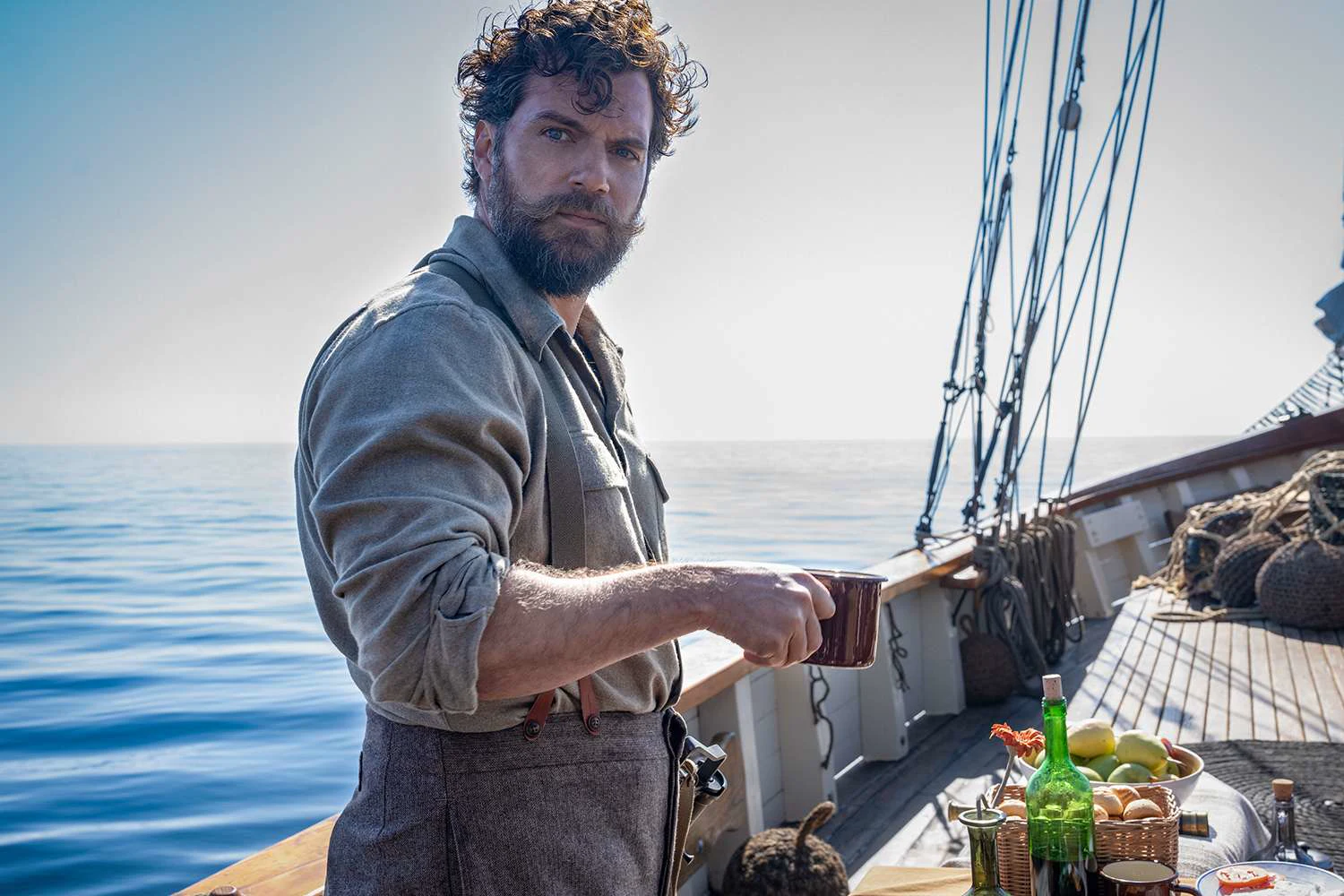
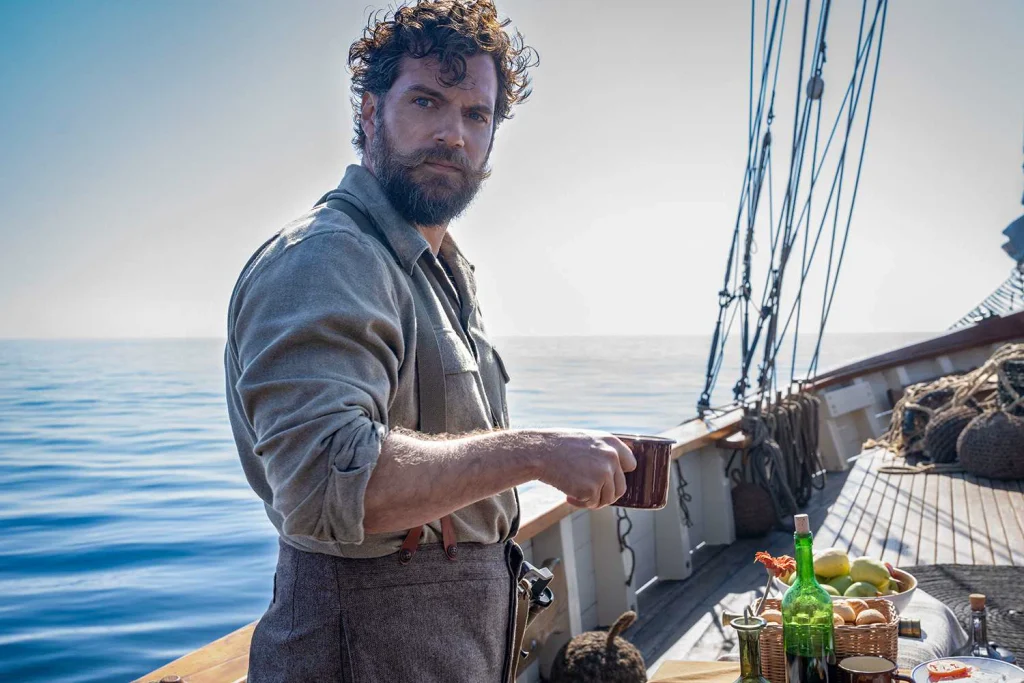
The mug is a good place to start. In a publicity photograph for The Ministry of Ungentlemanly Warfare, a bearded man stands beside a breakfast table on a boat, with calm blue water behind him. His gun stays at his waist while he holds his drink. It is an inviting image for a movie about a wartime mission. The filming location was Antalya, Turkey, standing in for West Africa. The sunshine, though, explains only part of the look.
Director Guy Ritchie and cinematographer Ed Wild were building an adventure with room for glamour. Wild’s production interviews make an interesting distinction: the boat exteriors were filmed at sea, while the interiors used a set. Considerable effort went into the physical setting without requiring the film to resemble a harsh wartime record. Those choices are worth separating before treating a convincing stretch of ocean as evidence that everything else is authentic.
The Camera Had to Fit on the Boat
In his interview with The Credits, Wild describes Antalya doubling for the story’s African setting. Contemporary reporting by Daily Sabah also places the production in Antalya. That establishes the location; it does not turn every picturesque corner of the region into a confirmed filming stop. A list of nearby beaches would tell us less about this production than the problem of finding somewhere to put the camera.
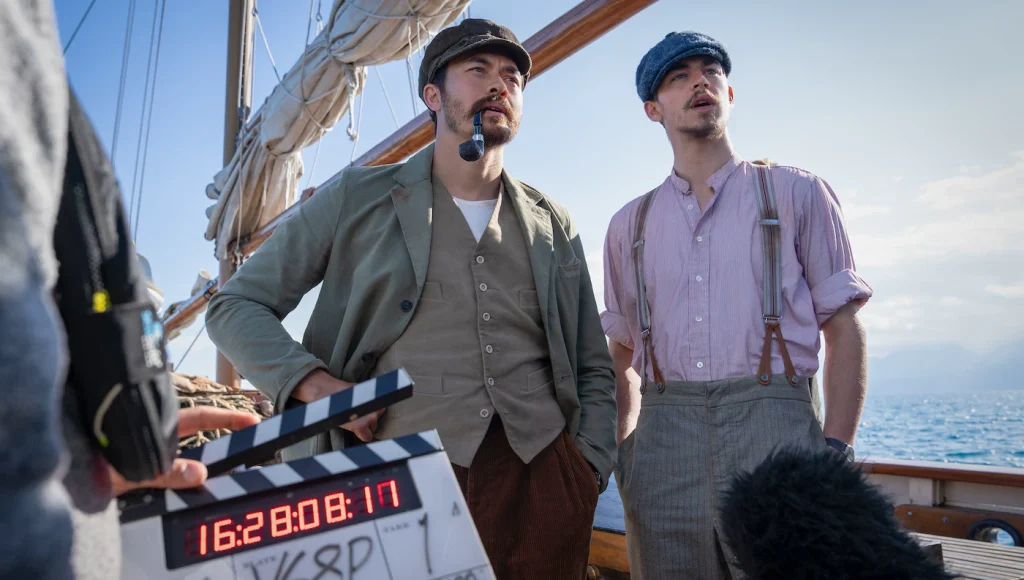
The behind-the-scenes photograph above makes the crowded working space unusually clear. Henry Golding and Hero Fiennes Tiffin have open sky behind them, yet a clapperboard and a furry microphone occupy the lower edge. The image has two useful layers: the clean period scene the actors are dressed for, and the modern equipment squeezed immediately around it. The open sea did not mean an empty working environment.
For Sony’s scene breakdown, Wild explains that a crane mounted on the boat could reach out and look back toward it; other work was handheld. A shot that appears to give the actors plenty of room can depend on equipment sharing their cramped platform. It is easy to imagine solving that problem by moving everyone into tighter close-ups. The crane offered another option: reach beyond the deck while keeping the camera attached to the same vessel. The machinery helped preserve a sense of space that the crew itself did not enjoy.
Glamour Takes More Than Good Weather
Wild told The Credits that the desired look drew on 1950s Technicolor glamour, with soft lighting around the actors’ faces. This is a description of the aesthetic, not a claim that the movie used the old Technicolor process. The distinction matters because the aim was a particular kind of attractiveness, not simply to photograph whatever sunlight happened to be available.
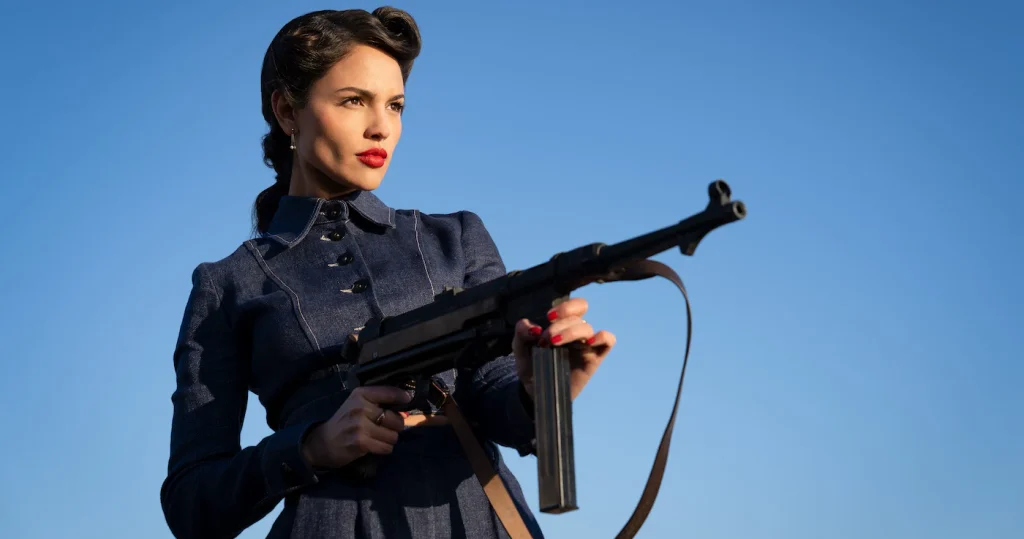
That preference is easy to see in the photograph of Eiza González. Her red lipstick and nails remain distinct against the blue sky and dark clothing. The weapon stretches across the frame, but it does not swallow the portrait. There is room to notice the hair, the buttons and the light on her cheek. For me, that is the most revealing detail in these images: the styling is allowed to hold attention even when a gun is the largest object in the picture.
The indoor work makes the same point through a different method. Sony’s breakdown describes a stationary train-carriage set, with passing light and smoke helping suggest movement. Visible lamps were supplemented by hidden lights rather than simply turned up until the fixtures became overexposed. An apparently straightforward lamp-lit face can therefore involve several carefully balanced sources. It is a useful corrective to the idea that this film’s production can be divided neatly into honest outdoor footage and artificial interiors.
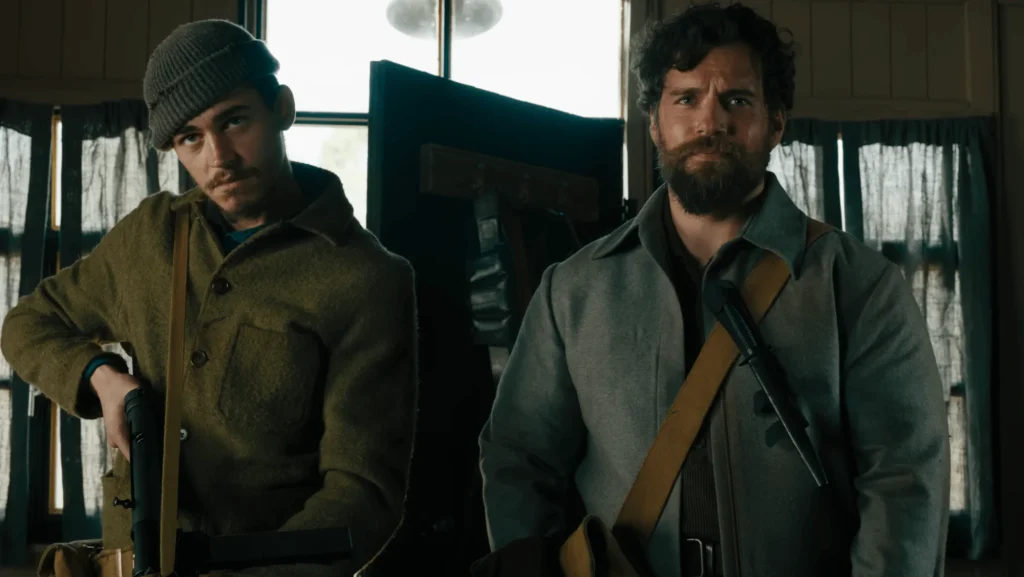
The separate interior still above also shows why “glamorous” need not mean uniformly bright. The coats have weight and texture; the window is much lighter than the room. Unlike the blue-sky portrait, this image keeps the figures surrounded by dark surfaces. I would not want an account of the film’s sunny look to flatten out that difference. The photographs suggest a range of lighting choices, not one cheerful filter applied everywhere.
What Real Water Cannot Prove
Historical accuracy requires a different set of questions. Task & Purpose’s interview with author Damien Lewis distinguishes the real Operation Postmaster from the movie’s embellished violence. AP critic Jake Coyle likewise describes a historical raid expanded into a much more exaggerated adventure. A boat can be genuine while the action staged on it takes considerable liberties. The production evidence does not cancel that criticism.
Our look at F1’s invented team and real racing world raises a related question about what a physical setting lends to a fictional story. Here, I would keep the judgment narrower: the production details explain how Ritchie’s film makes room for both a tangible environment and conspicuously polished people. They cannot tell us whether every joke works or whether the danger carries enough weight.
The useful thing to watch for is how much of the actors’ surroundings remains visible when the camera moves closer. Look at the water behind a shoulder, the light across a face, or the window beside a dark coat. Antalya supplied a location. Turning that location into this particular kind of adventure required decisions about what to illuminate and where the camera could stand. The mug beside the gun belongs to that same invitation: there is a mission ahead, but the picture still leaves time for breakfast.



1 thought on “Where Was The Ministry of Ungentlemanly Warfare Filmed?”