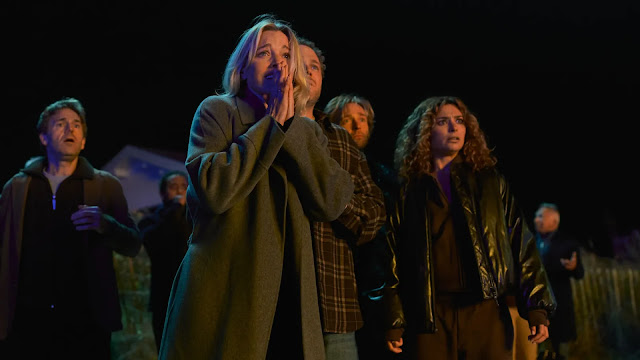
So does anybody actually get an answer at the end of The Perfect Lie? No. The seventh episode stops in the middle of the thing you most want explained, and if you went in expecting a tidy Dutch murder mystery, that is going to sting. Netflix has not announced a second season. The show arrived on September 10 and was inside Netflix’s American television top ten the next day, which is the kind of number that usually decides these things, but nothing is official yet. Over on the film side of the same week, The Whisper Man is still parked in the top three, two weeks in. What I want to do here is explain why that ending exists at all, because the answer is mostly arithmetic.
This exact story has been filmed before. Saskia Noort published the novel in 2004, in Dutch, under the title De eetclub, and it ran 239 pages. In 2010 Robert Jan Westdijk turned it into a feature film. That film is ninety minutes long. It came out in Dutch theaters on November 25 of that year, sold enough tickets to earn a Golden Film, and got mostly unkind reviews. Then it went away.
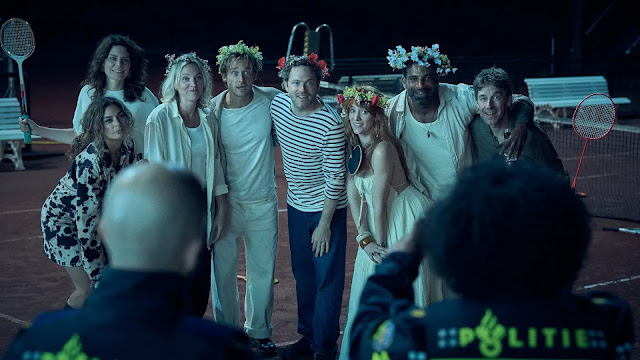
Sixteen years later the same book gets seven episodes and just over six hours. Same fire, same dead man, same group of friends with too much money and too many secrets. Four times the running room. That gap is where this ending comes from.
What Ninety Minutes Forces You to Do
A ninety-minute thriller has no choice. It has to introduce a town, a marriage, a circle of friends, a fire, a body, and a suspicion, and then it has to hand you a resolution before the audience starts checking the time. Everything in that structure pushes toward closing. You cannot leave a thread hanging at minute eighty-eight, because there is no minute ninety-five. The 2010 film worked under that rule and finished its story inside it.
That is a constraint, and constraints show up on screen. A feature has to treat a group of eight people as one object. It gives you the club, not the members. You get a shape and a culprit, and the people inside the shape stay roughly the size of their function.
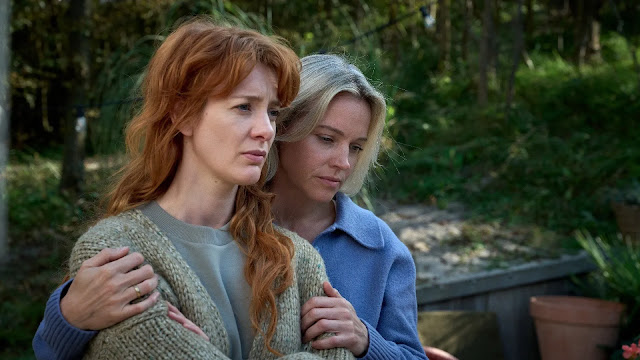
I keep thinking about how differently the 2026 version solves the same problem, and the solution is sitting right there in the episode list. The seven episodes are titled Karen, Hanneke, Simon, Michel, Patricia, Babette, and Ivo. Each hour is named after a person. That is the structure, out in the open, before you press play. The show is not spending six hours on a mystery. It is spending roughly one hour per suspect.
Dorien Goertzen, the head writer, said as much when Netflix put out the first images. She described the job as reinventing a well-known story, and said the team chose a different narrative structure and gave the characters a contemporary twist. Writers say things like that in press releases all the time and it usually means very little. Here you can check the claim against the episode titles, and they back her up.
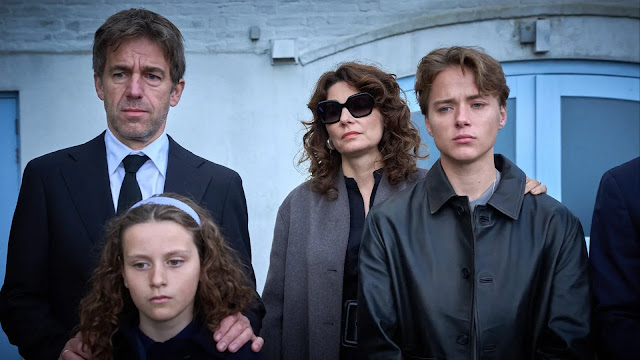
What Six Hours Lets You Keep
The series also frames all of it as a police interview. A woman sits down with detectives and agrees to tell them everything, and the story comes back to us in flashback from there. That frame is doing real work. It gives the show permission to withhold. Someone telling her own version is allowed to get to things late. It also hands the finale a place to stand that is not the scene of the crime.
Put those two things together and the ending stops looking mysterious. A show built as seven character studies has already given you its payoff by episode six, because the payoff was the people. A show framed as a confession can end on the confession being incomplete. And a show that travels this far in its first days has every commercial reason to keep one thread live. None of that requires the writers to be cryptic. The open door is what the format wanted.
That is also the honest answer to whether a second season is coming. Nobody has announced one. But the show was built with a door in it, the numbers arrived fast, and a Dutch-language series reaching an American top ten in its first week is not a common event. I would be surprised if that door stays shut.
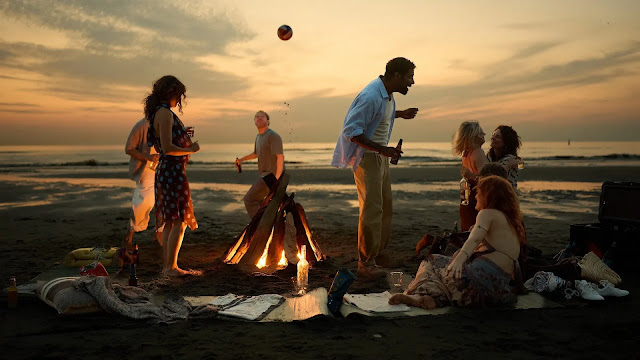
There is one thing I would push back on, though. The Secret Woman did something similar earlier this month and closed its book. Six hours is a lot of room, and a lot of that room here goes to dinners, affairs, and the slow business of watching wealthy people be unpleasant to each other. When a show spends that much of your evening, finishing feels less like a bonus and more like the deal. The 2010 film had ninety minutes and no leverage and still gave people an ending. This one has four times the space and chose to keep something back.
Still, I understand the calculation. Noort wrote a book about a group of people who look perfect and are not, and the 2010 film had to compress that into a culprit. Seven hours of television can afford to let the group be the subject instead, which is a better use of the novel even if it costs you a clean last scene. The cliffhanger is not a trick. It is the price of the version that took the characters seriously.