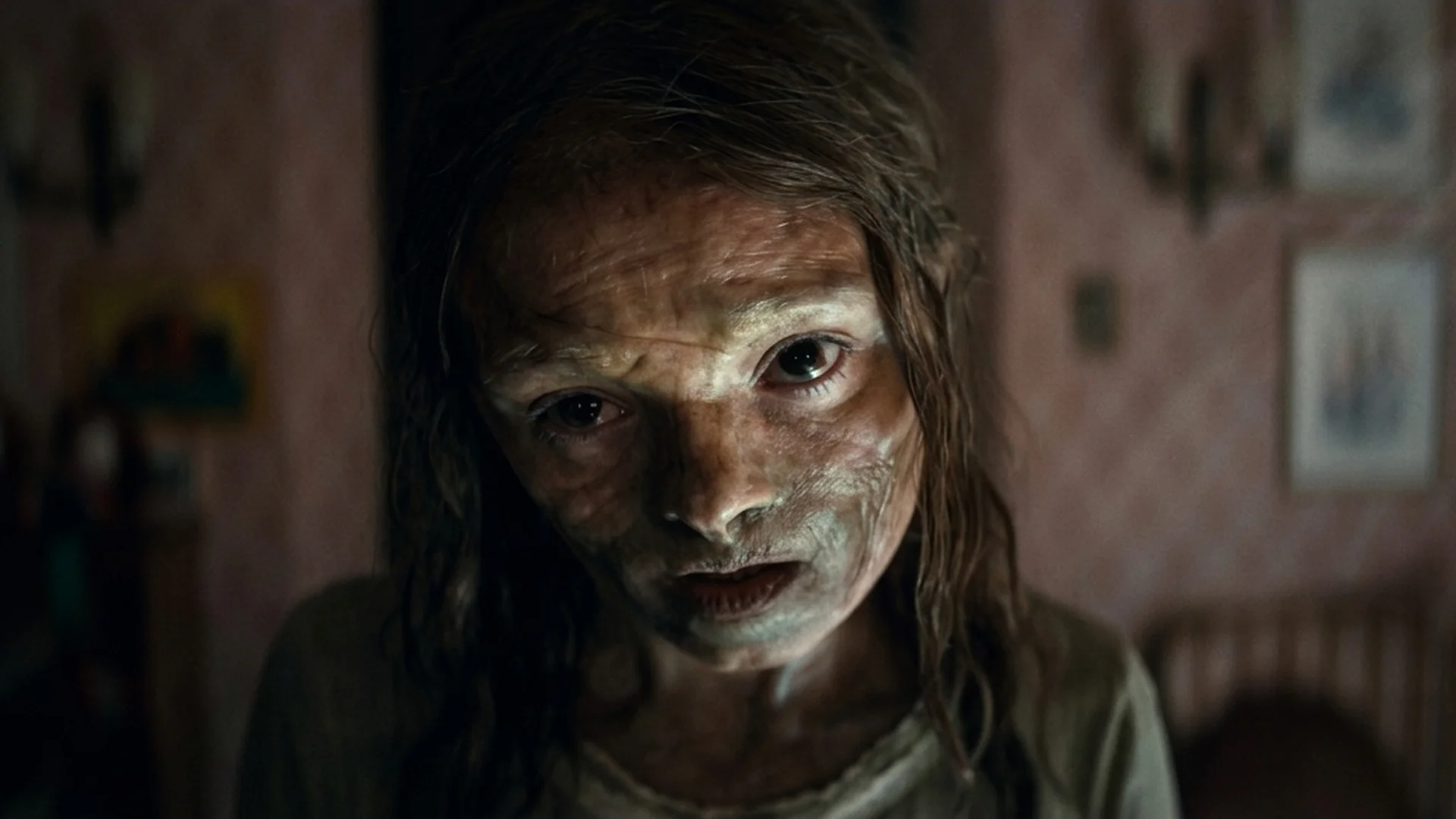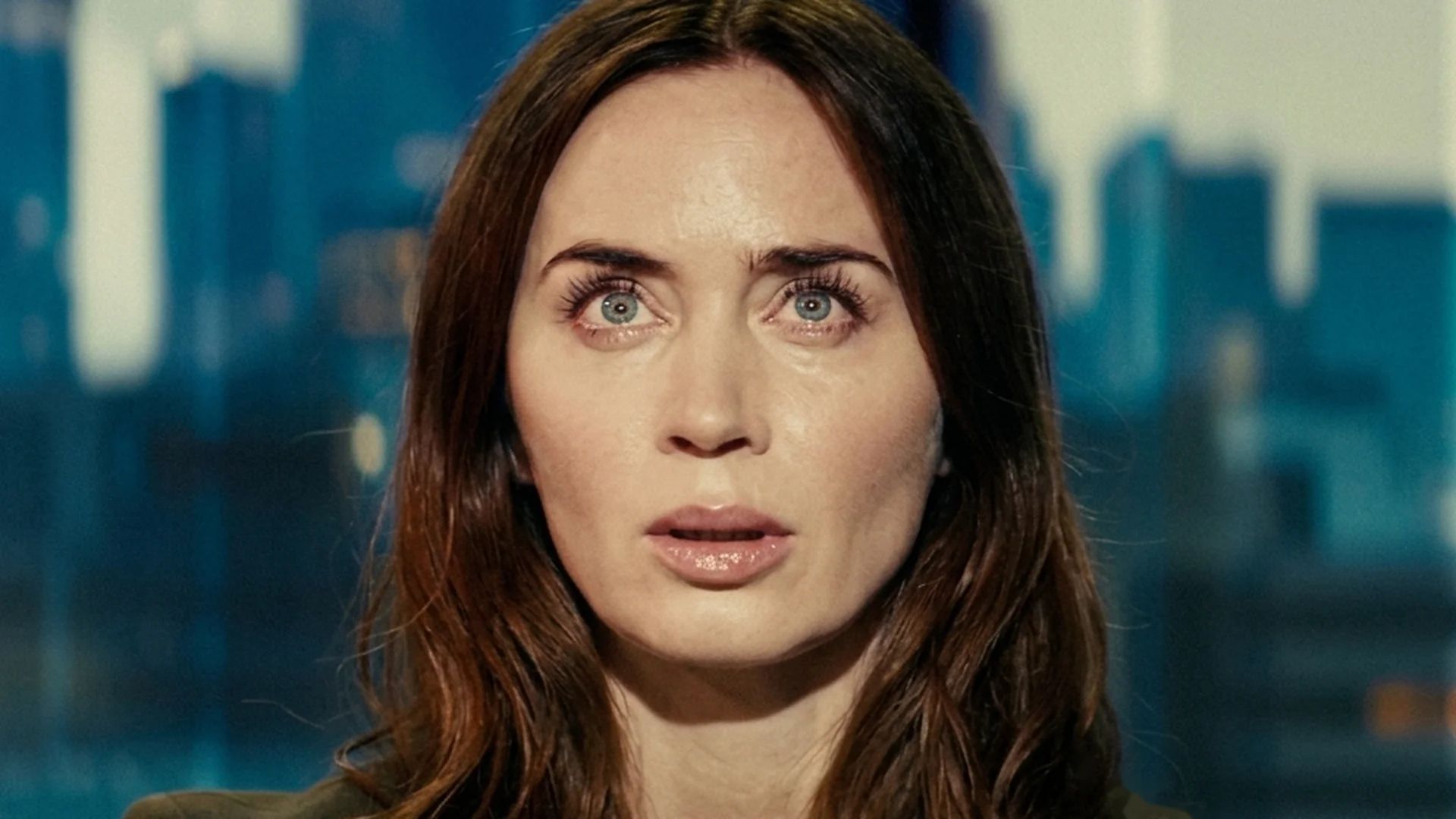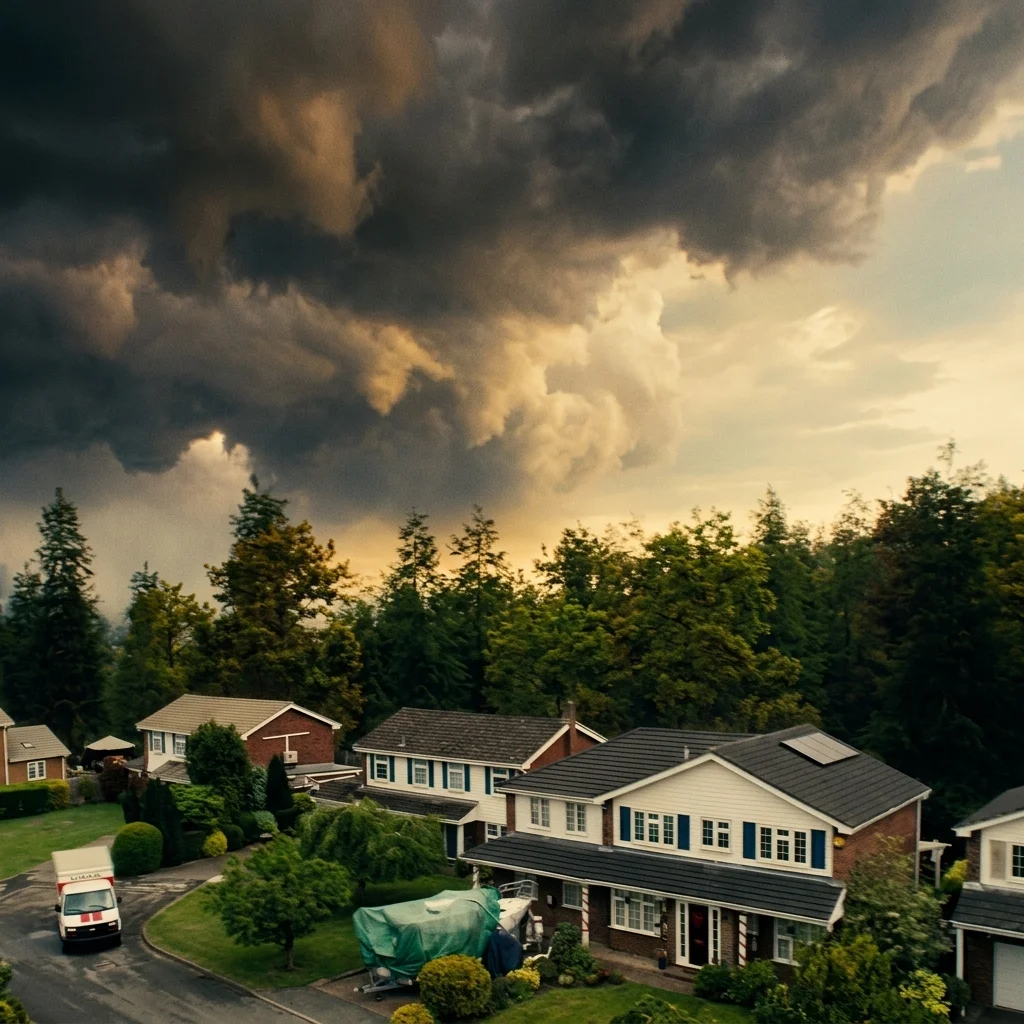
When the trailer dropped back in June, all we really had was a family sealed inside their own home and a title that sounded like a warning. Now the film is here, it’s the number one movie on Netflix worldwide, and the question everyone is searching is the same one the trailer left hanging: what is actually out there, and how does anyone get out? The short answer is that the thing trapping the Delgado family isn’t an army or an alien fleet. It’s the rain, and what the rain brings with it. And the escape, when it comes, is stranger than any weapon. The house itself falls apart.
Not Aliens, Something Older
For most of the movie the threat stays offscreen, which is where director Louis Leterrier keeps it scariest. What we eventually learn is that the rain is the real prison. When it falls, it seals houses shut from the outside, everywhere, all at once, and creatures arrive with it. The surprise is where they come from. Instead of arriving from space, they rose out of the ocean, and they have been on Earth far longer than people have. So this was never an invasion in the usual sense. It’s closer to something ancient surfacing and taking back ground we only borrowed. The Delgados are less under attack than locked out of a world that stopped being theirs.
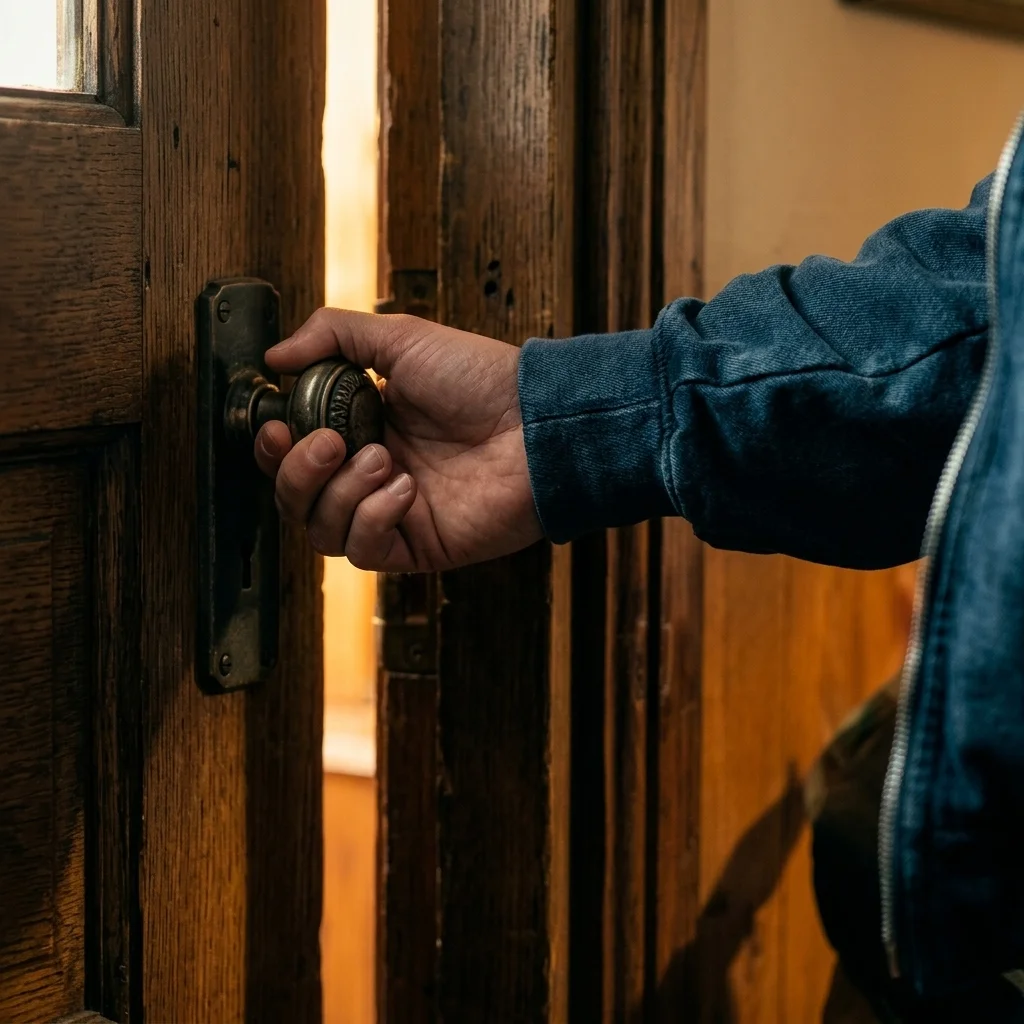
That framing is why the movie plays less like a creature feature and more like a chamber drama. Four people, dwindling supplies, and years passing inside the same walls, long enough that the children grow up while the siege drags on. The real tension has little to do with whether the things outside get in. What matters is whether the family holds together while the waiting wears them down. Several critics landed on the same read: the film works best while the threat stays a mystery, and loses a little grip the moment it explains itself. Whether that’s a flaw depends on what you came for.
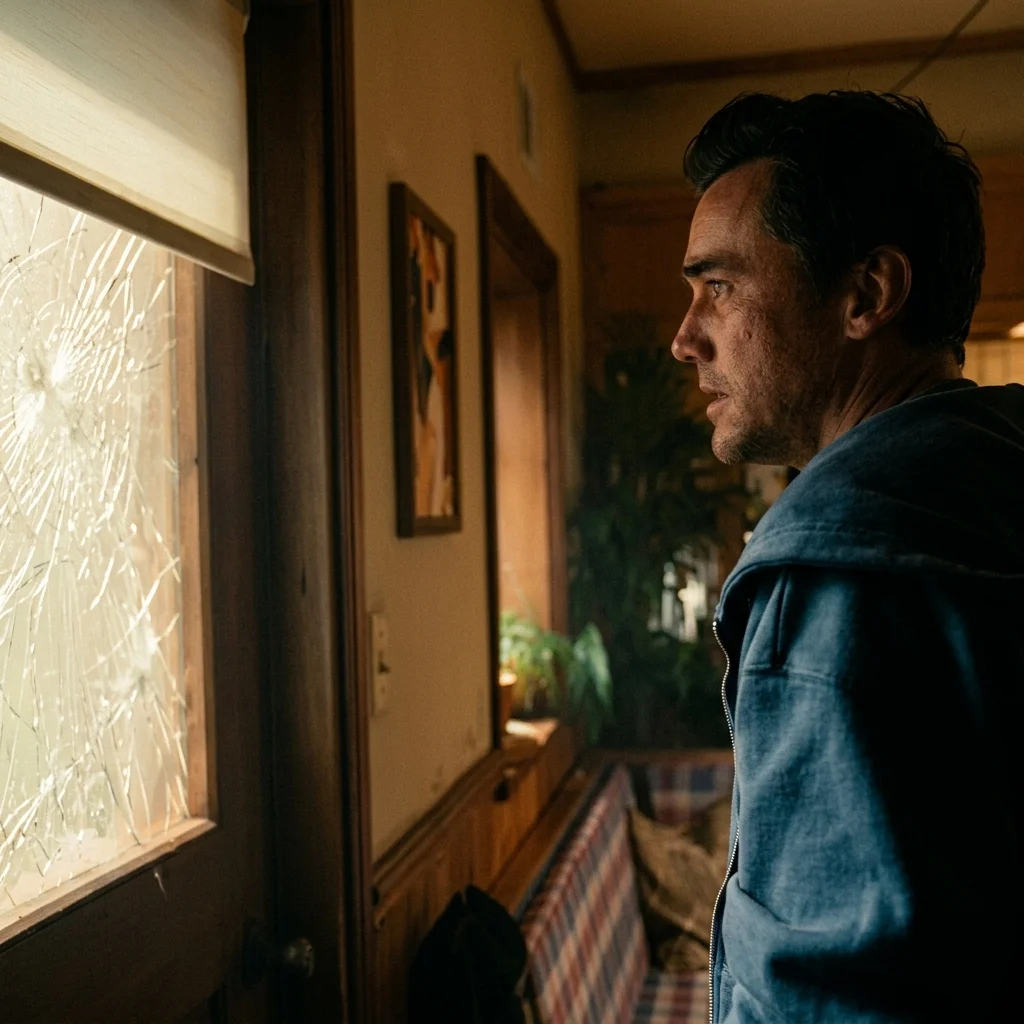
The Escape That Isn’t a Fight
The ending comes down to the one thing the family can’t stop: their house is slowly wearing out. The story runs across years, and the same barrier that keeps them in also keeps them from making repairs. Eventually the chimney cap works loose and falls away, and that small gap in the seal is the first real opening they’ve had. In the final stretch, one of the creatures seems to speak to the others. The rain stops. The house collapses, the creatures drop into the hole where it stood, and they are gone for good. The family walks out. Not because they outfought anything, but because they refused to turn on each other while everything else came apart.
That’s the sly move at the center of it. A survival movie where the weapon is patience and kindness, and the way out is decay. Fear and isolation are given every chance to break these four, and the film’s answer is that they simply don’t let it happen. For a story that opens like a horror movie, it lands somewhere much warmer.
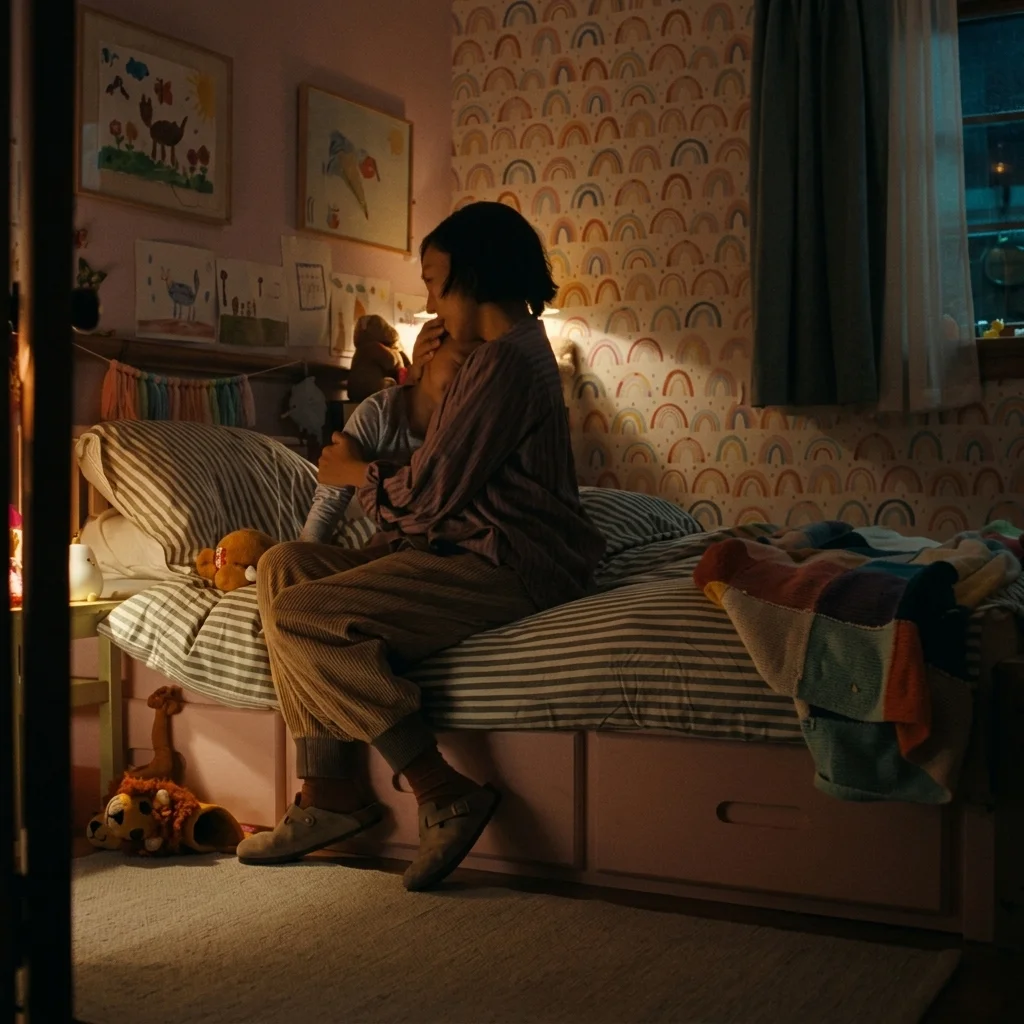
The Blockbuster Director Who Built a House to Rot
One production detail stuck with me. Because the house had to age and break down over years, the crew built a real one and physically wore it out as they shot, in sequence, so the decay you see is actually happening. The rot isn’t an effect added later. It’s the set coming apart on schedule. Which means the film’s method and its meaning are the same thing: a house falling apart is what frees the people inside it. For something sold as a monster movie, that’s an odd and oddly hopeful thing to build toward.
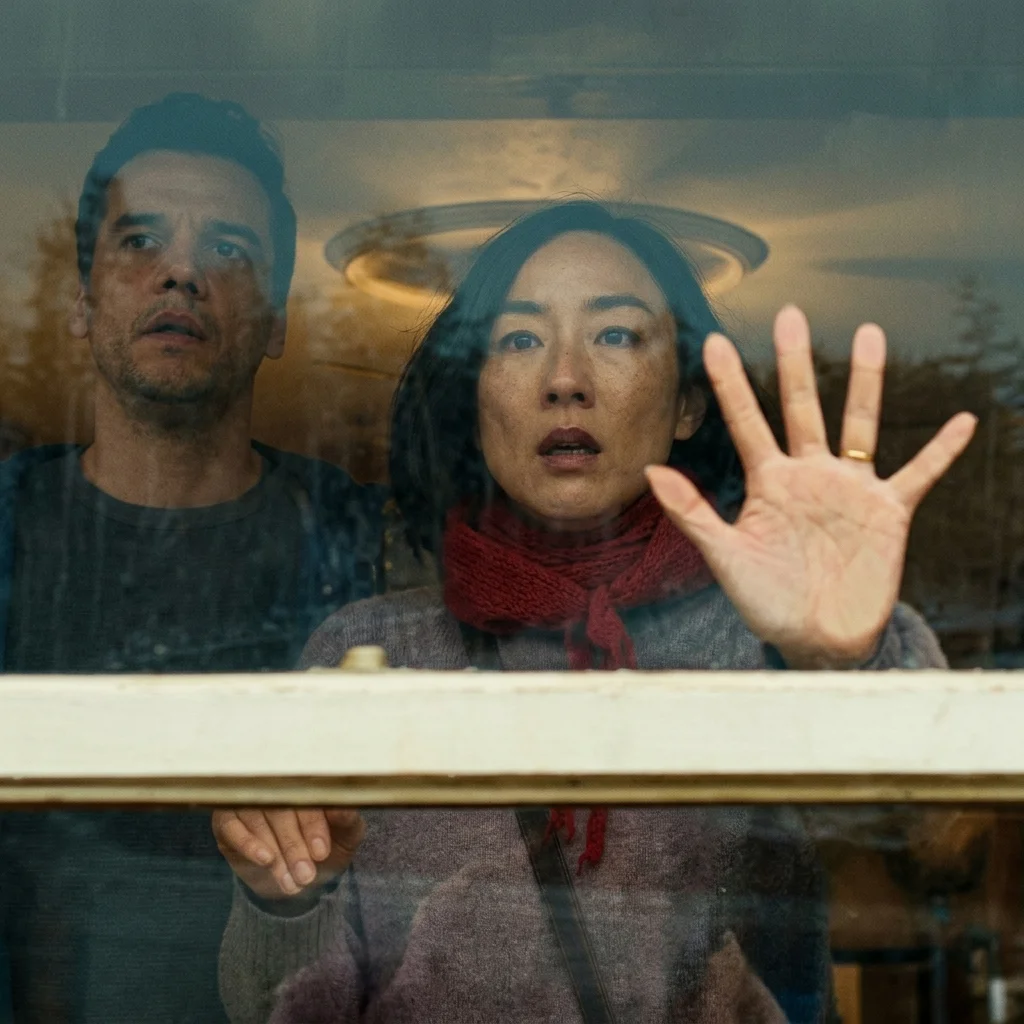
That instinct comes from a surprising place. Louis Leterrier usually works big: Now You See Me, the fifth Fast & Furious, Clash of the Titans. Here he shrinks everything to four people and four walls, and the restraint is the point. Greta Lee, who broke out in Past Lives, plays the mother, Ann. She had believed in the script for years before it got made. Leterrier first sent it to her around the time she was shooting that film. She even trained to film underwater for the role, which tells you the ocean is where the story was always headed. Past Lives keeps turning up lately for a reason, too: its writer-director, Celine Song, just followed it with Materialists, and its breakout star is now fronting the biggest movie on Netflix.
So the plain version, for anyone who scrolled down for it: they get out because the rain finally stops and the house breaks open, and they survive the wait because they stay kind to each other when panic would have been easier. For all the dread the trailer promised, that’s where The Last House leaves you, with the water gone and a gap where a wall used to be.