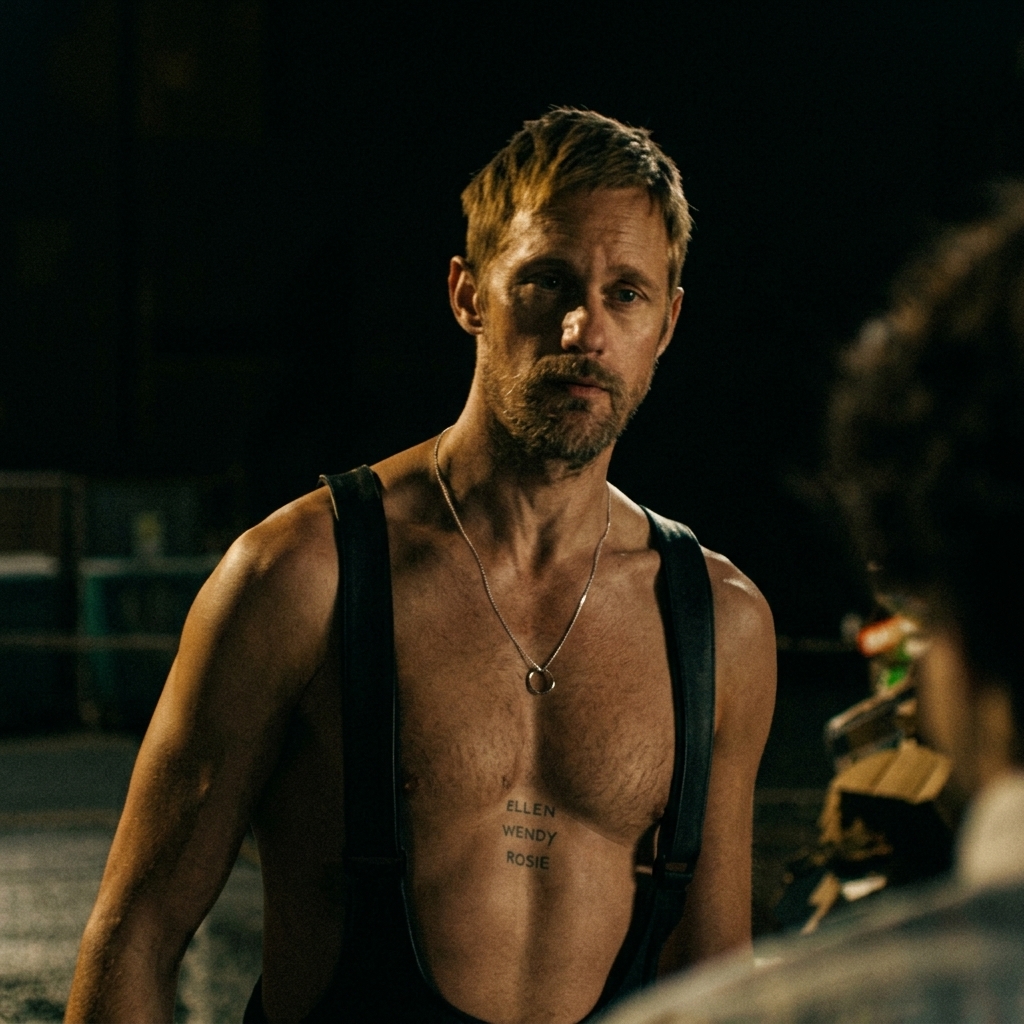
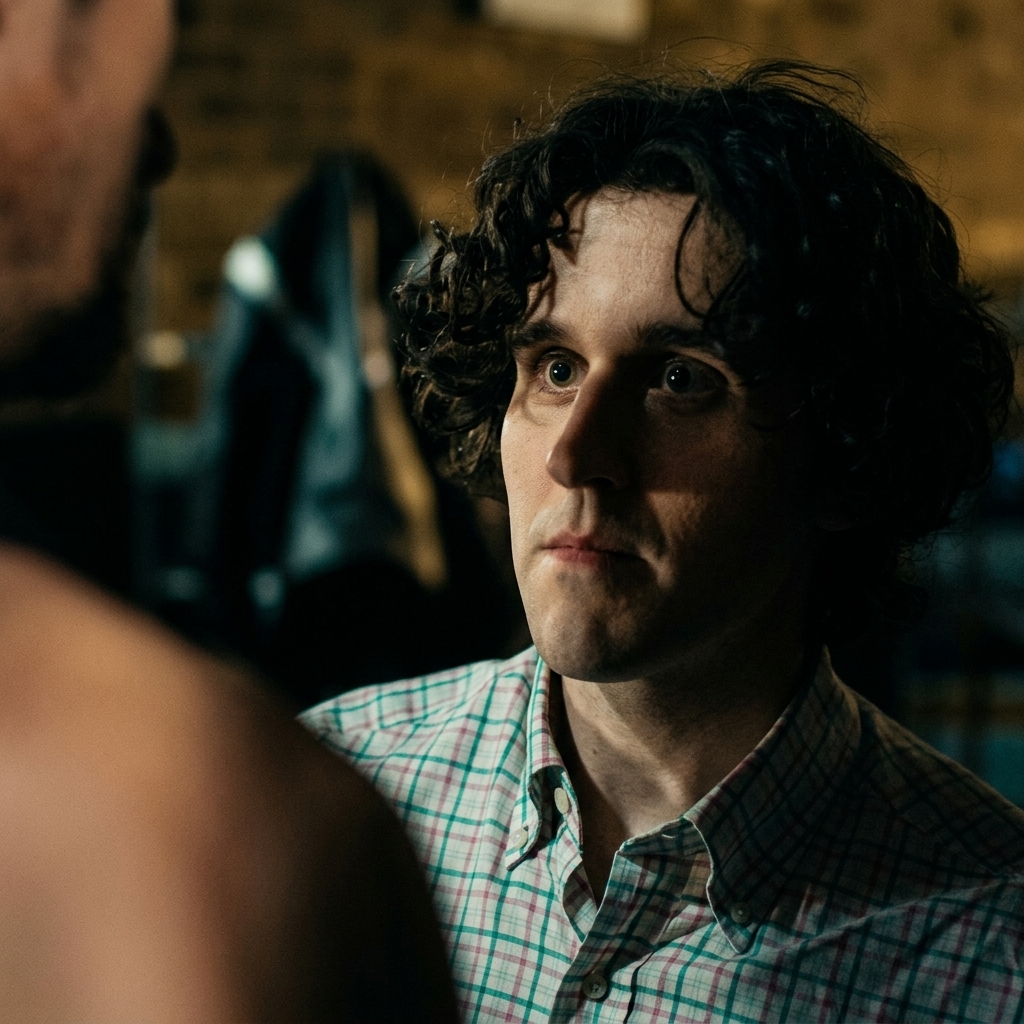
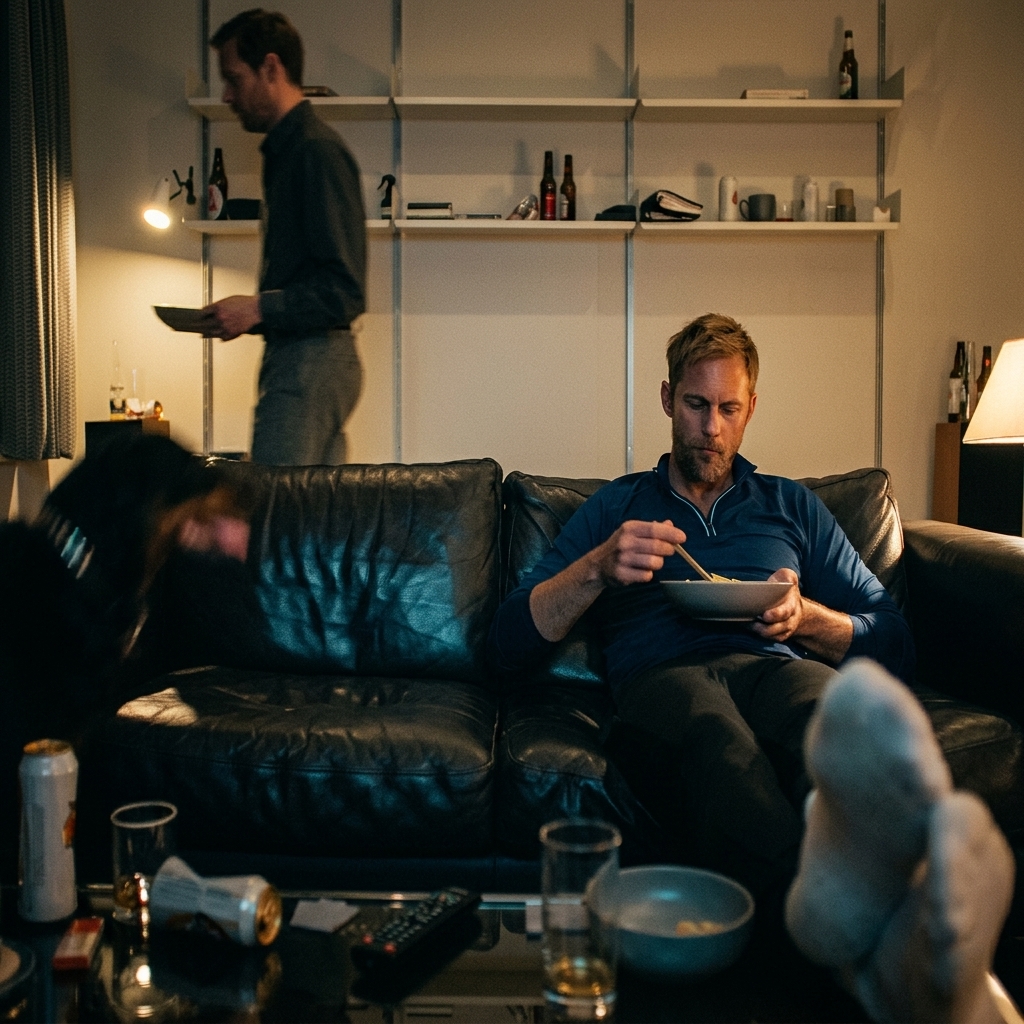
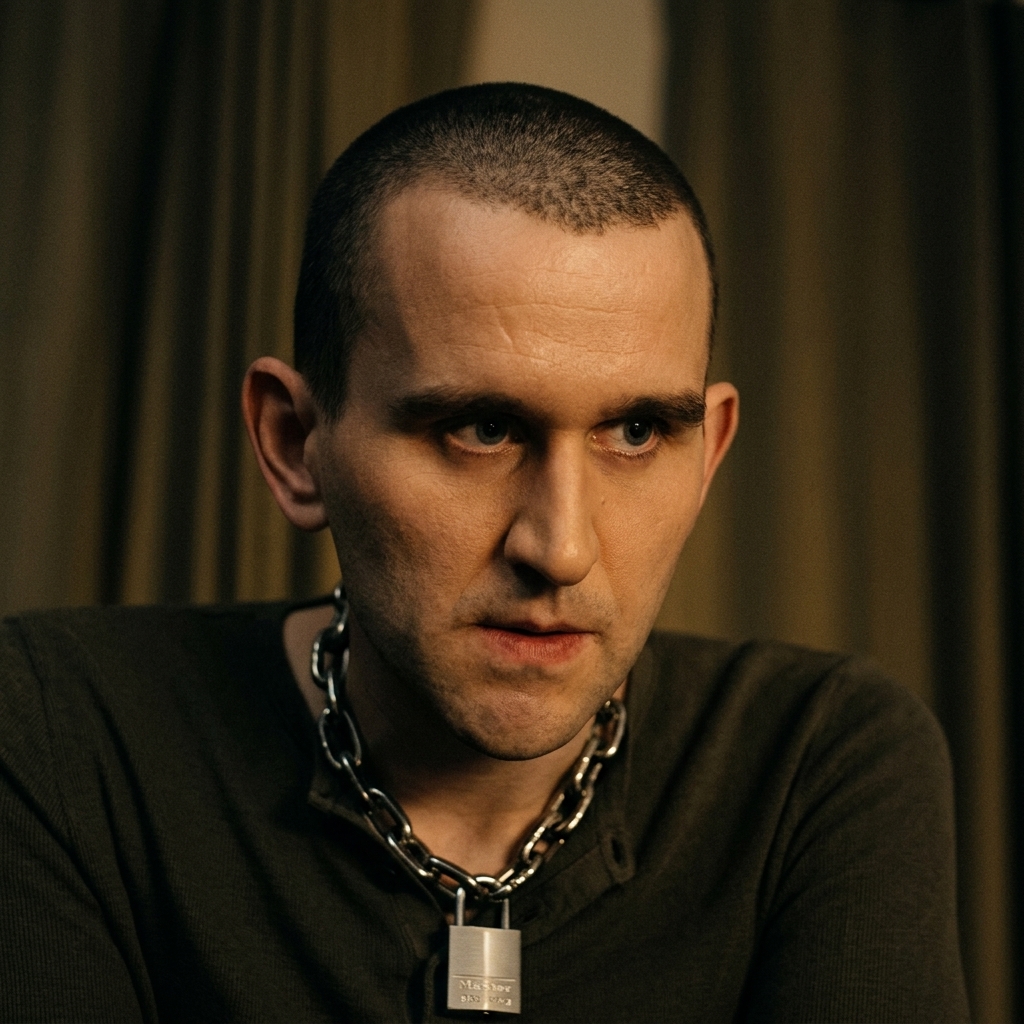
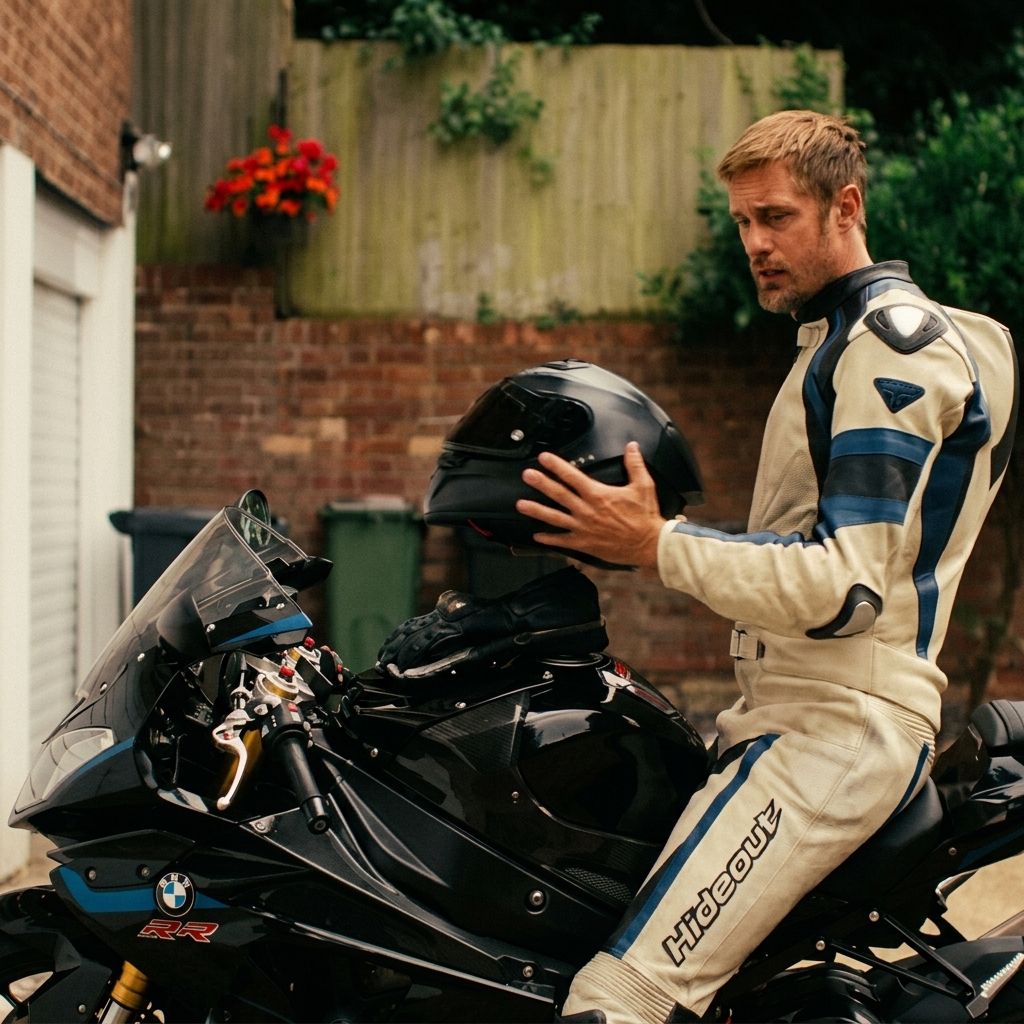
Colin is in his thirties. He lives with his parents outside London, works at a parking garage, and sings in a family barbershop quartet. That is the entire shape of his life when Pillion begins, and Harry Melling plays him with a stoop in his shoulders that tells you he has stopped expecting anything to change. Then Ray walks in — the leader of a gay motorcycle club, played by Alexander Skarsgård as a wall of stillness and command — and decides, more or less unilaterally, that Colin belongs to him.
On paper this is a film about a sub/dom relationship, and it has been sold that way. But that framing misses what Pillion actually is. Strip away the leather and the hierarchy and you find one of the gentlest coming-of-age stories in recent memory, about a man learning, very late, how to want things out loud.
What the Premise Hides
The setup invites you to expect provocation. A meek wallflower is taken in hand by a dominant stranger; the early scenes don’t shy away from the physical reality of that arrangement. A lazier film would stop there and treat the kink itself as the whole point, the thing it wants you to gasp at.
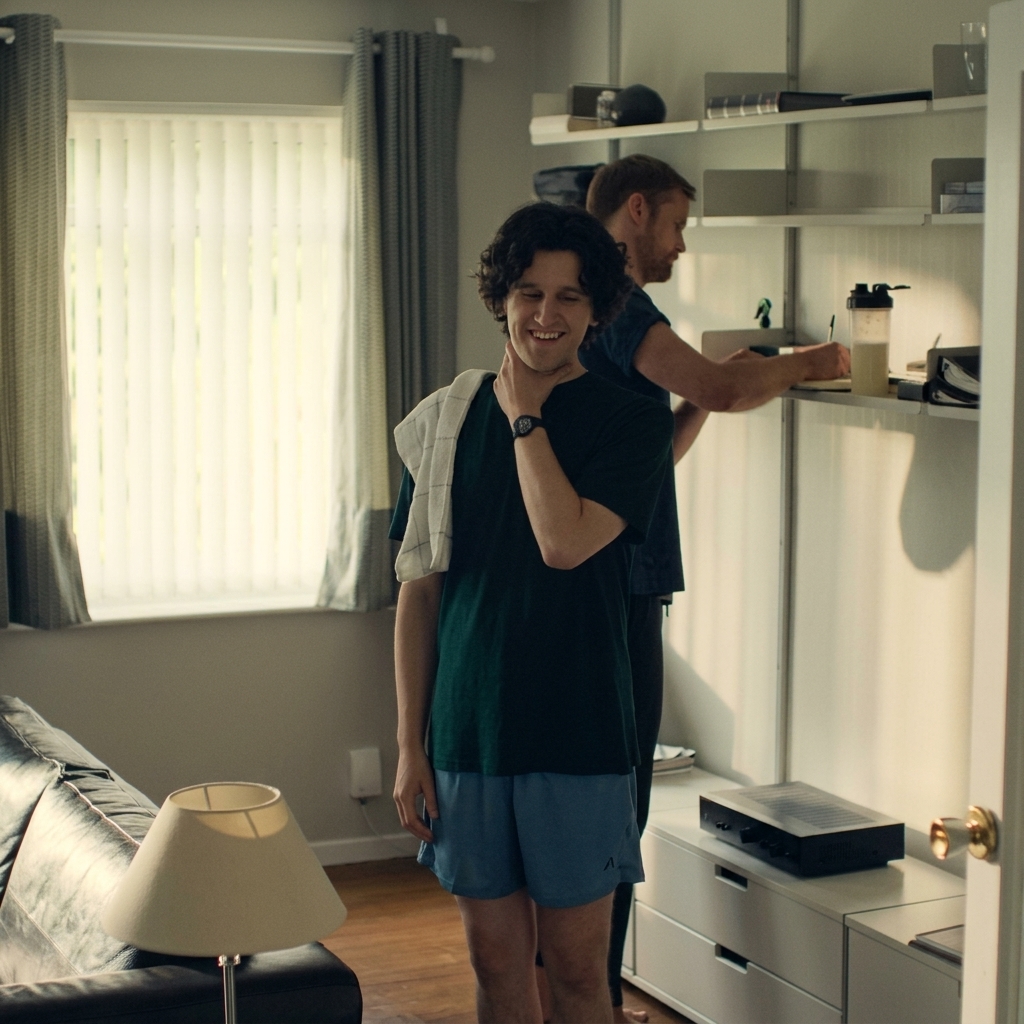
Harry Lighton, making his debut as writer-director, has no interest in your gasp. He adapts Adam Mars-Jones’s novel but drains out its darkness, moving the story to the present and reshaping it into something almost tender. The submission, in his hands, is not a destination. It is a doorway. Colin has spent his whole life unable to articulate a single desire, and the strict architecture of his arrangement with Ray gives him, paradoxically, the first vocabulary he has ever had for what he wants. He learns to ask. That turns out to be the entire movie.
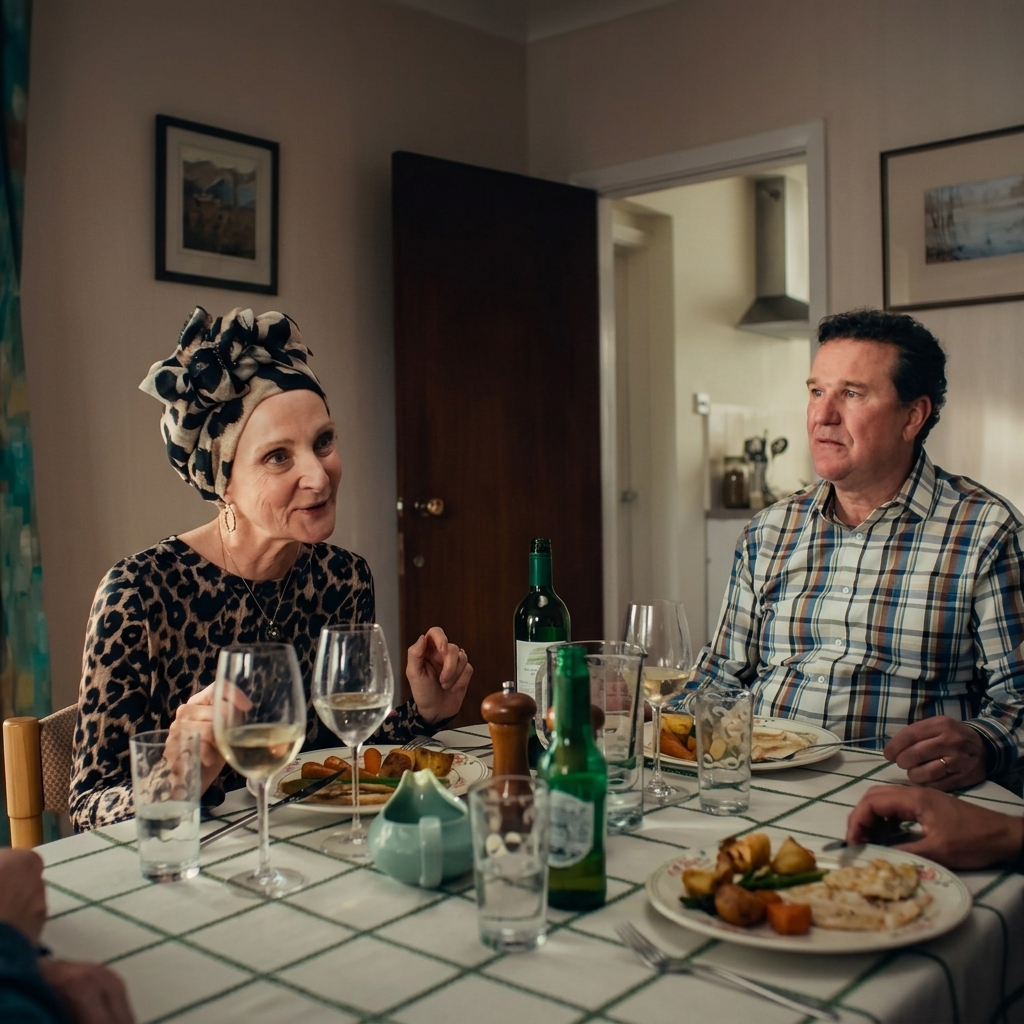
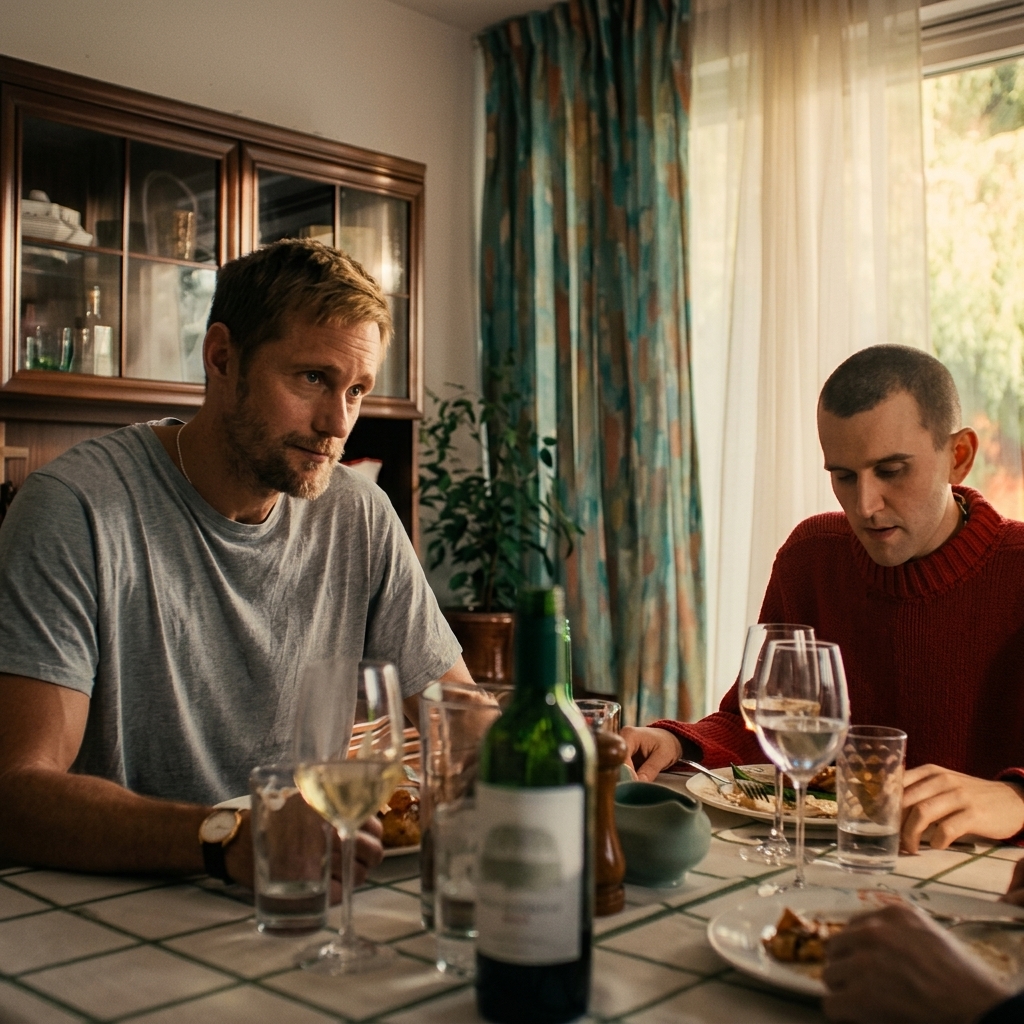
Two Performances Pulling in Opposite Directions
The film works because its leads are playing two completely different emotional registers and letting the gap between them generate the heat.
Melling, who has spent years quietly becoming one of the most interesting actors of his generation, gives Colin a yearning that keeps leaking out around the edges of his composure. You watch him discover that he is allowed to take up space, and the performance makes that discovery feel enormous, because for Colin it is. Skarsgård goes the other way. His Ray is a closed door — controlled, withholding, protecting some other self that he refuses to let Colin near. It would be easy to play a character like this as a fantasy object. Skarsgård plays him as a man with a locked room inside, and the small moments when something flickers behind his eyes land harder for how rarely they come.
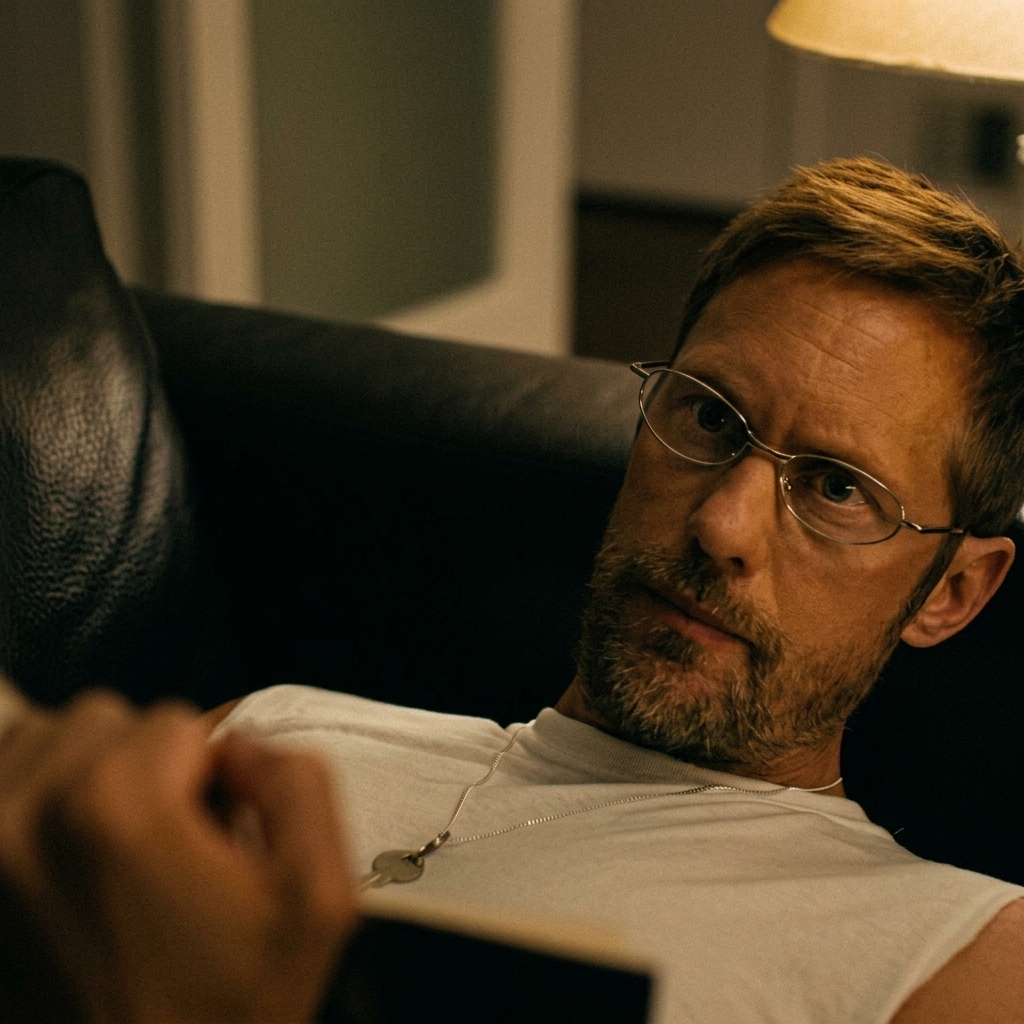
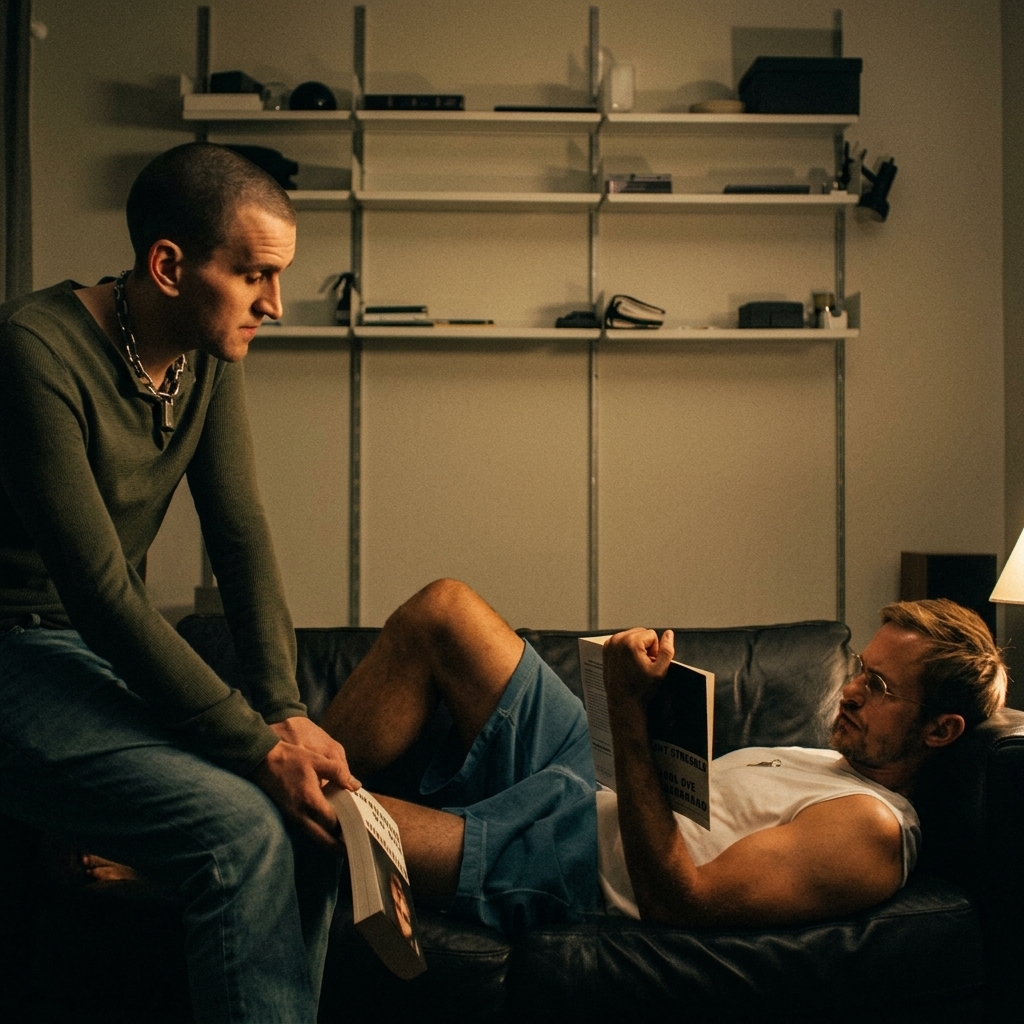
The tension between them is not really about power. It is about asymmetry of need. Colin wants more than orders; he wants Ray. And Ray, the film slowly makes clear, has given Colin everything he is capable of giving, which is not enough. That is a heartbreak anyone can recognize, dressed in clothes most films would never let it wear.
The Detail That Tells You It’s Serious
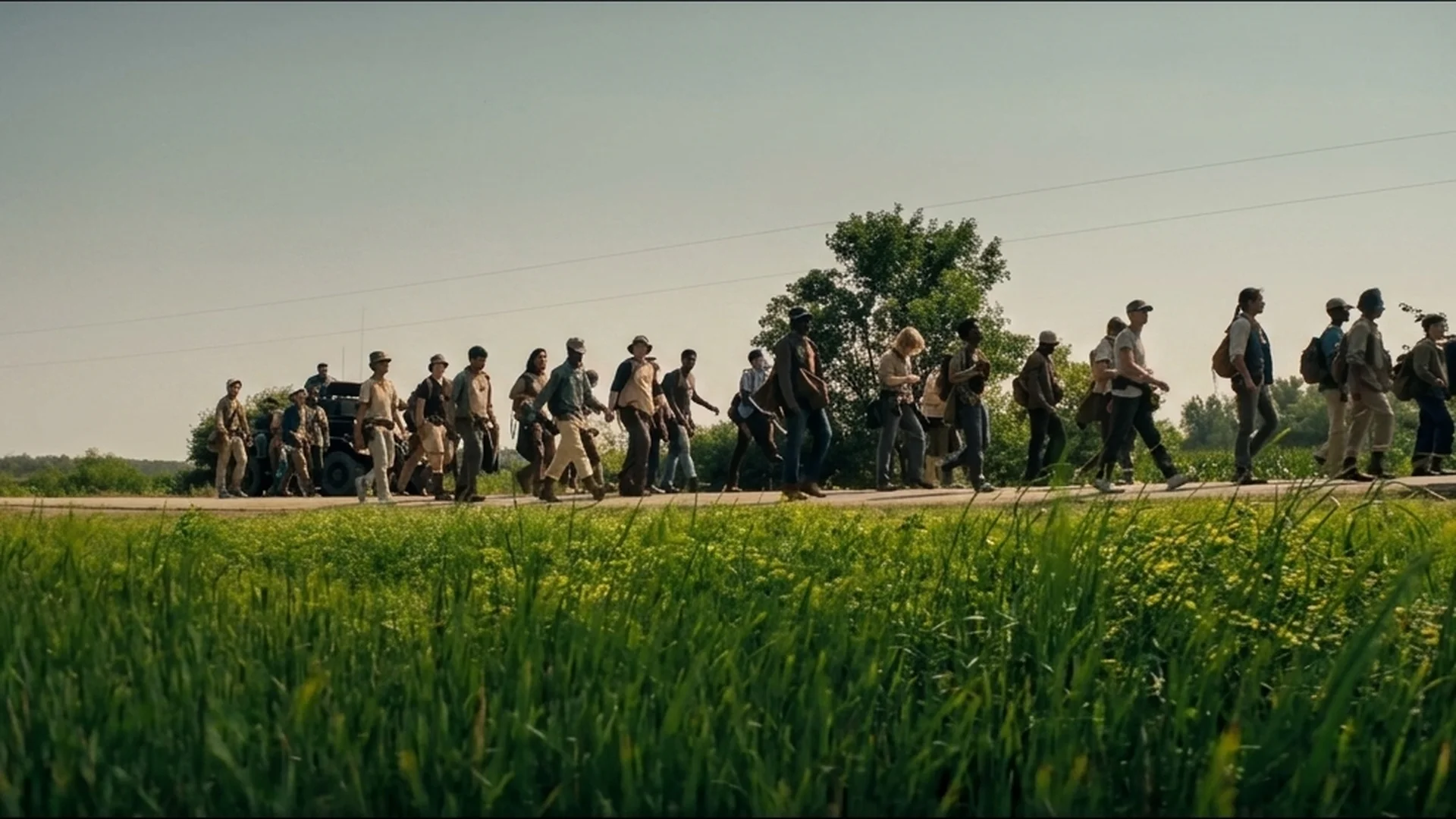
Lighton spent time with the real Gay Bikers Motorcycle Club while writing the film, and members of the club appear in it, playing themselves. You can feel that research in the texture of every group scene. The community around Ray and Colin is never treated as spectacle or shorthand. It is a place with its own warmth, manners, and inside jokes, and the film grants it the ordinariness of any other subculture — a bowling league, a church choir, a barbershop quartet.

That choice matters, because it is the whole ethic of the movie in miniature. Pillion refuses to look at any of its characters from the outside. It declines, at every turn, to judge them, and that refusal is its quiet superpower. The result is a film that is far funnier and more romantic than its description suggests, closer in spirit to a good rom-com than to the provocation the marketing promises.
Where It Lands
I won’t give away how the relationship resolves, except to say that Lighton makes a choice the novel didn’t, and it is the right one. He gives Colin dignity. The film understands something most love stories are too sentimental to admit: that the person who teaches you the most about yourself is often someone you cannot stay with. You outgrow the room they opened for you. That is not a tragedy, exactly. It is just the cost of having been changed.

Pillion is a remarkable debut, anchored by two performances that deserve to be remembered at year’s end, and it pulls off the hardest trick a film like this can attempt. It takes the most extreme version of a relationship it can find and uses it to tell the most universal story there is — a person, finally, becoming themselves. The leather is just what Colin happened to be wearing when he woke up.

It is streaming now on HBO Max. Come for the premise if you must. Stay for the unexpectedly ordinary, unexpectedly moving thing underneath it.