Hillman College is fictional. In Netflix’s A Different World sequel, however, parts of the campus belong to Morehouse College, Spelman College, and Clark Atlanta University. These are real historically Black colleges and universities, or HBCUs, in Atlanta. There is no single Hillman campus to enroll in. The series assembles its college from places that already have students, traditions, and histories of their own.
That arrangement suits a story in which arriving at the same school means very different things. Deborah Wayne, played by Maleah Joi Moon, is entering the alma mater of her parents, Dwayne Wayne and Whitley Gilbert. Rashida, played by Alijah Kai, is a first-generation college student. Deborah arrives with family expectations to navigate; Rashida is entering territory her family has not. Their different starting points give Hillman a story beyond its returning alumni.
Real Campuses and Student Input
The production used actual HBCU grounds alongside constructed interiors. Showrunner Felicia Pride told TV Insider that moving to a single-camera format let the sequel explore Hillman beyond the original’s stage-based approach. The Atlanta Journal-Constitution’s location reporting also distinguishes the real college grounds from built spaces such as the dorm interiors and the Pit, the familiar campus gathering place. Recognizing a building does not make every room behind its doors a filming location.
More useful than a list of addresses is Netflix’s account of student involvement. Current HBCU students advised the writers and the Atlanta production, and students also worked across production departments. Pride also discussed that consultation with the Journal-Constitution. The people who attend these institutions had a way to comment on how college life was being represented. That is a more substantial connection than borrowing a school sign for a shot.
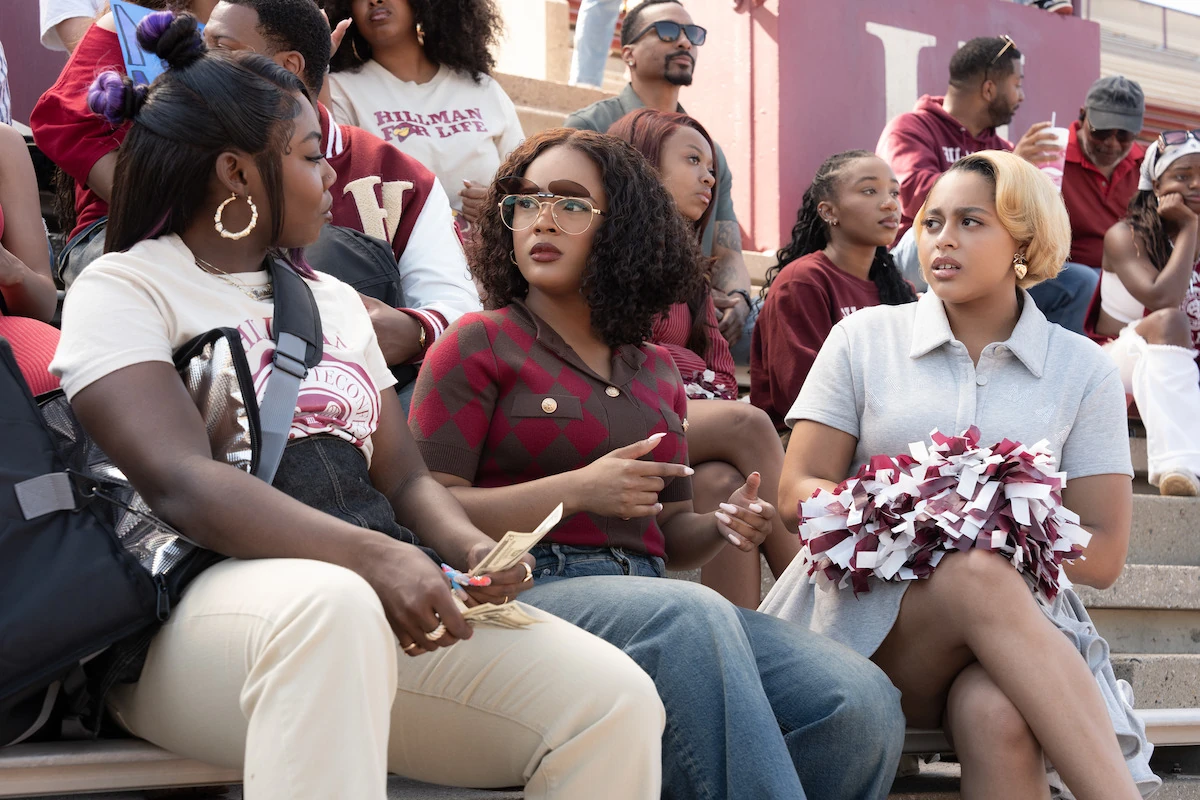
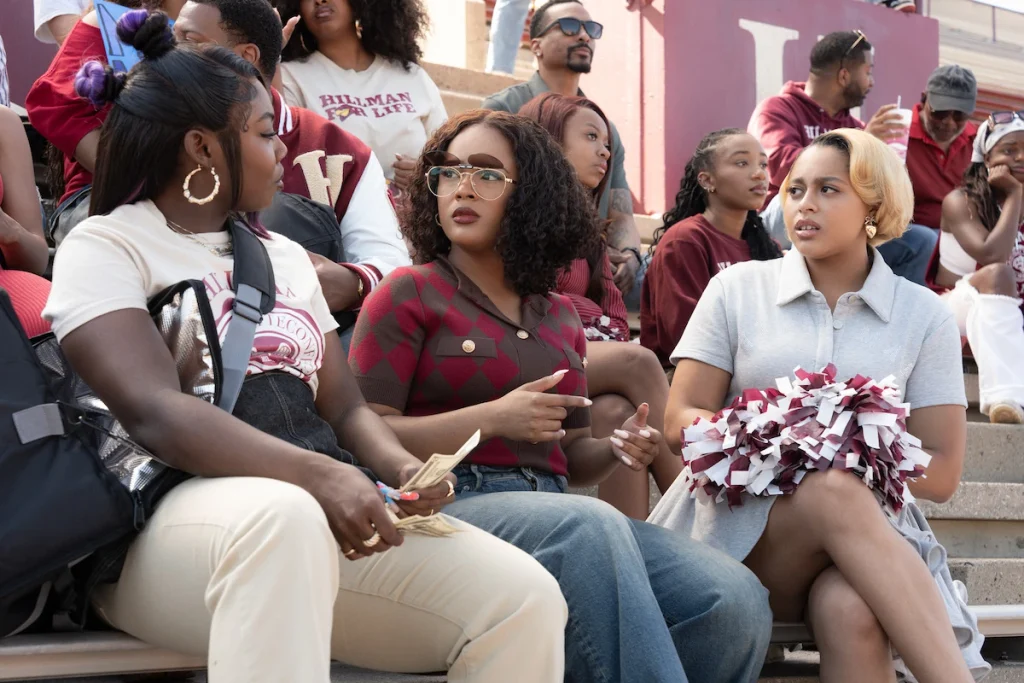
In the official stadium still, Hillman shirts fill the stands around Rashida, Deborah, and Hazel. Hazel holds pom-poms while Deborah turns toward Rashida. The school colors establish where they belong; the exchange between them is what catches my eye. It is a small glimpse of the students within the campus spectacle, though a still cannot tell us what they are saying.
Deborah and Rashida Arrive With Different Stakes
Pride’s description of the new ensemble puts Deborah’s privilege beside Rashida’s determination. Deborah has room to explore her interests and resist the path her family imagines for her. Rashida is intent on making college count. Those are useful sources of friction because neither position can be reduced to liking or disliking Hillman. You can value an education and still resent the expectations attached to it. You can love being there and have little patience for someone treating the opportunity casually.
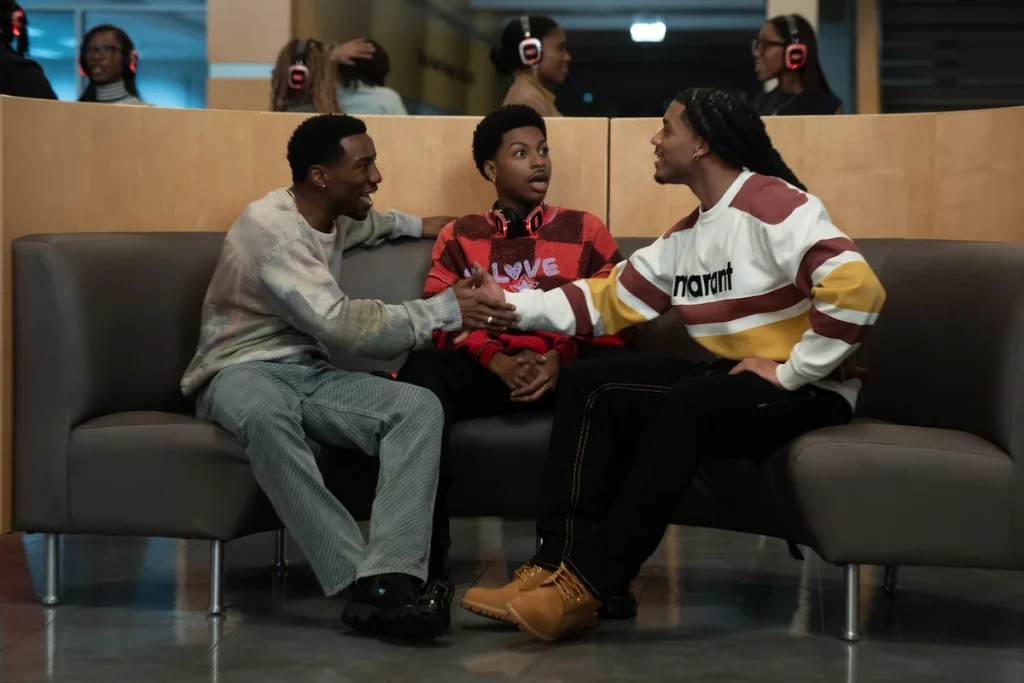
The other students widen that range. Pride describes Kojo as an entrepreneur drawn to fashion, while Hazel arrives with a strong church background. These details give the group interests and assumptions that do not all originate with Deborah’s parents.
There is also a trap in treating Rashida as the automatic answer to Deborah. A hardworking student can become a convenient lesson for a wealthier protagonist: here is someone who knows how to appreciate what you have. The more revealing question is whether Rashida gets her own desires, mistakes, and disagreements. Her education matters even when it teaches Deborah nothing.
A Homecoming for Some, a Beginning for Others
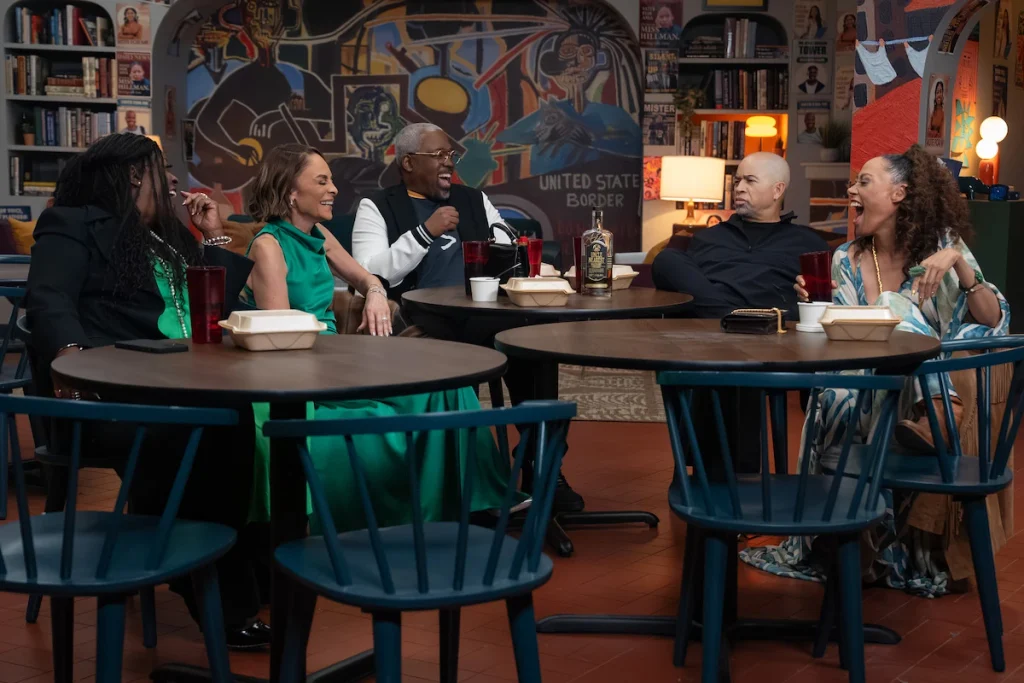
Listening to real students has a history in this series. The Television Academy’s account of the original describes research visits to Morehouse and Spelman under Debbie Allen, where conversations with students and faculty fed episode ideas. The new production’s student consultation continues that practice.
That preparation does not settle how well the sequel balances its generations. In her RogerEbert.com review, Jen Chaney argues that its attachment to the original too often limits the new show’s independence. Her criticism identifies a real tension in the premise: the familiar faces that bring people back can also take attention from the students whose lives are beginning. Using real campuses cannot resolve that writing problem.
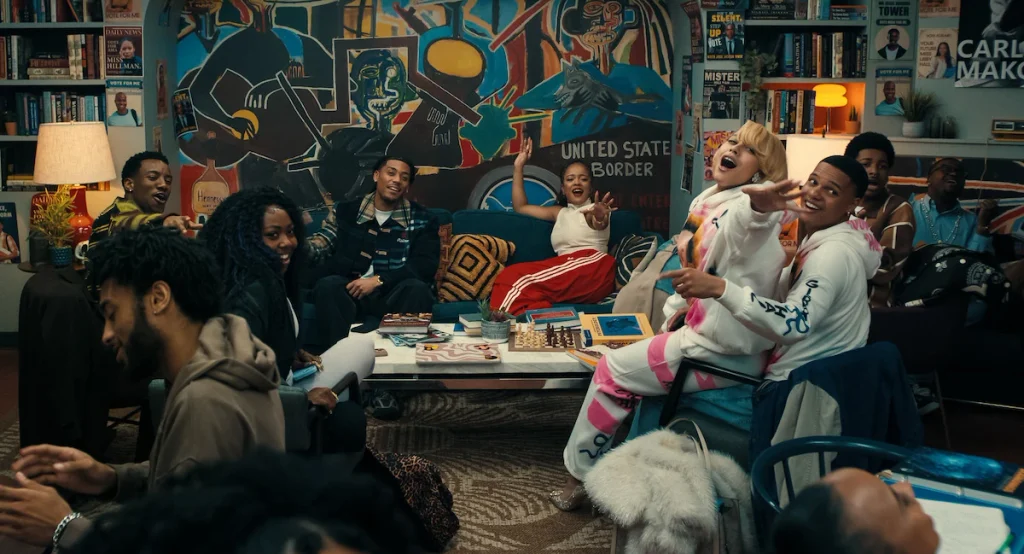
So the answer to the location question is straightforward: Hillman is invented, and real Atlanta colleges help give it a physical life. The reason to look beyond the addresses is Deborah and Rashida. They can wear the same school colors while disagreeing about what the school owes them and what they owe themselves. For the sequel, making room for that disagreement is a better use of Hillman than asking every freshman to share the alumni’s memories.