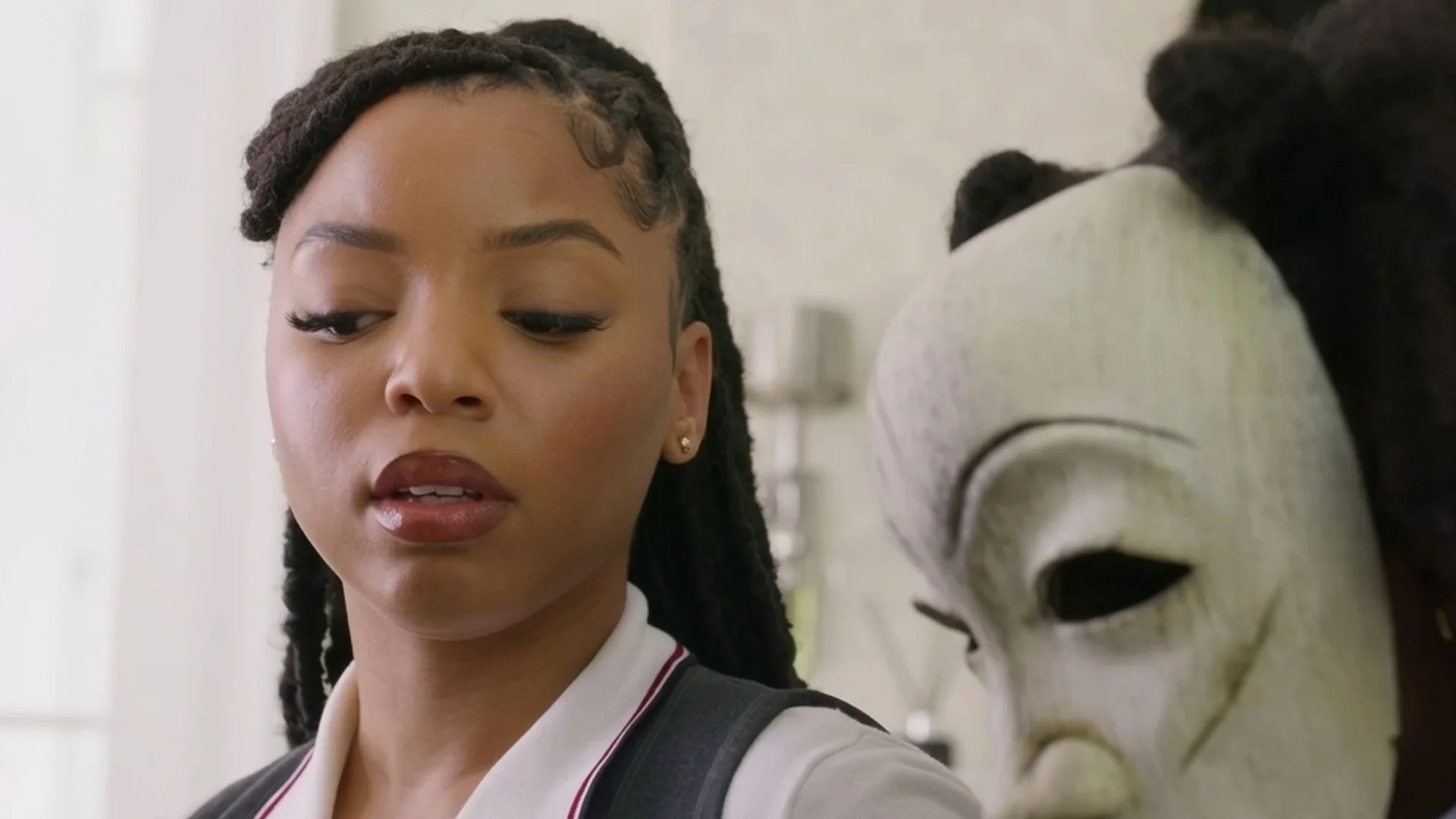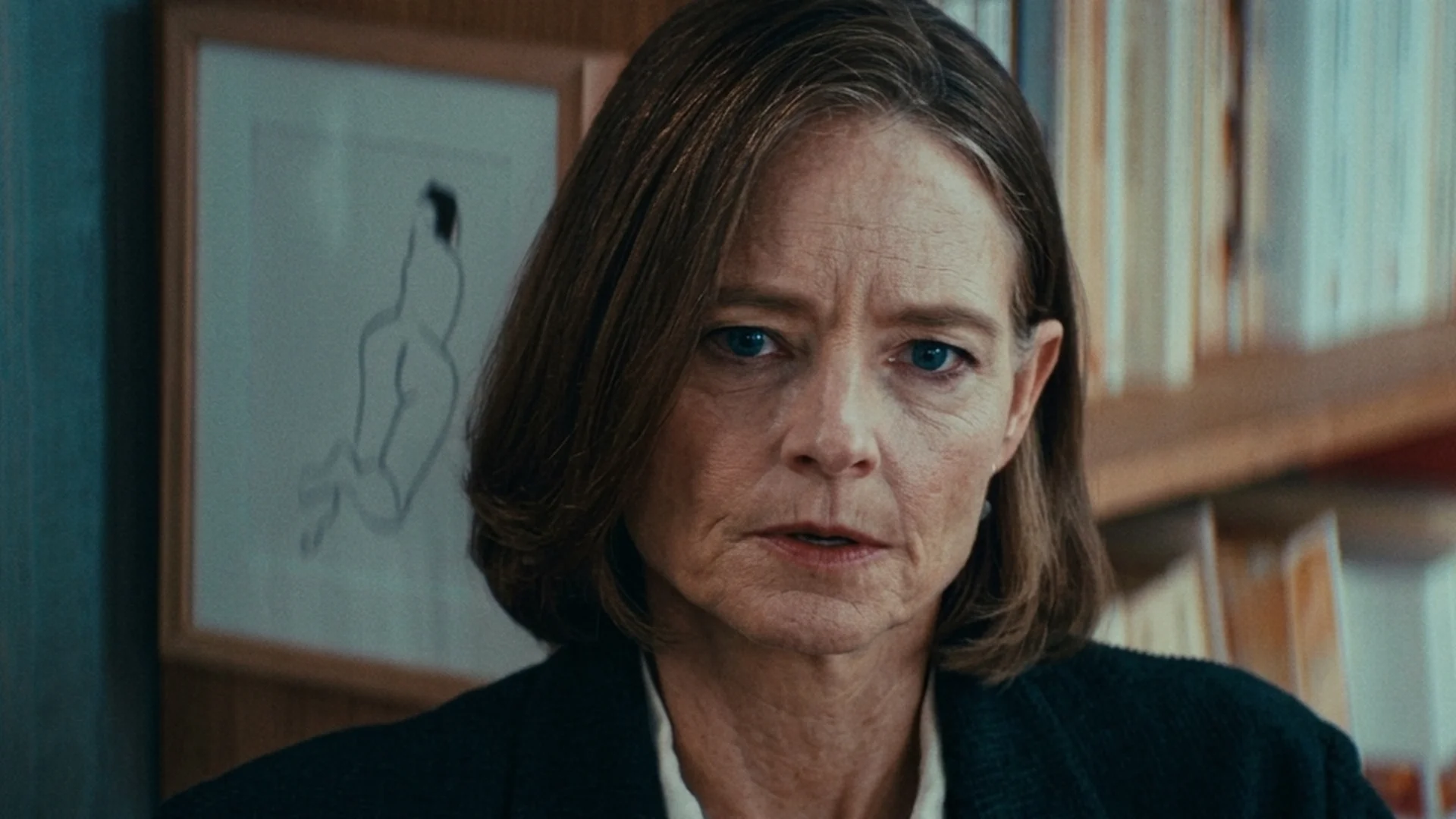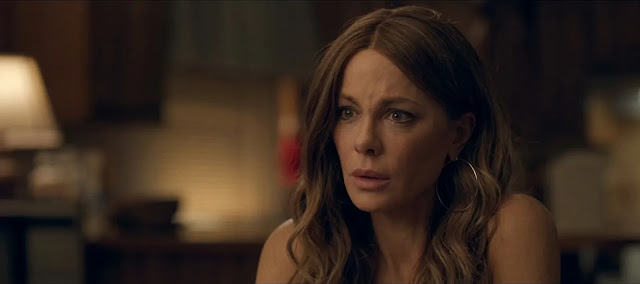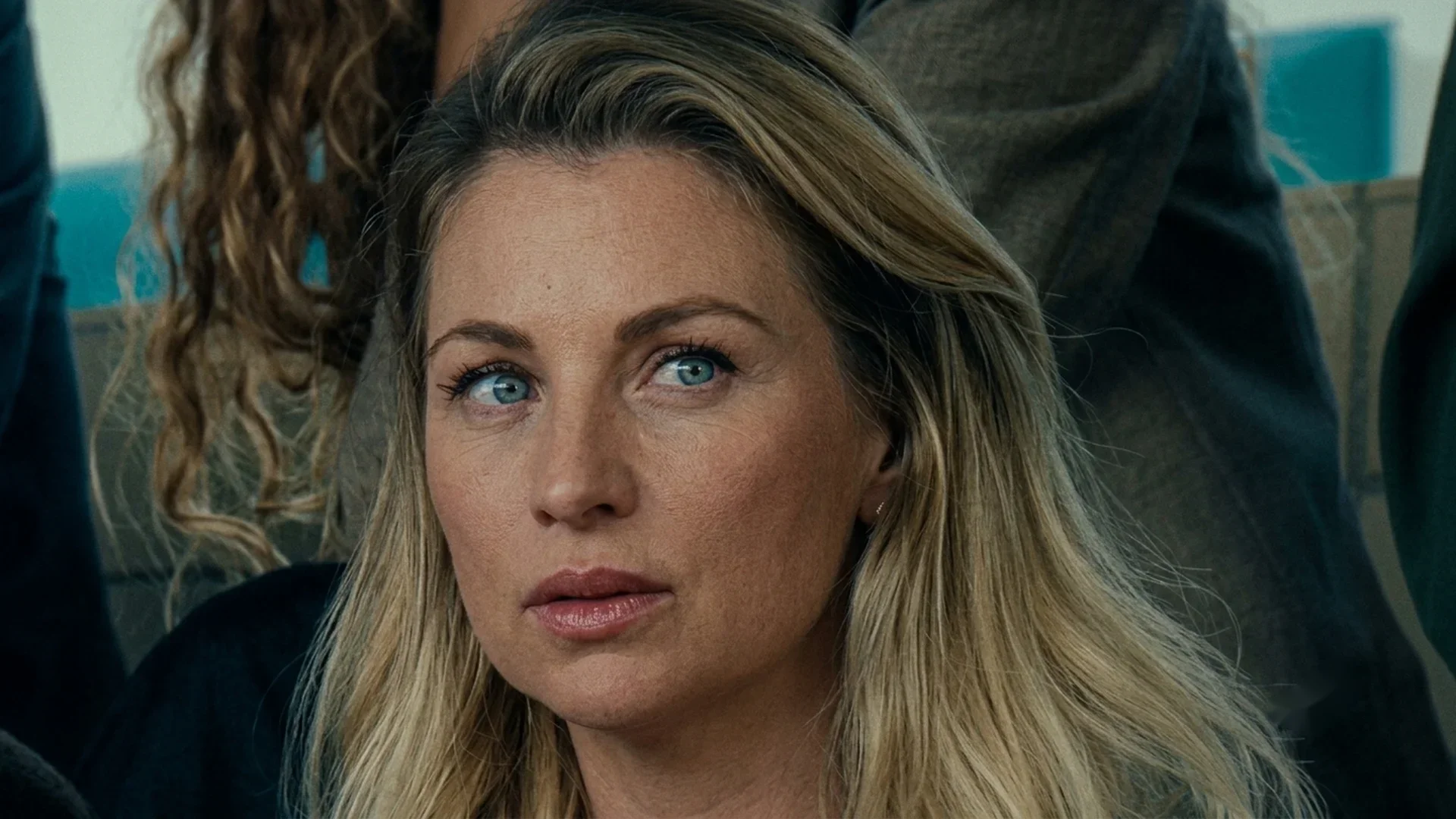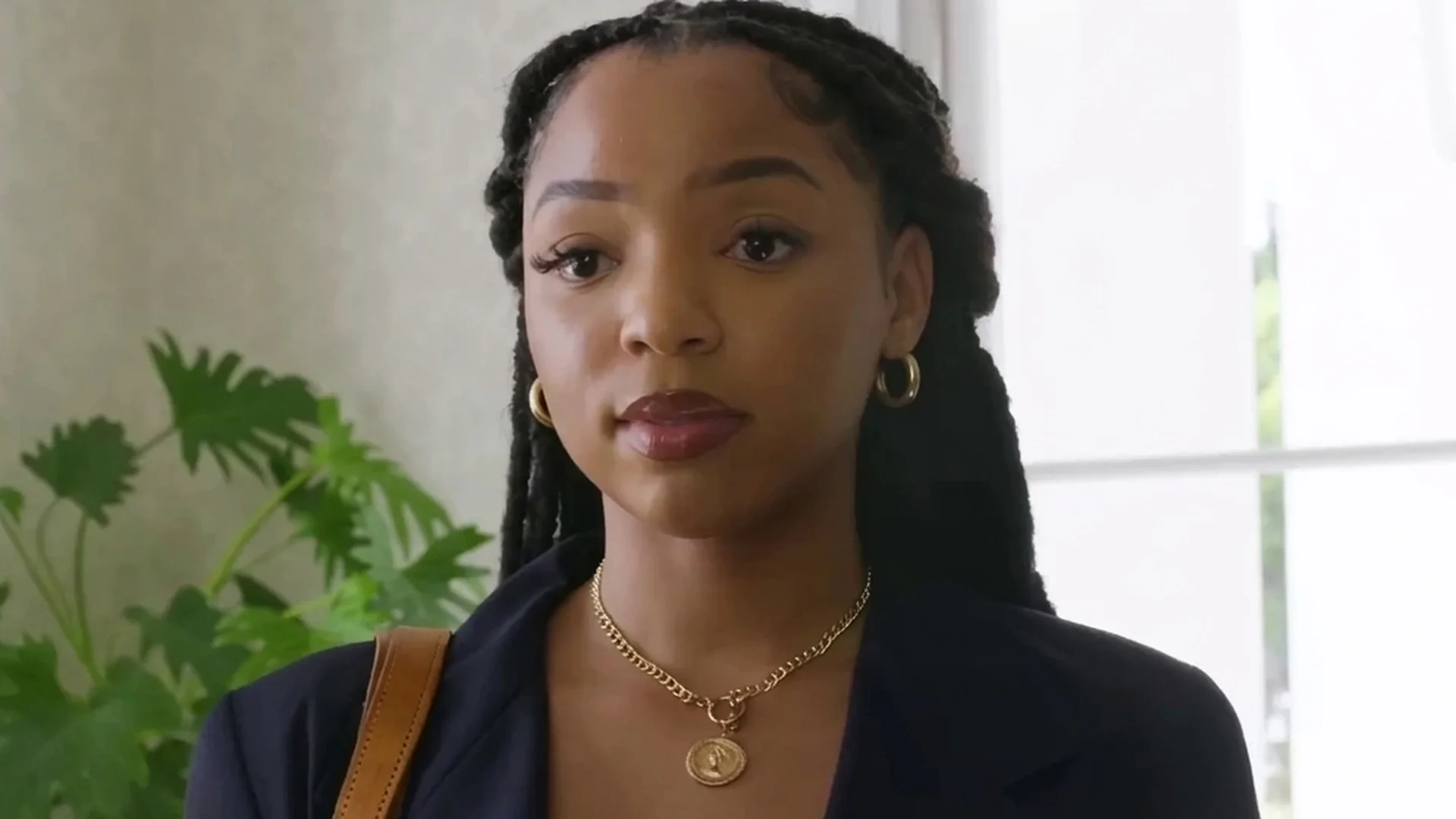
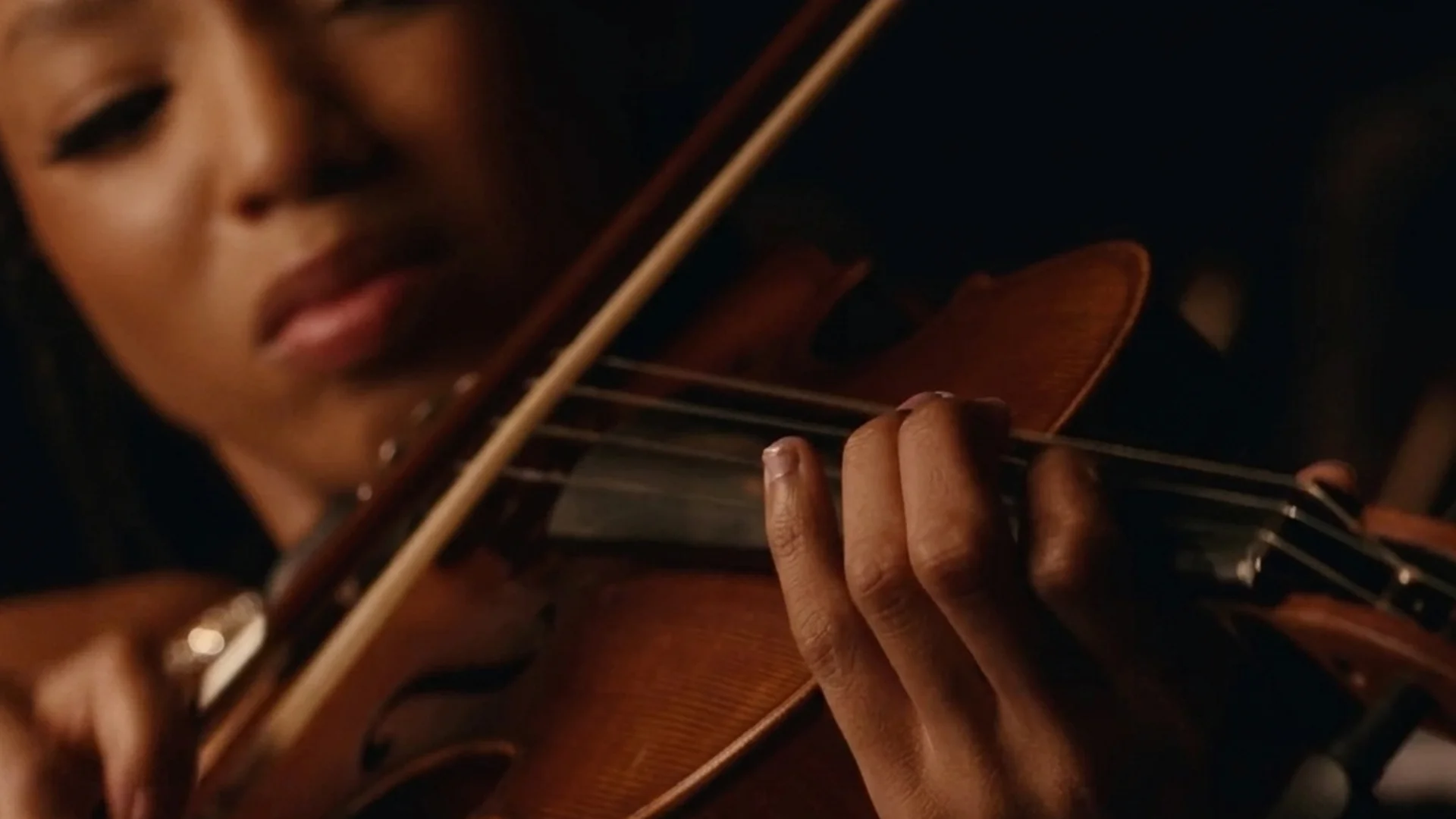
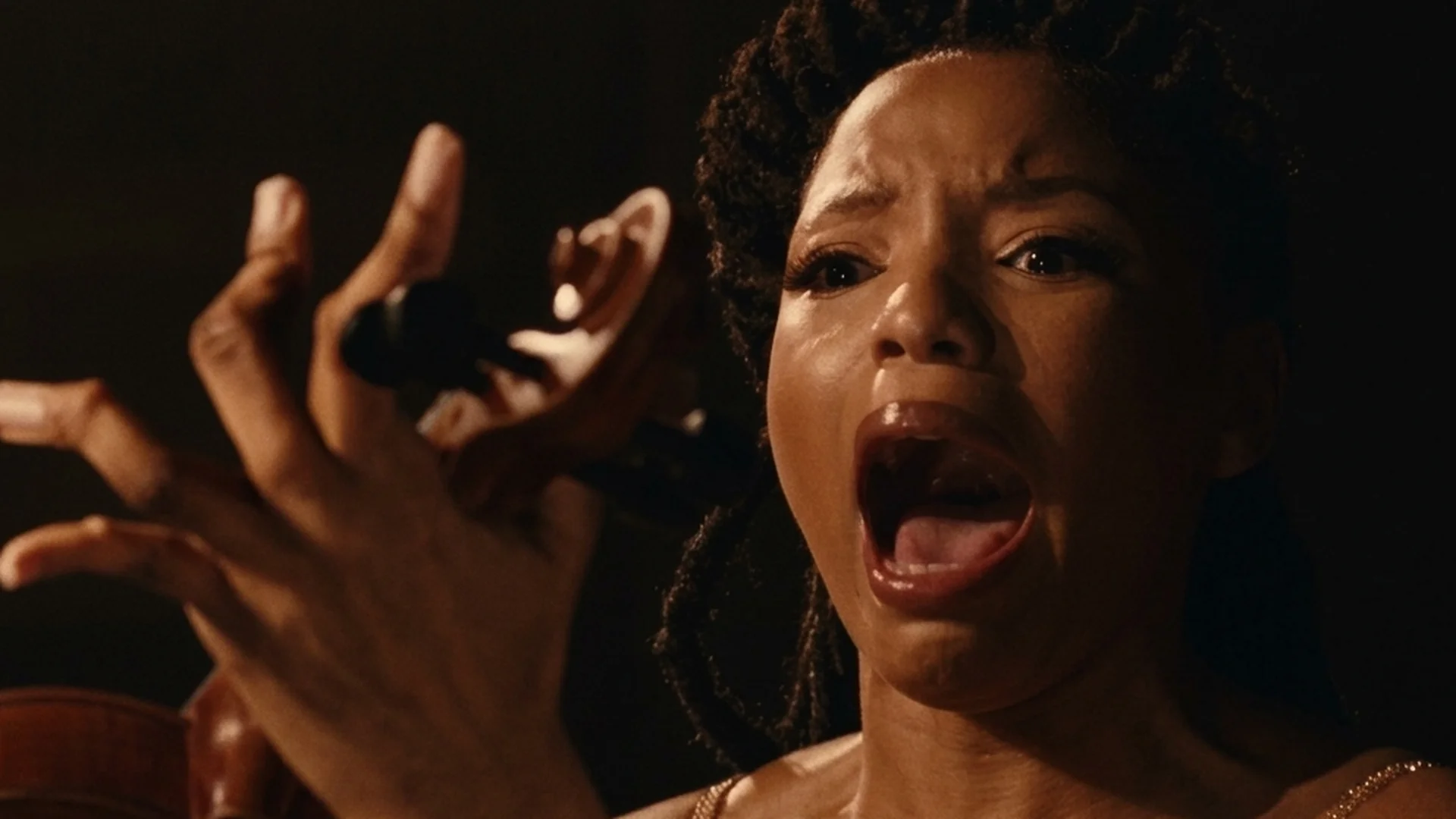
Every part of Strung is right there in the title. Chloe Bailey plays Laila, a gifted violinist whose whole world is strings. She takes a live-in job tutoring a wealthy family’s young daughter, and she is slowly strung along by people who know exactly which of her wounds to pull on. When the movie finally turns violent, the weapon that ends it is something Laila herself strung up. Peacock’s Blumhouse thriller is never subtle, yet the way it turns its own title into a murder weapon is the sharpest thing it does.
How Laila Ends Up in That House
Laila carries a wound she never fully closed. As a girl she watched her little sister die during a severe asthma attack, and she still keeps an Epi-pen within reach as an adult. When she is offered a high-paying live-in position tutoring Zuri, the gifted young daughter of an affluent family, she is drawn to the child at once, because Zuri reminds her of the sister she lost.
The household is off from the first day. Zuri’s father, a rapper, supposedly died of a drug overdose, and no one in the house says his name without flinching. Her mother, Imani, and her grandmother, Audra (Lynn Whitfield), run the place with a control that never quite reads as grief. Between lessons, the mansion feels less like a home than a set dressed for her arrival, every warm gesture landing a half second too late to be real. She is told she was hired for her talent. In truth she was hired for her wounds, an outsider walking into a rich family’s home that already has plans for her.
The Twist: Audra Was Pulling the Strings
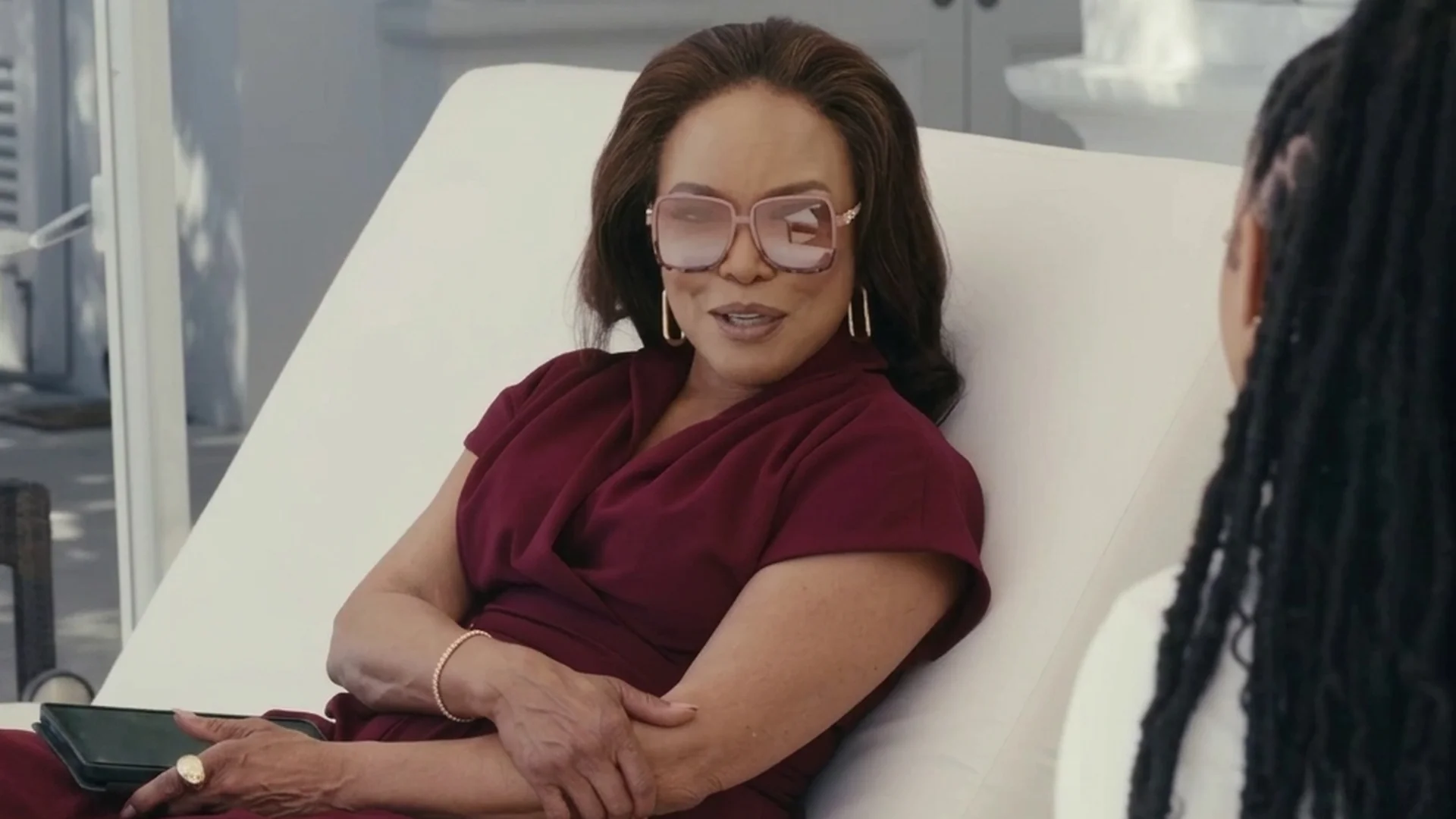
The danger was never a ghost or a stranger at the window. It was Audra, the grandmother. Years earlier she arranged for Marcus, the father’s best friend, to murder him and stage it as an overdose, then marry Imani, so Audra could engineer a grandchild she was able to shape. Now she has decided Zuri is in the way, and she needs someone to hang it on.
Laila was chosen for the very qualities that make her easy to frame: a grieving woman with a short fuse and an old history with Marcus. Audra even sabotages Laila’s performance at a baby shower to make her look unstable in front of witnesses, building a record of a volatile hire before anything ever happens to Zuri. By the third act, Laila is being set up to take the fall for a killing she has no part in.
The Title Is the Murder Weapon
On the night it all comes apart, Audra’s hired man drugs Laila to stage a suicide. Laila survives by using the Epi-pen she carries, the same object her grief has kept in her pocket for years, then goes back into the house to get Zuri and Imani out. In the chaos, Audra turns on Marcus and kills him, jealous of the feelings he has developed for Laila. Then she points a gun at Laila and fires. The shot misses her. It strikes the enormous glass chandelier that Laila had strung up in the house earlier, and the whole fixture comes down on Audra and crushes her. The staging is blunt and almost gleeful, and the movie is telling on itself here. The title was never only about the violin. Laila is strung along, strung out by an old grief, and the thing that finally saves her is a length of chain she rigged with her own hands.
Later, Zuri performs a song from her father’s music box at a recital, the movie’s one clean note of grace. Then the mid-credits scene takes it back: Audra is alive, wrapped head to toe in bandages, which is Blumhouse propping the door open for a sequel.
Is It Worth Watching?
Strung is not going to win over anyone who rolls their eyes at a glossy Tyler Perry and Blumhouse team-up. Critics were lukewarm, and the plot leans on coincidences that do not hold up to much poking. Chloe Bailey is the reason to watch anyway. She commits fully to the scream-queen turn, and she plays Laila’s grief as something heavier than a plot engine: a woman who latches onto a child she is meant to protect because she once failed to protect her own sister. That thread stayed with me longer than the twist did. I think it is the one place the movie reaches for something real instead of something loud. The horror hardware, the mask and the drugging and the staged suicide, is the least interesting thing in it. What lingers is quieter: a woman who cannot tell whether the warmth around her is real, in a house designed to make sure it never is. If you want a slick, mean little thriller that actually pays off its own title, this earns the watch. Just do not expect the logic to survive the chandelier.