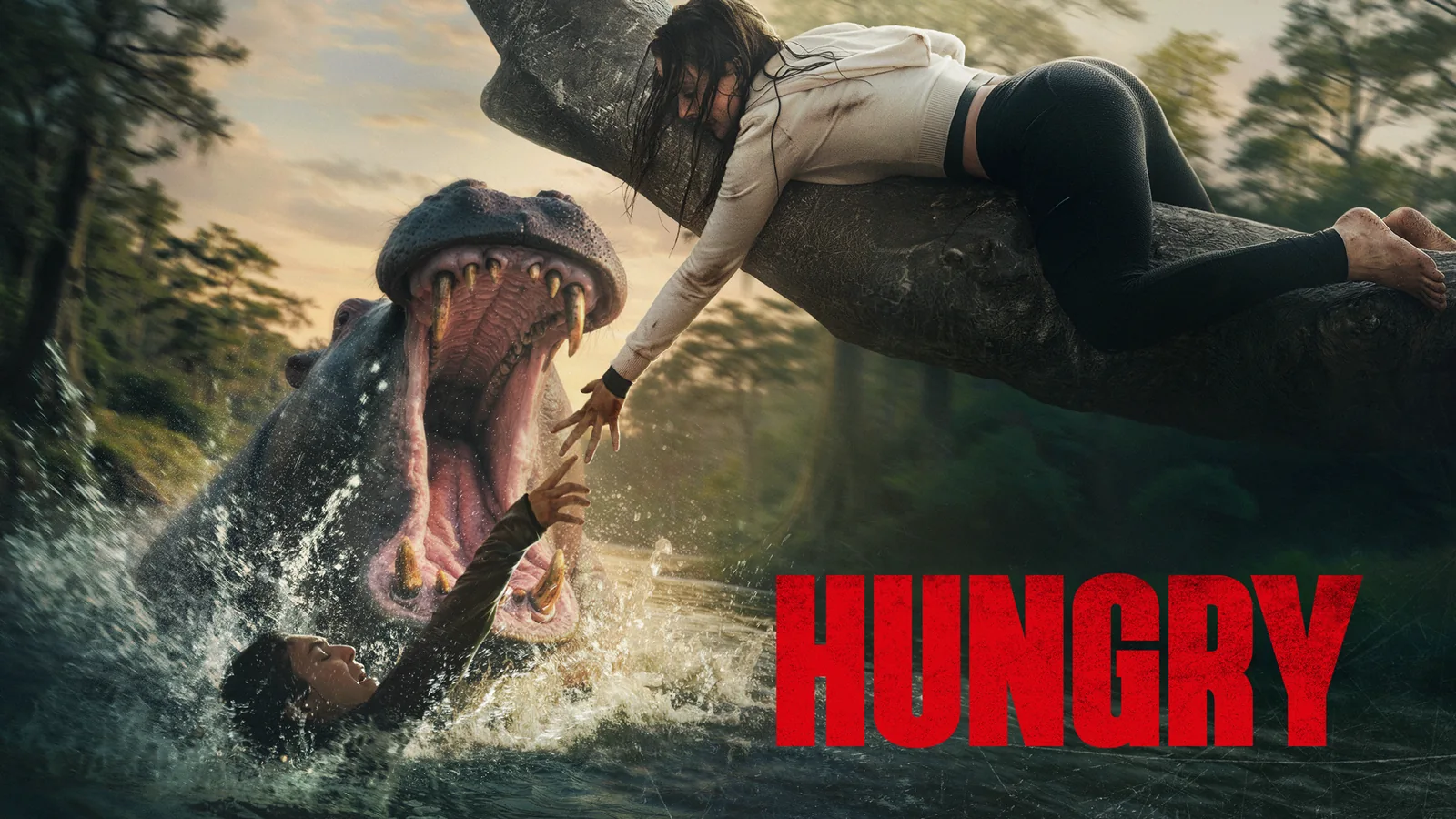
Helping the calf of an animal that has been killing people is a difficult way to end a survival story. In Hungry, Sistine frees a trapped baby hippo, and its mother stops attacking her. A helicopter rescues her; the hippos leave together. That explains how she survives James Nunn’s film, but it leaves a more interesting question beside the answer. How should we understand her decision before we know it will work? From the safety of the ending, the rescue looks like a solution. For the person still within reach of the mother, it requires something less comfortable than knowing what to do.
I would be reluctant to describe it simply as kindness being rewarded. That makes the outcome sound almost guaranteed, as though Sistine has discovered a rule that good people will be spared. The troubling part of her choice is precisely that she has no such assurance. The calf belongs to the animal she has reason to fear, yet its predicament is something she can change. Recognizing that need does not require her fear to disappear. It asks her to act while the reasons for being afraid are still there.
Sistine Has Already Judged Herself for Failing Her Mother
The decision becomes more personal when we remember how Sistine talks about her own mother. Earlier, she counts caring for her sick mother among the things she believes she has failed at. Michael Guillen’s review places that guilt alongside her struggles with work and the fear of losing her home. What strikes me is how readily several difficult circumstances become one judgment about herself. Failing to make everything turn out well is, in her account, evidence that she is a failure. A person who carries that judgment may find another helpless creature especially difficult to walk away from.
Her words to the adult hippo make the connection explicit: she recognizes its protectiveness and recalls her own mother’s. That gives her an emotional way to approach the animal as well as a possible explanation for its aggression. I would not reduce the moment to either a survival calculation or an act entirely free of self-interest. She wants to live, and she understands something she can do for the calf. Her memory of her mother brings those concerns together. It also makes the rescue more intimate than a generic demand that the last survivor prove herself brave.

The Mother Has a Reason to Attack
Nunn’s explanation of the creature helps keep that personal connection in perspective. In his Love Horror interview, he describes the hippo as acting territorially rather than out of malice. That is a useful limit on what we ask the ending to mean. The mother does not need to recognize Sistine as a virtuous person for the danger to end. Reading the release as the removal of an immediate source of conflict makes more sense to me than imagining a grateful animal deciding who deserves to live. The latter interpretation would make the earlier deaths uncomfortably close to judgments on the victims.
That does not make it necessary to take the mother’s side. Understanding an animal’s behavior cannot settle the human experience of being attacked by it. A survivor can see why something happened and still find it unbearable. This is where the ending holds my interest: Sistine has to respond to the calf in the present, while the audience can still carry an objection on behalf of everyone the mother has hurt. Helping the young animal need not resolve that objection. We can want it released without deciding the entire ordeal has become fair.

Leaving the Swamp Does Not Undo What Happened There
There is still a reasonable objection to how neatly the release resolves the danger. Free the calf, end the attack, get rescued: laid out that way, the sequence can seem too convenient for the suffering that precedes it. Sistine’s connection to her mother makes her decision more personal, but it cannot by itself make the hippo’s sudden withdrawal convincing. I can find her choice meaningful and still understand dissatisfaction with how quickly it brings safety. Those responses do not have to cancel each other out.
The reunion also belongs to the hippos in a way it cannot belong to Sistine. Mother and calf can leave together, but her rescue cannot restore the people lost during the ordeal. Holding those outcomes beside each other keeps the ending from becoming a general promise about compassion. There is relief in the calf’s release and in her escape, without a corresponding repair of everything else. The story gives her a way out of the swamp. What she can make of having survived is a much larger question than the helicopter can answer.
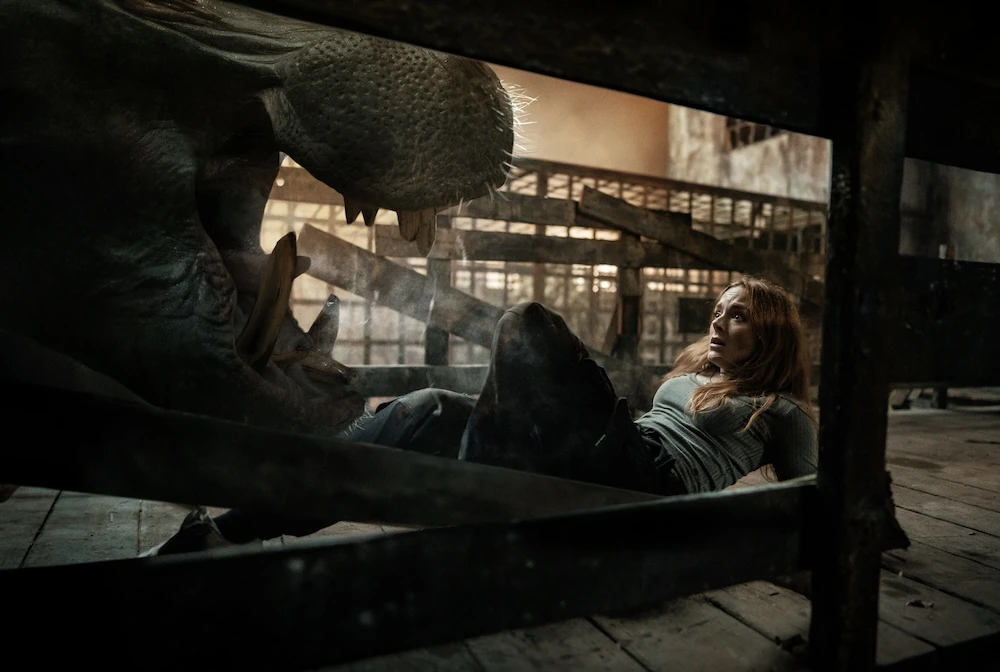
Perhaps that is the most I would ask the calf’s rescue to offer her. It cannot prove she cared for her mother well enough, and another life saved cannot settle that earlier relationship. But a woman who has been counting her failures has now done something she can point to without qualification: this animal was trapped, and she freed it. She does not have to emerge from the swamp feeling healed. Being able to leave with one less life lost may be enough for the moment, before she has to begin making sense of all the others.